What to see in Ghent on foot
29 places with their stories, the map and free audio in 15 languages.
Updated November 2026 · 7 min read · Produced by World Tour
Ghent in a nutshell
The history of Ghent is surprising because behind its quiet and charming appearance lies a city that was one of the most important in Europe during the Middle Ages. Its location at the confluence of the Lys and Scheldt rivers made it a strategic point for river trade from very early on.
The places on the map
Each number is the place’s number in the list.
Ghent Walking Tour
-
1. St Bavo’s Cathedral
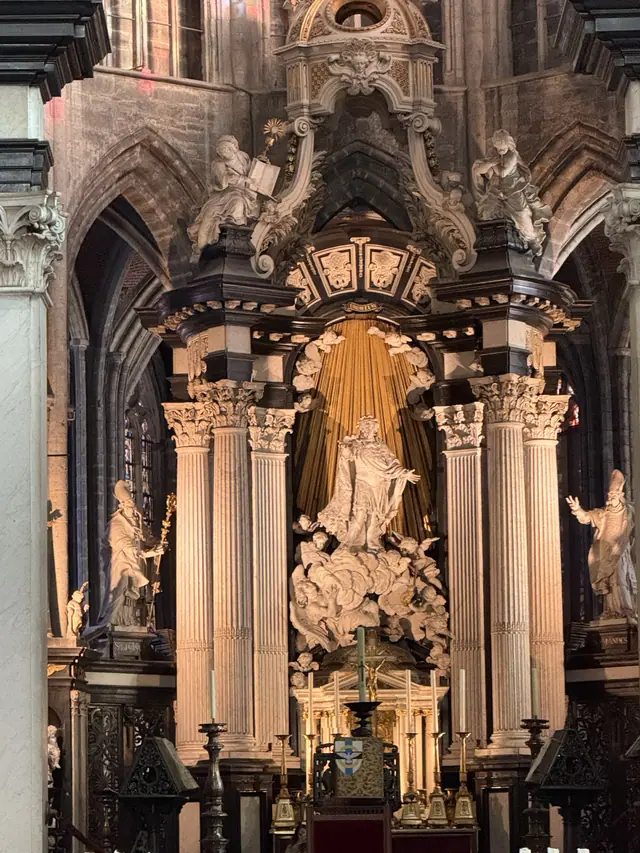
We’re in one of Ghent’s most recognisable buildings. Look at the pointed arches and how high the vaults are. That’s what makes you feel so small when you walk into a Gothic building like this. A church dedicated to St John the Baptist once stood on this very spot.
-
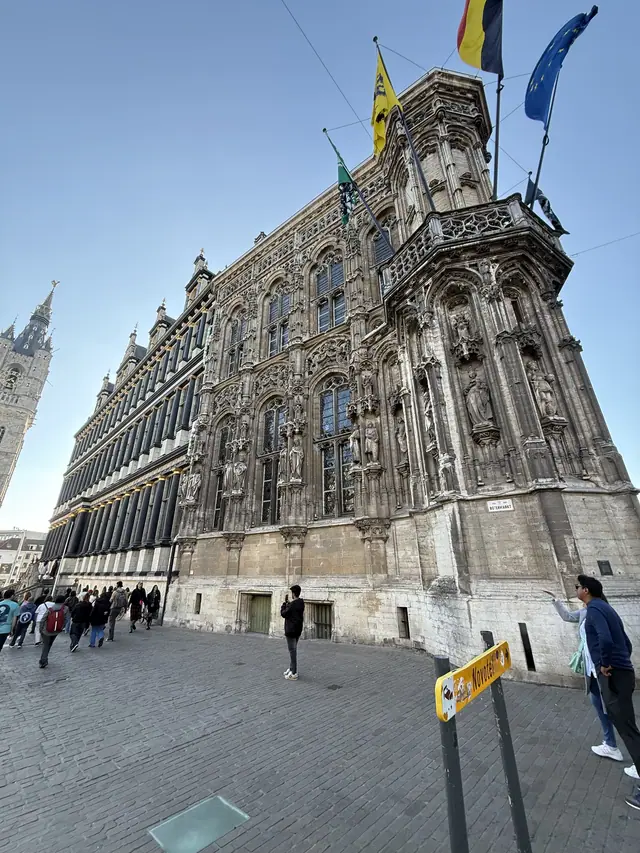
2. The Town Hall
At the first stop on our tour, I told you that Charles and Ghent didn’t always get along. Now I’ll tell you why. One thing hasn’t changed much in Ghent since the Middle Ages. In those days, there were kings and emperors in place of presidents.
-
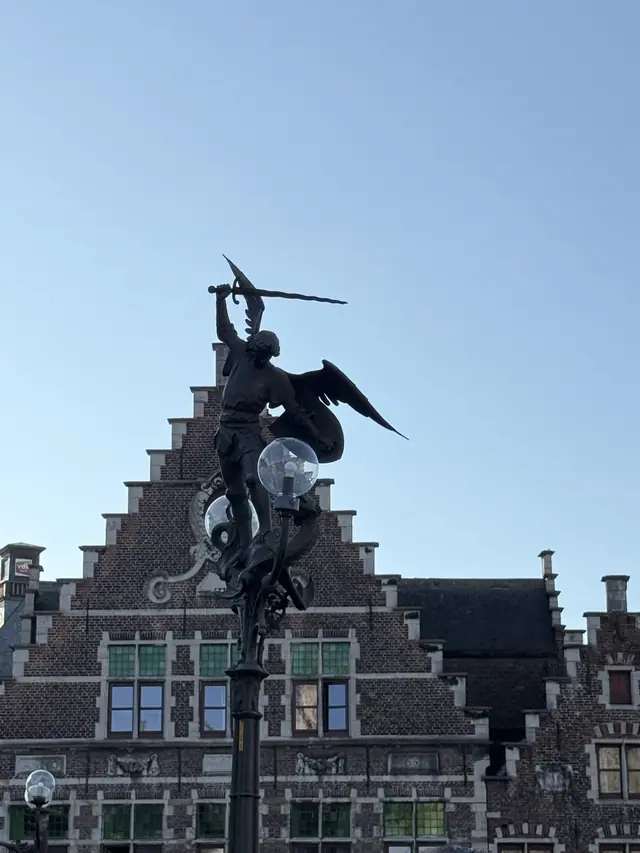
3. An unusual sculpture
A little earlier, I mentioned that boats bringing grain to Ghent had to leave part of their cargo here. Grains such as wheat and rye were used to make bread, while barley was used to brew beer.
-
4. Old and new in Ghent
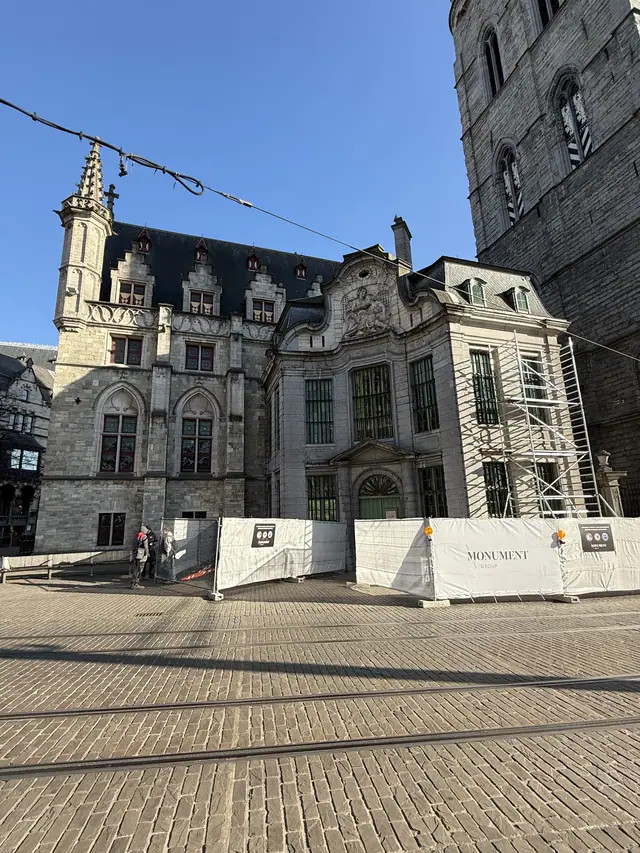
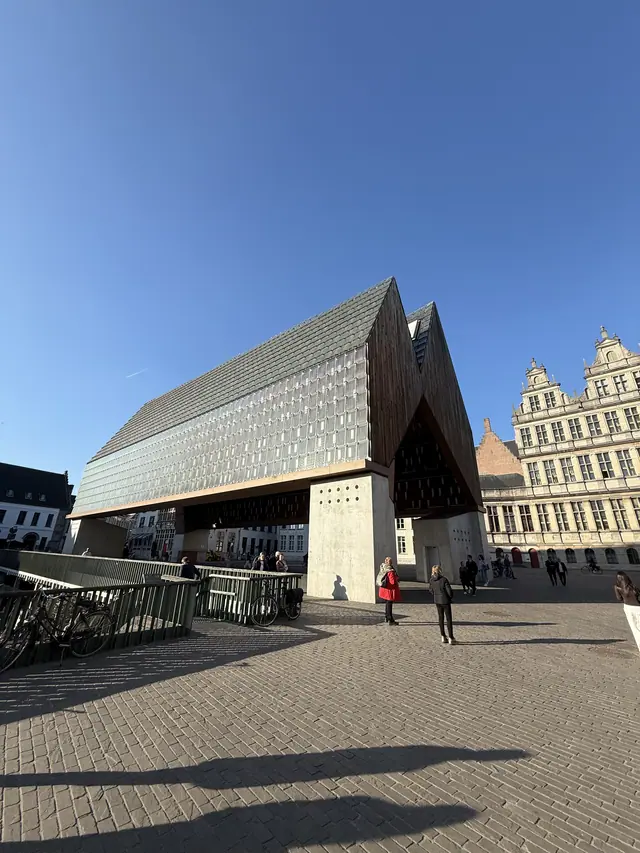
From this corner, you can see several very different buildings in Ghent. Can you see that modern structure with two large, pointed roofs? That’s the City Pavilion. You might be wondering what a building like that is doing between the Town Hall, the Belfry and St Nicholas’ Church.
-
5. St Nicholas’ Church
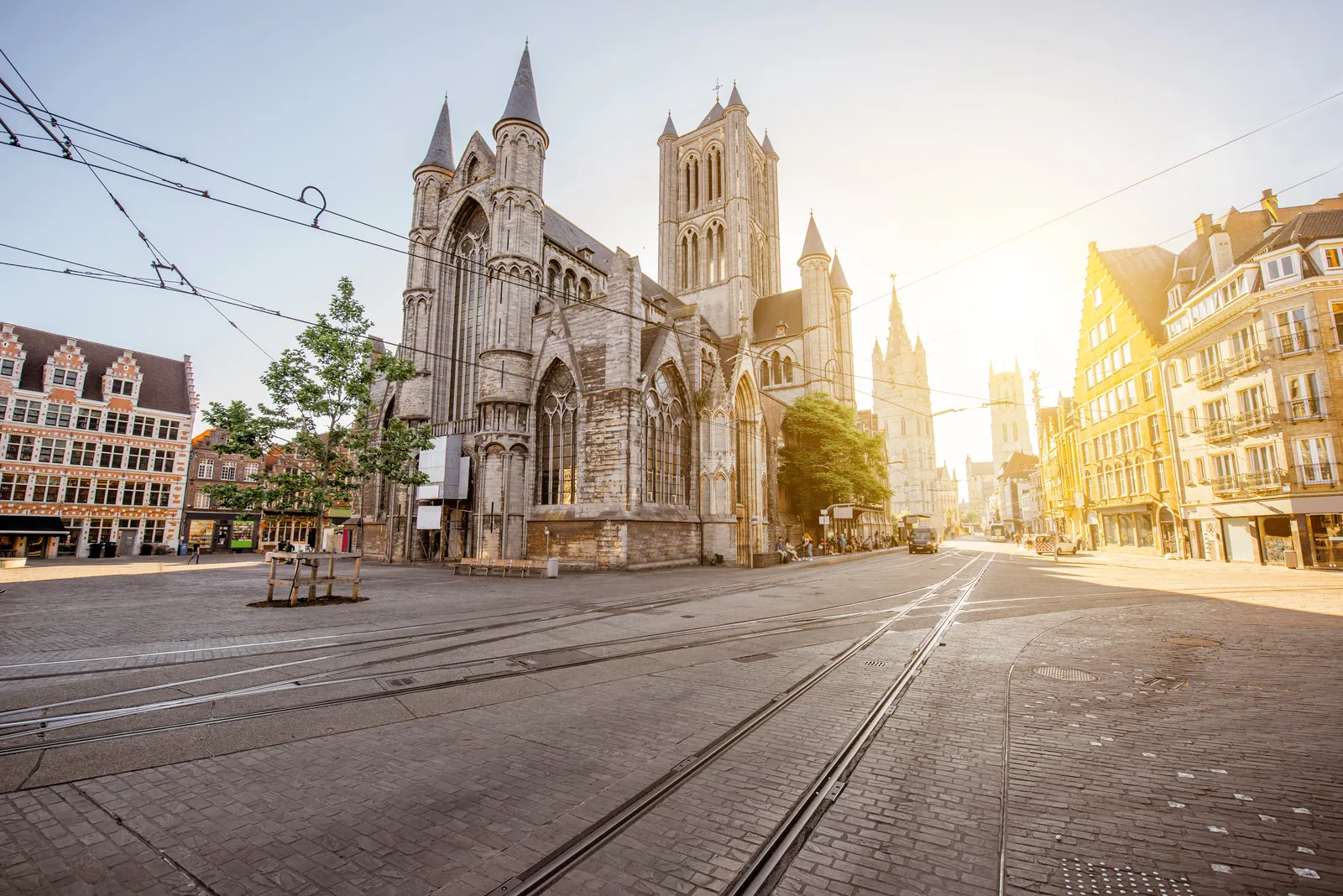
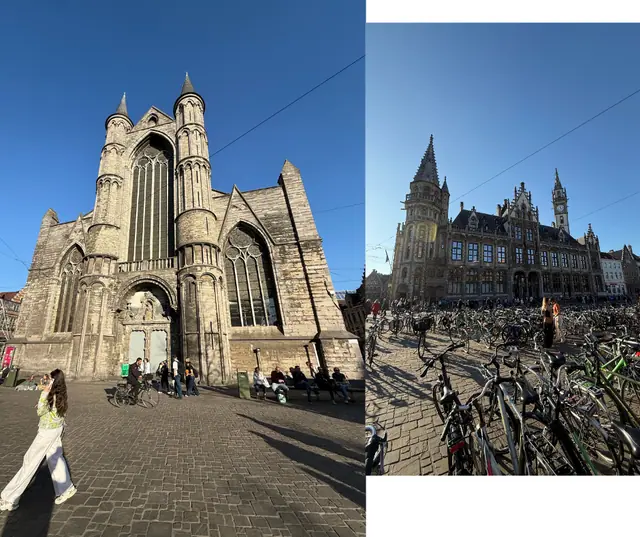
You’re looking at St Nicholas’ Church, one of Ghent’s best-known landmarks. Work began in the early thirteenth century on the site of an earlier Romanesque church that had become too small. Notice the blue-grey stone.
-
6. A Picture-Postcard Moment
This is a wonderful spot for taking photos. Look back towards the previous stop and you’ll see Ghent at its medieval best. The three towers the city is famous for stand in a row. The nearest is St Nicholas’ Church, which we’ve already visited.
-
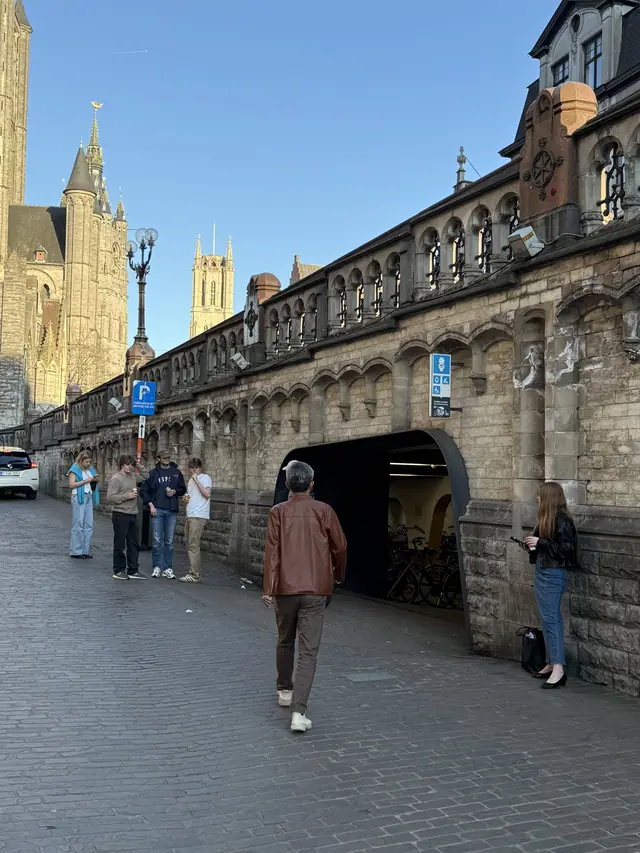
7. Public Toilets
We’re making a quick practical stop. If you need the loo during the walk, there’s one nearby. It’s under St Michael’s Bridge, next to the cycle parking on the Korenmarkt side. It’s a public toilet, free to use and open 24 hours a day.
-
8. The Two Banks
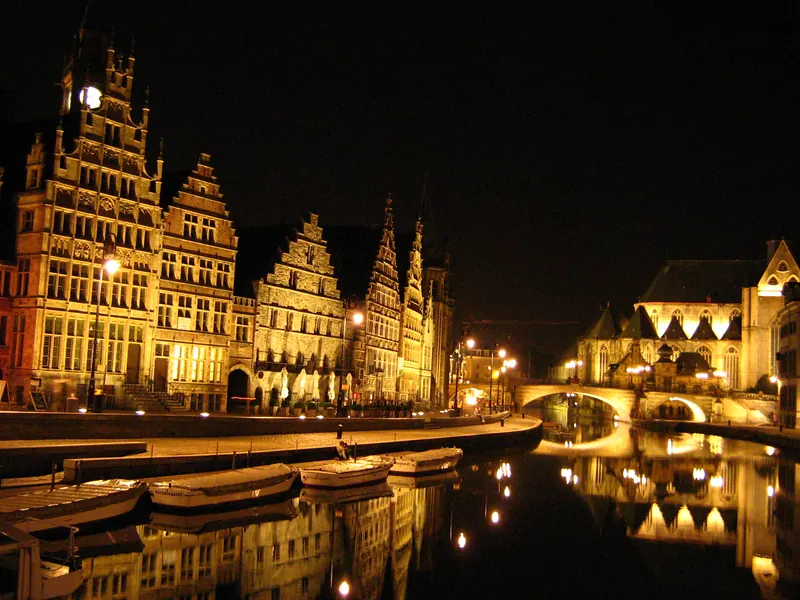
As I mentioned, this is the River Lys. It’s one of the two rivers around which Ghent grew. The quays you see on either side are called Graslei and Korenlei. In Dutch, the names mean roughly ‘Herb Quay’ and ‘Grain Quay’.
-
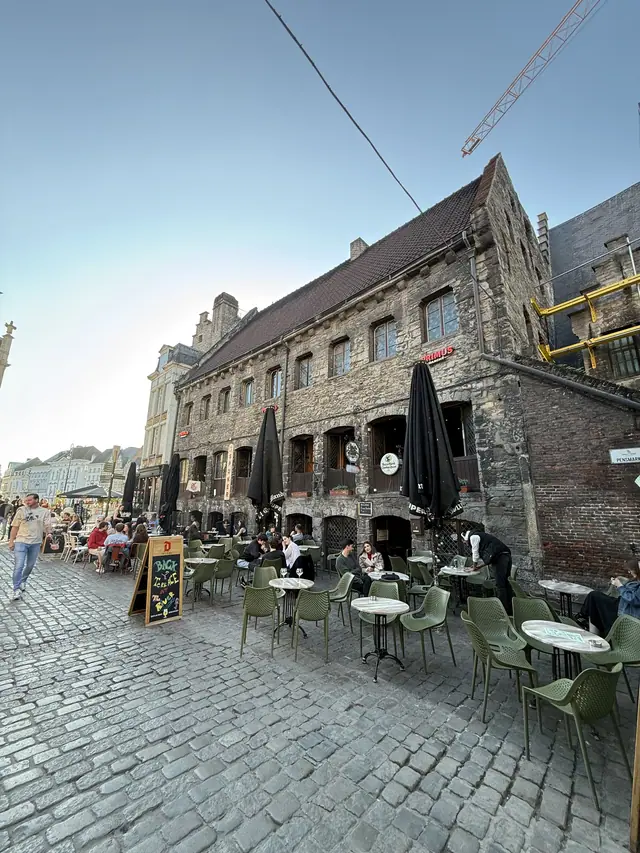
9. In Case You’re Feeling Peckish
These two riverside bars look as though they’ve come straight out of a Harry Potter film. One is Waterhuis aan de Bierkant, known for its beers and its terrace by the water. The other is Dreupelkot, a bar specialising in jenever, a traditional spirit flavoured with juniper.
-
10. The Market Square
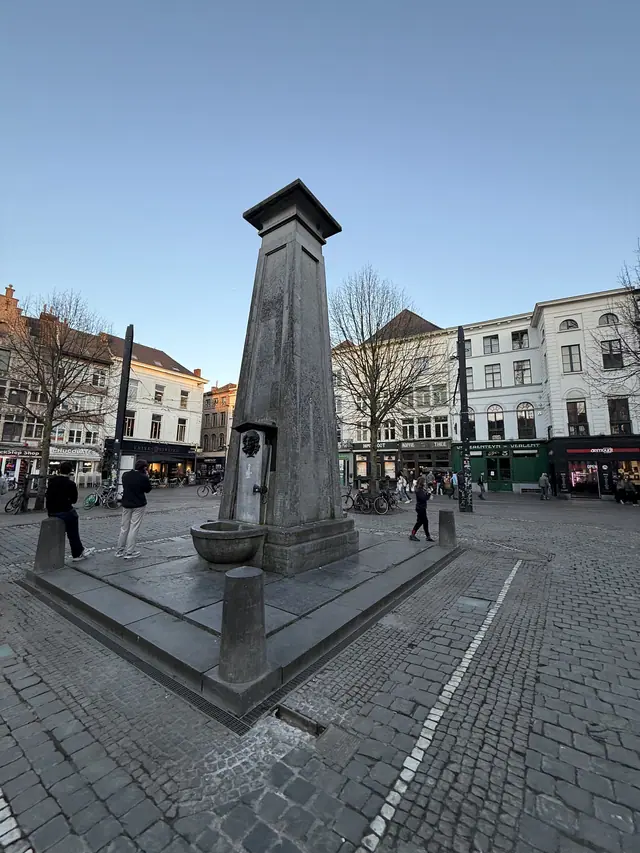
This is the Vegetable Market Square. Fish was sold here in the Middle Ages, and it has been known as the Vegetable Market since the eighteenth century. Look at the water pump in the centre. It looks like a little obelisk. It was installed in 1812 for the vegetable sellers.
-
11. The Castle of the Counts and Saint Pharaildis Square
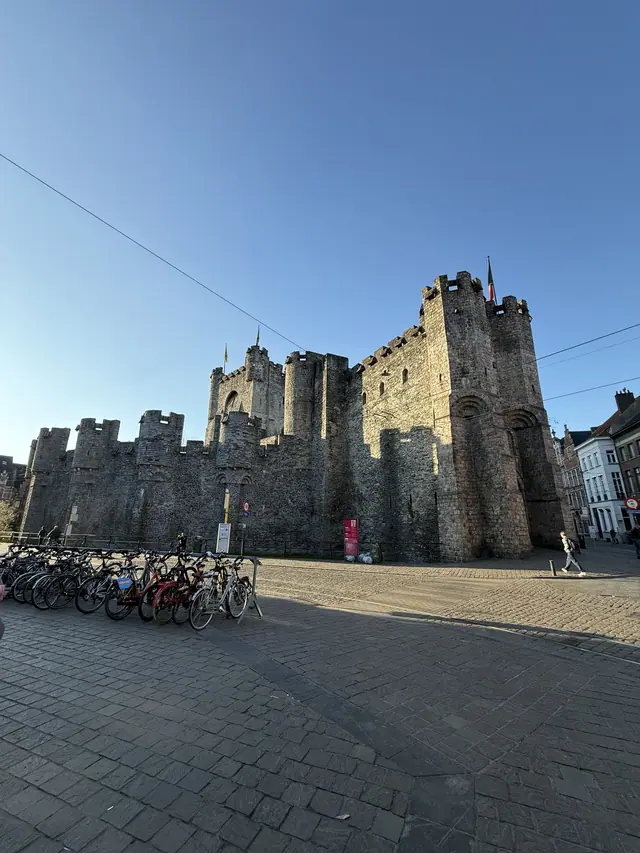
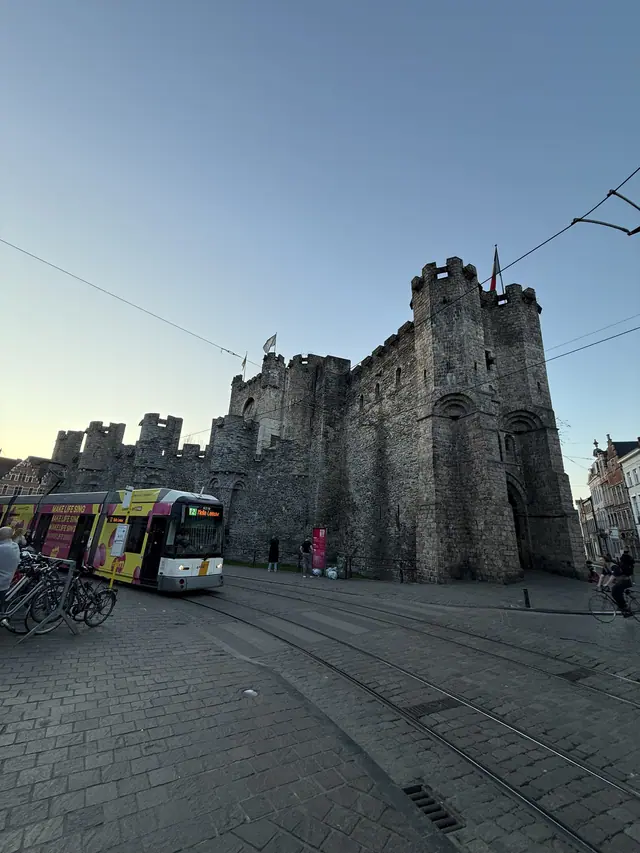
This is the imposing Castle of the Counts of Flanders, one of Ghent’s best-known sights. The Latin inscription above the entrance says that Philip of Alsace ordered the castle to be built in 1180. Its walls, towers and moat sent a clear message.
Ghent: Mysteries and Legends
-
12. The Three Towers
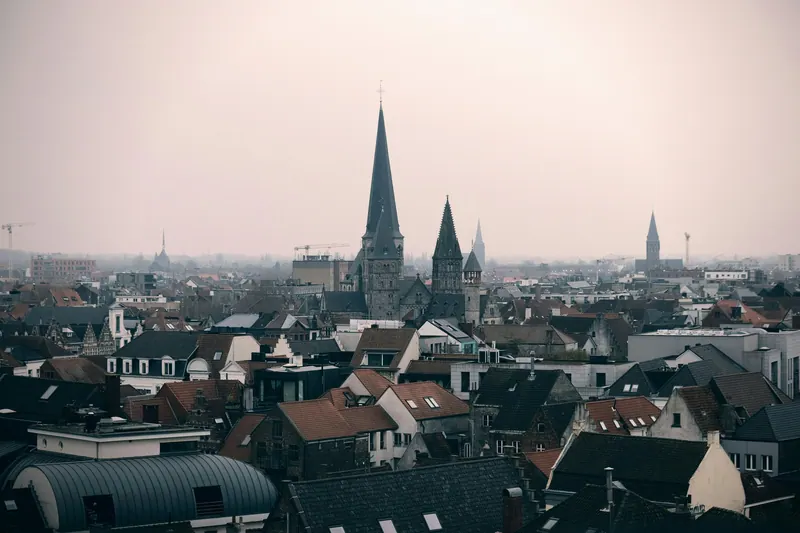
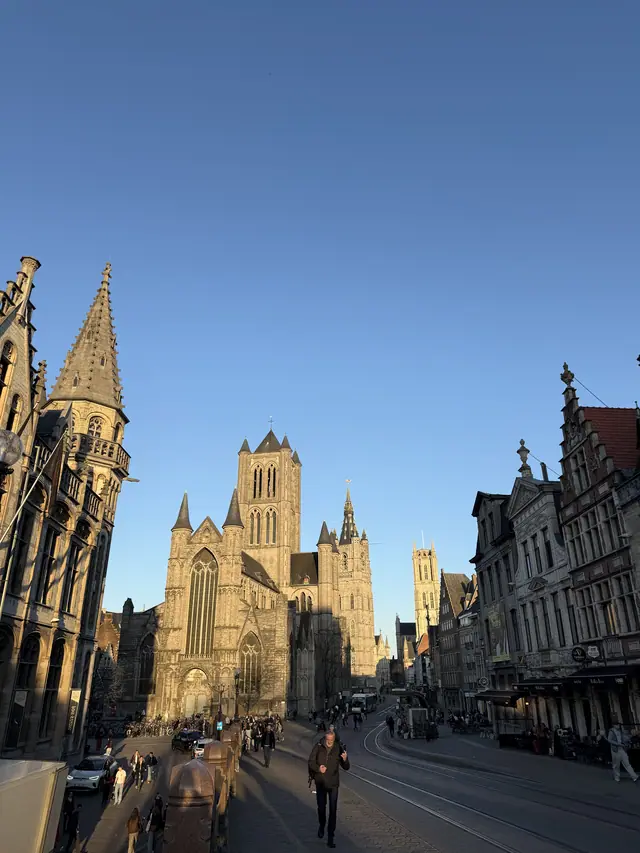
It goes with what you’re hearing. We’re standing in front of Ghent’s three medieval towers, witnesses to centuries of history, secrets and battles. On the left is St Nicholas’ Church, in the centre is the Belfry, and in the background is the magnificent St Bavo’s Cathedral.
-
13. Old Post Office
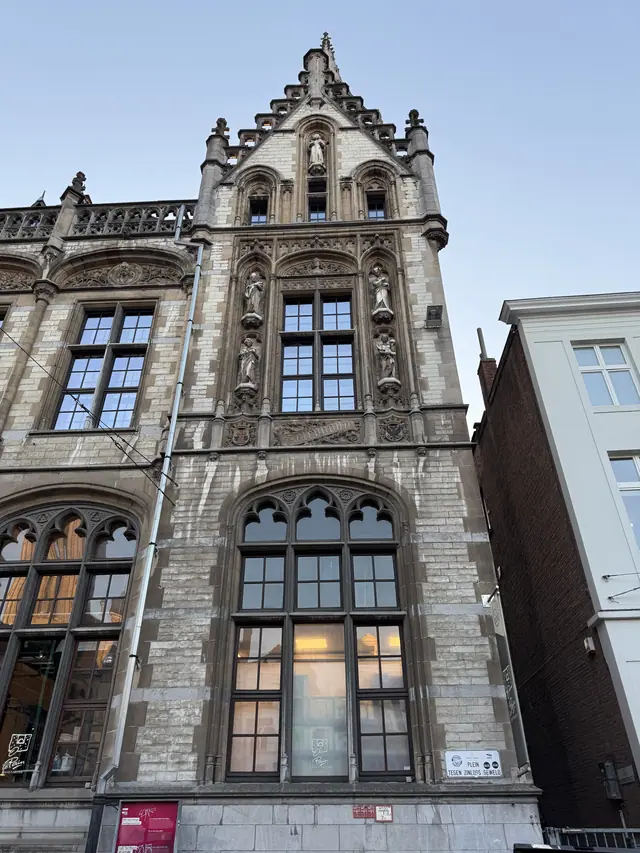
We’re standing in front of a grand building. Inside, it may feel modern, but from the outside it takes us back in time. This is Ghent’s old post office. The building was completed in 1908, during the reign of Leopold II, and the postal services moved here in October 1910.
-
14. Vegetable Market Square
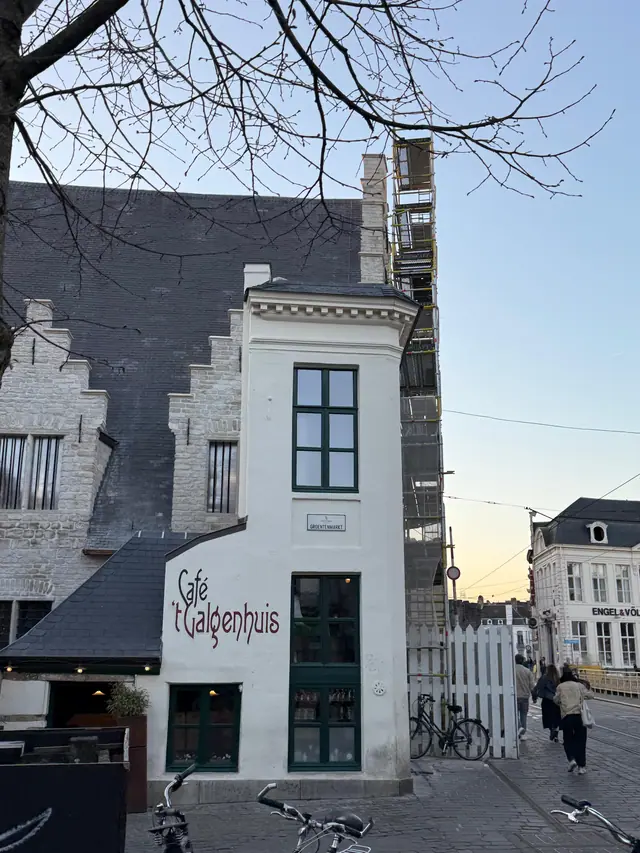
We’ve reached the part of the tour where things get properly medieval. We’re in what looks today like a quiet, almost innocent little square. But don’t let the cafés or the smell of freshly made waffles fool you. The square is called Groentenmarkt, which means vegetable market.
-
15. The Castle of the Counts
We’re in St Pharaildis Square. For centuries, public punishments and executions took place here. Right in front of you is the Castle of the Counts. It’s quite a sight to come across a fortress like this in the heart of Ghent.
-
16. House of the Crowned Busts
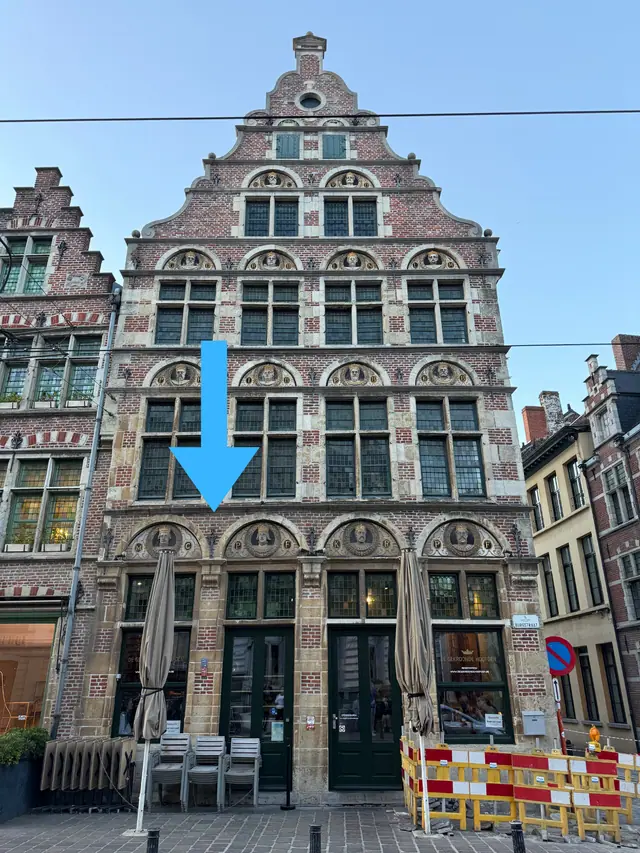
Take a look at this unusual building. Look closely at the arches on the façade. In them you’ll see round portraits of heads wearing crowns. That’s how the House of the Crowned Busts got its name. The façade was built around 1560, during the Flemish Renaissance.
-
17. The Mural
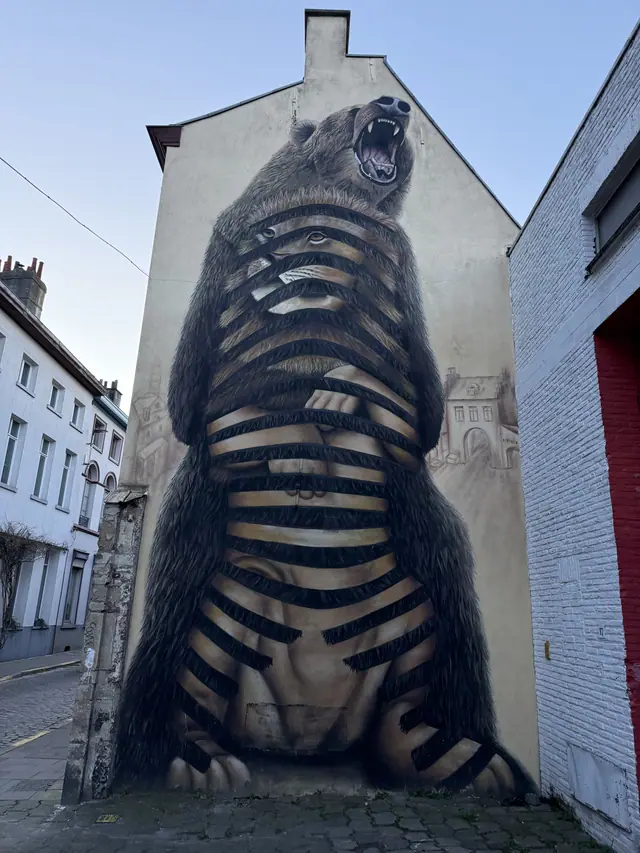
Look at this modern mural. Notice how the bear and the lion merge into a single figure. These animals were symbols of strength, power and nobility. Here they recall the old zoo at the Prinsenhof palace, known as the Leeuwenhof. The court kept lions, bears and other animals there.
-
18. The Sculpture of the Boy
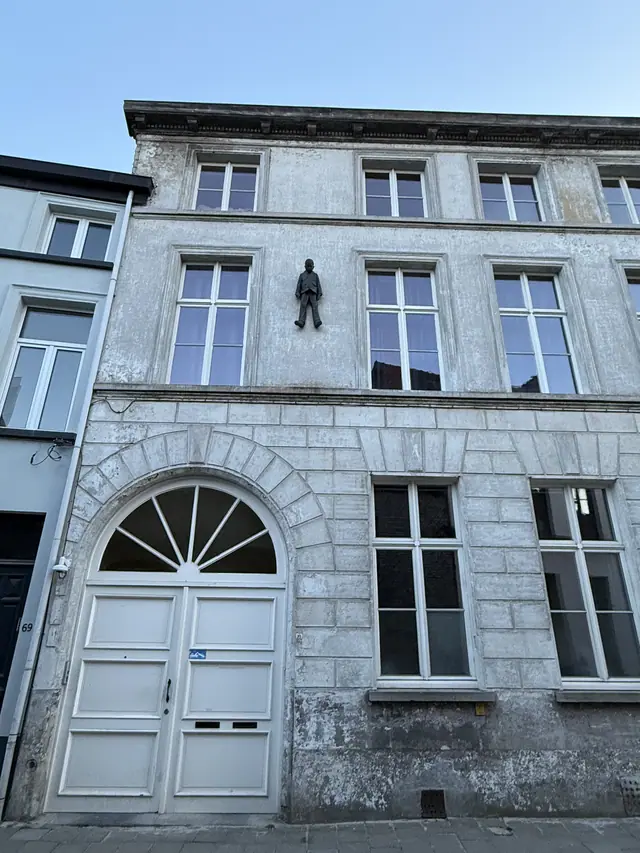
Look up at the façade of number seventy-one, Prinsenhof. Between the windows you’ll see a boy hanging from a coat hanger, his feet in the air. The work is called Jonas. The Belgian artist Sofie Muller made it in bronze in 2011. Jonas is about four feet tall.
-
19. The Scale Model
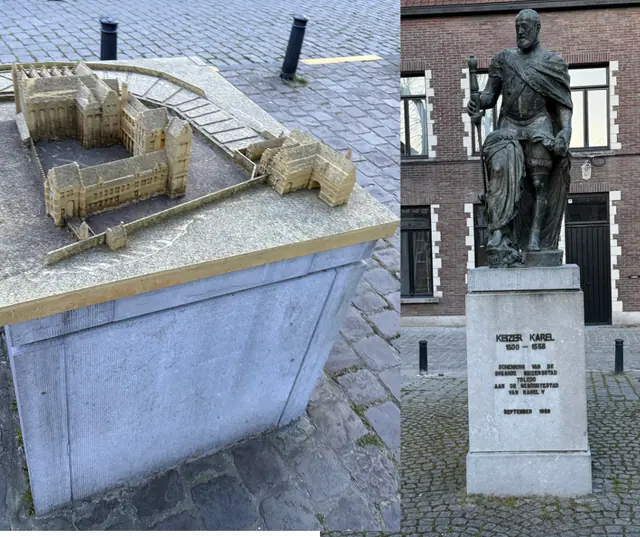
Here we have a scale model of the old Prinsenhof, the palace where Charles V was born. And just behind it stands his statue. The model gives you an idea of how impressive the palace was in its day. It had more than three hundred rooms, decorated fireplaces and a private zoo.
-
20. The Memorial to the Forgotten Victims of the Witch Hunts
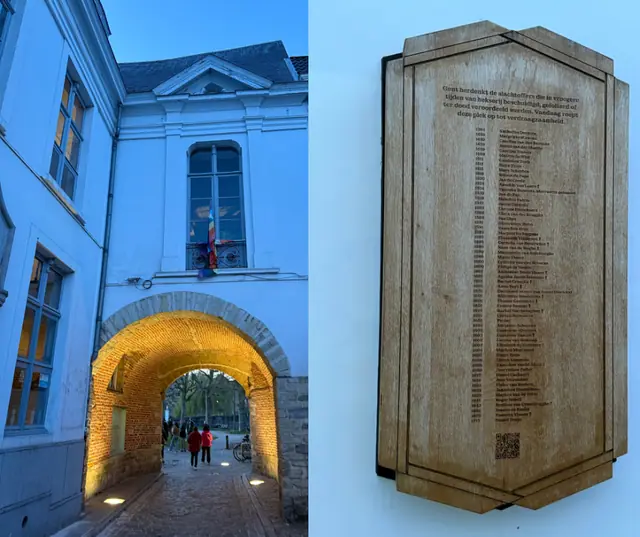
Look at this wooden plaque beside the Dark Gate. It’s a memorial and probably one of the quietest stops on the tour. It remembers those who were persecuted for witchcraft in Ghent. Between 1364 and 1713, the authorities accused at least forty-four women and fifteen men.
-
21. The Noose Bearers
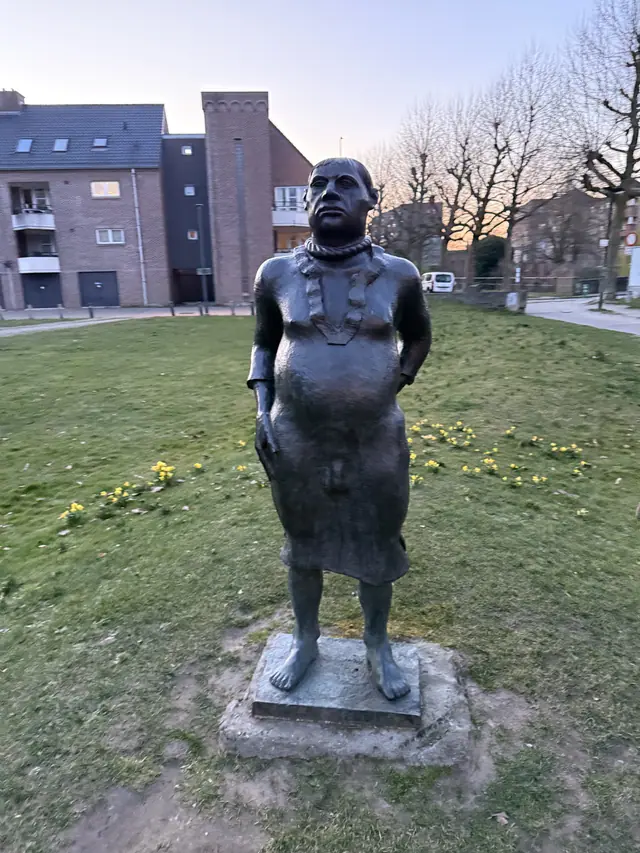
This is the famous Mr Gantes, as we like to call him on this tour. This statue represents one of the rebels of Ghent whom Charles V forced to march in 1540. About fifty men walked barefoot with nooses around their necks.
-
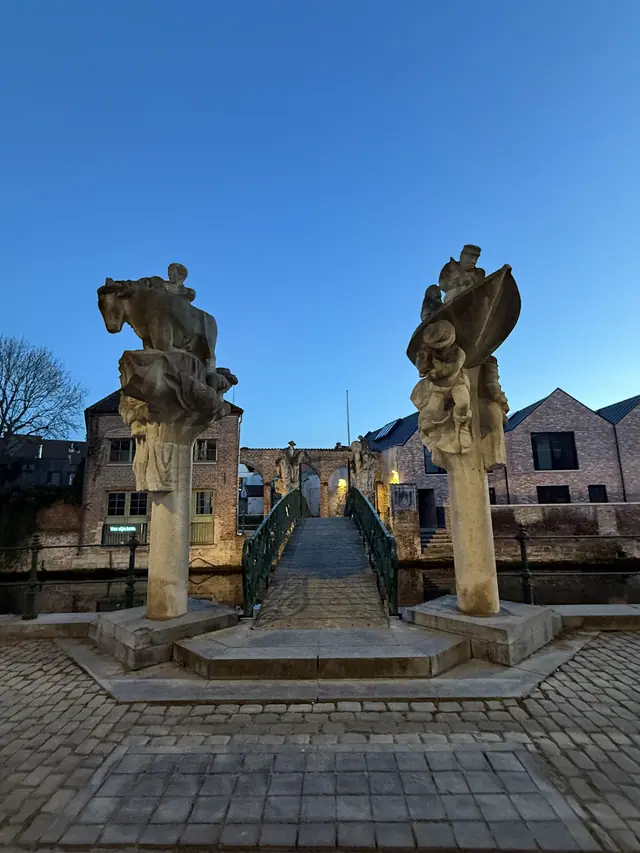
22. The Bridge of Delights
As you know, Charles V spent the first 16 years of his life in this city. Later, he returned several times — as Emperor of the Holy Roman Empire. And while he was a man of immense power, between wars and politics, he also had his gentler moments.
-
23. The Beer Corner
In this little corner of Ghent, where students now live, monks once brewed beer — just as much a part of their daily life as spirituality and survival.
-
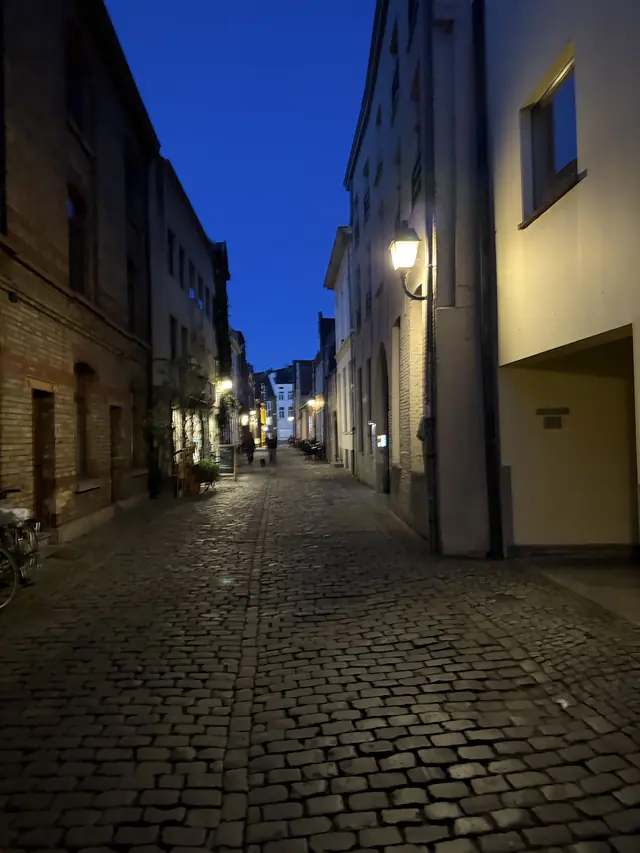
24. The Patershol Neighbourhood
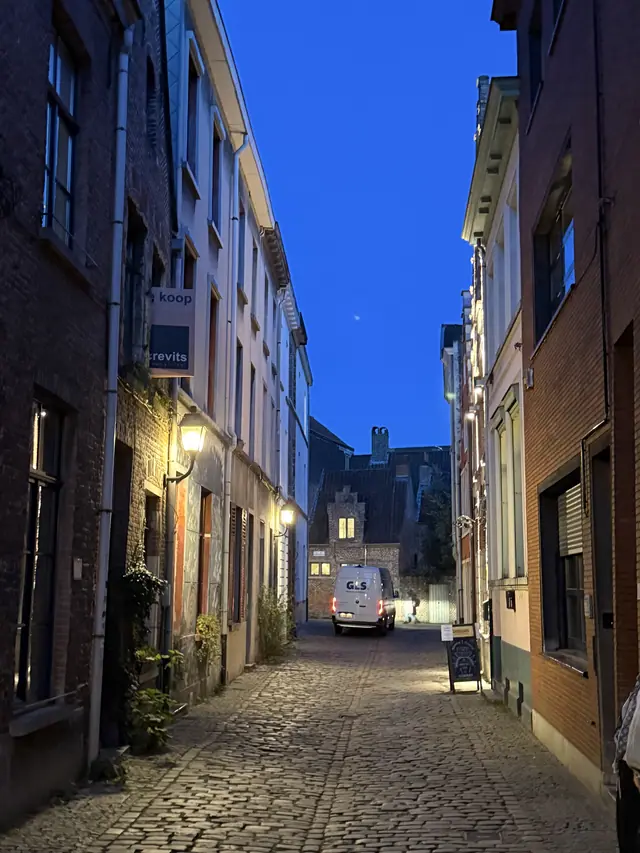
In Dutch, the name of this neighbourhood literally means “the fathers’ hollow”, a reference to the monks who lived in this area during the Middle Ages.
-
25. Recommendations
If you’re in the mood to add a good local meal to your walk, this is the perfect moment. This area is full of excellent spots where you can try proper Belgian food — without falling into the overly touristy places. That place on the corner with the red awnings is called Amadeus.
-
26. The Story of Lieven Bauwens
This corner of the Patershol district, during the Industrial Revolution, was full of small textile factories and family-run workshops.
-
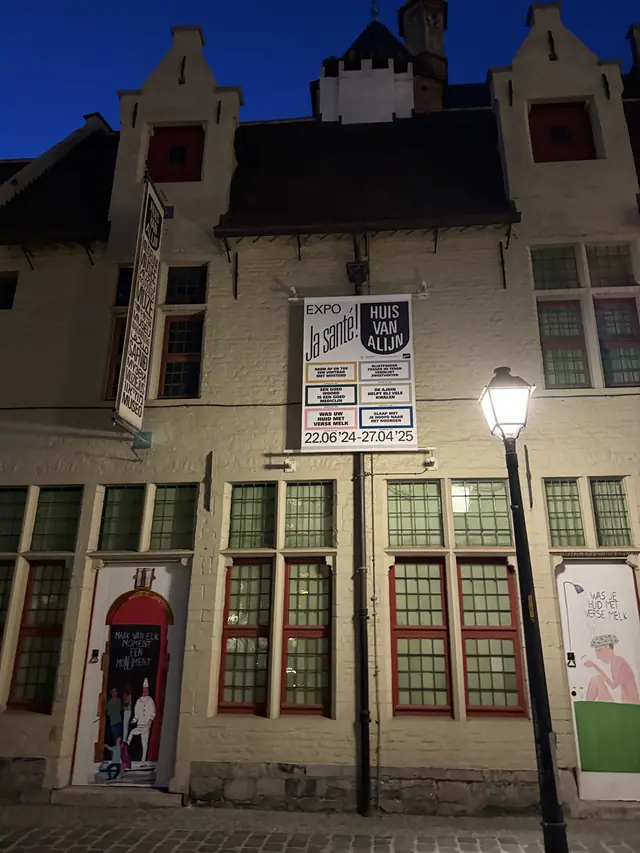
27. The Old Hospital
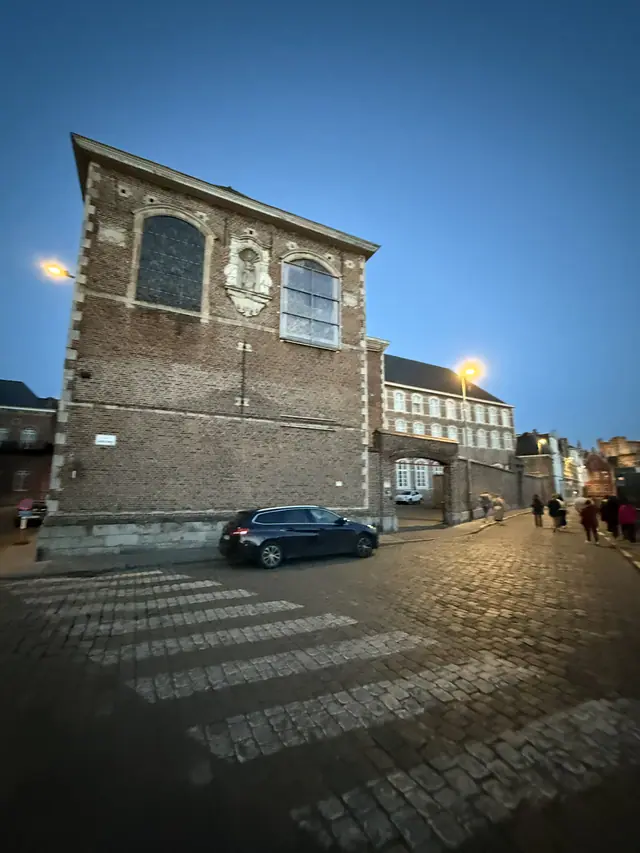
This building, which looks so peaceful today, has quite a heavy history. It used to be the Old Hospital of St John, founded in the Middle Ages to care for the poor, pilgrims and the sick — those who couldn’t afford a doctor, let alone a place to stay.
-
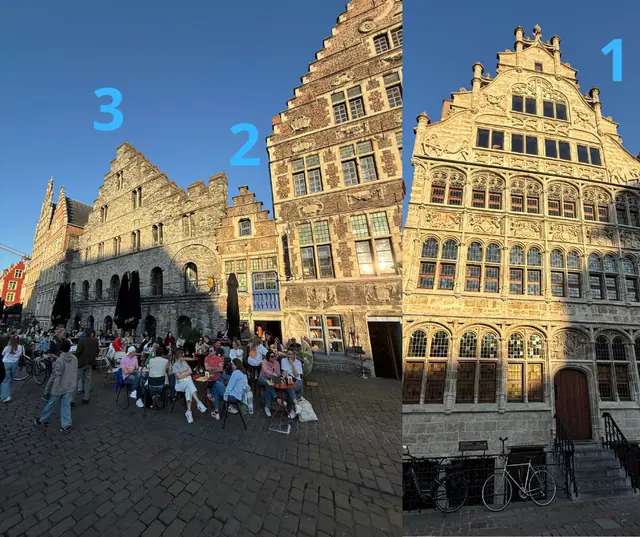
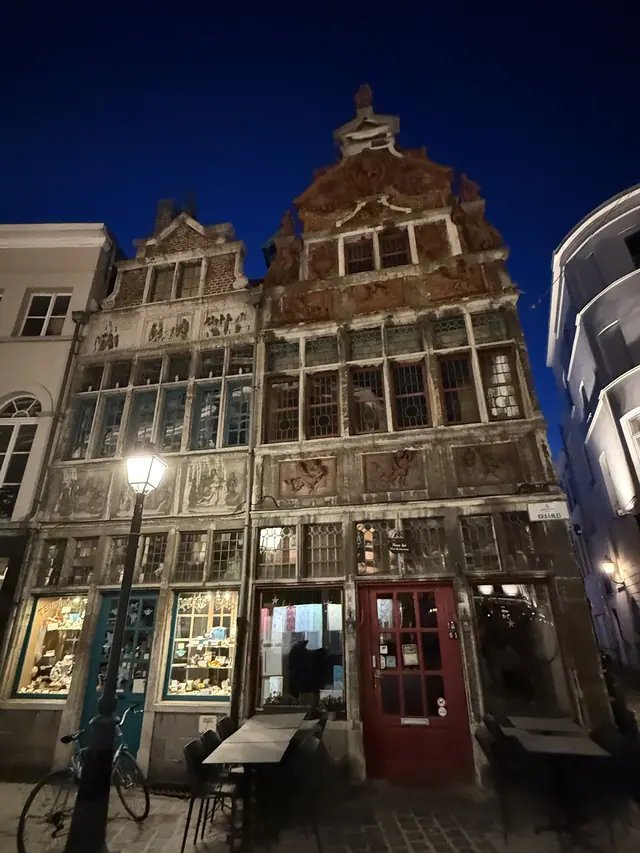
28. The Two Façades
I want to tell you the story behind these two incredible façades. During the 16th and 17th centuries, Ghent — like many Flemish cities — developed a strong tradition of Christian charity.
-
29. Friday Market Square
We finish our tour here, in one of Ghent’s oldest and largest squares. Since the 12th century, a huge market was held here every Friday, where people sold textiles, food, tools, and livestock.

Walk them with the app
The 2 tours visit these places in order, with the full audio and the map. Free, with no sign-up.