
Stop 4 of 12
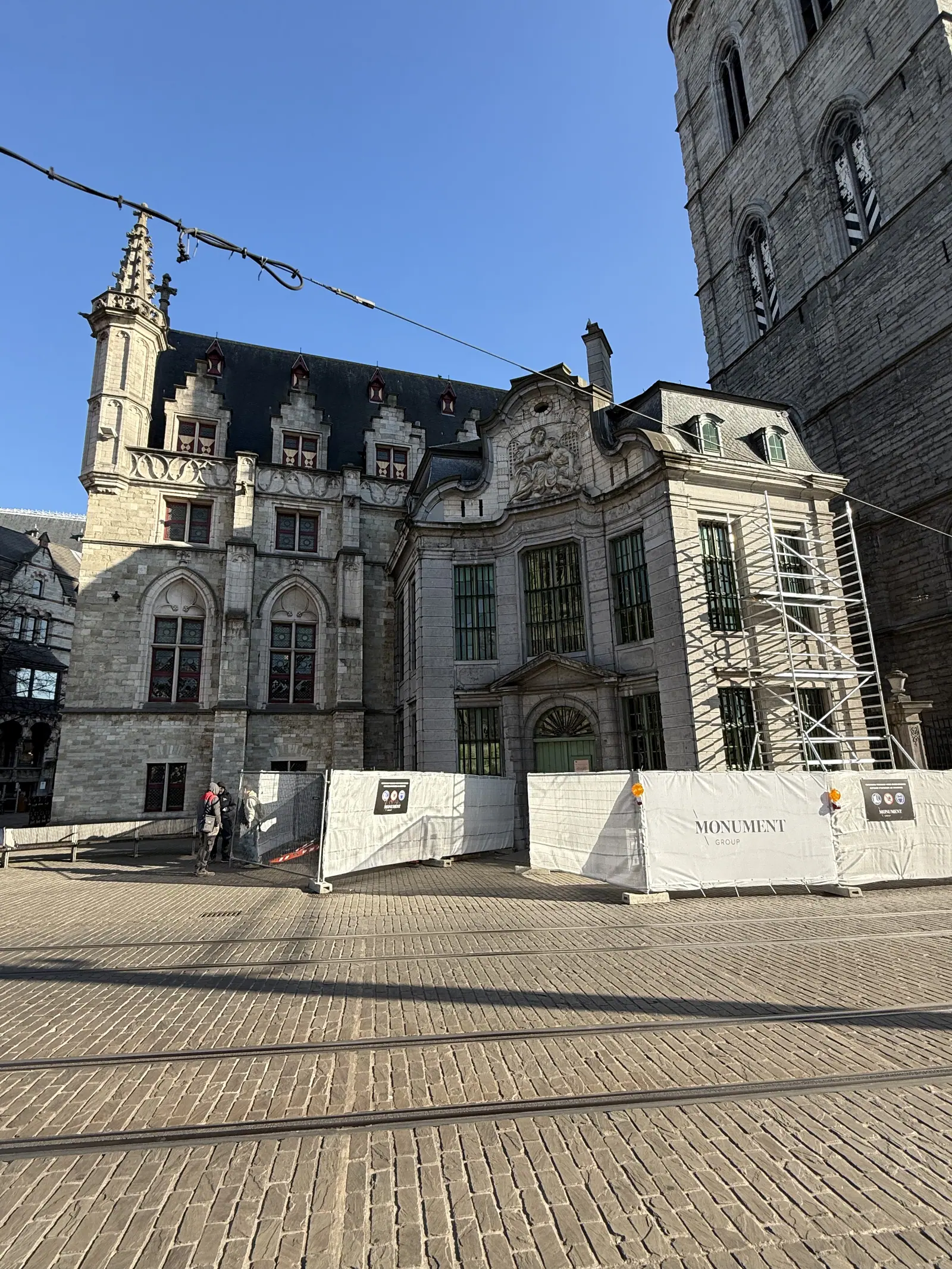
An unusual sculpture
Ghent · Produced by World Tour
The story
A little earlier, I mentioned that boats bringing grain to Ghent had to leave part of their cargo here. Grains such as wheat and rye were used to make bread, while barley was used to brew beer. That privilege helped keep the city supplied and made its port a centre of the grain trade.
Ghent was also a major textile centre. In the Middle Ages, its craftspeople used English wool to make fine cloth that was sold across Europe. When you hear the word ‘cloth’ here, picture a piece of woven wool. Right here in the Cloth Hall, the quality of the cloth was checked and prices were negotiated.
Now look at the small building that links the Cloth Hall to the Belfry. It is called the Mammelokker. It was built in 1741 as the gaoler’s home and the entrance to the city prison, which occupied part of the Cloth Hall. The prison remained in use until 1902. Look just above the door.
The story continues in the app
This stop lasts 2 min. In the app you can hear all of it, and the other 11 stops on the route, free and in 15 languages.
Get the app