
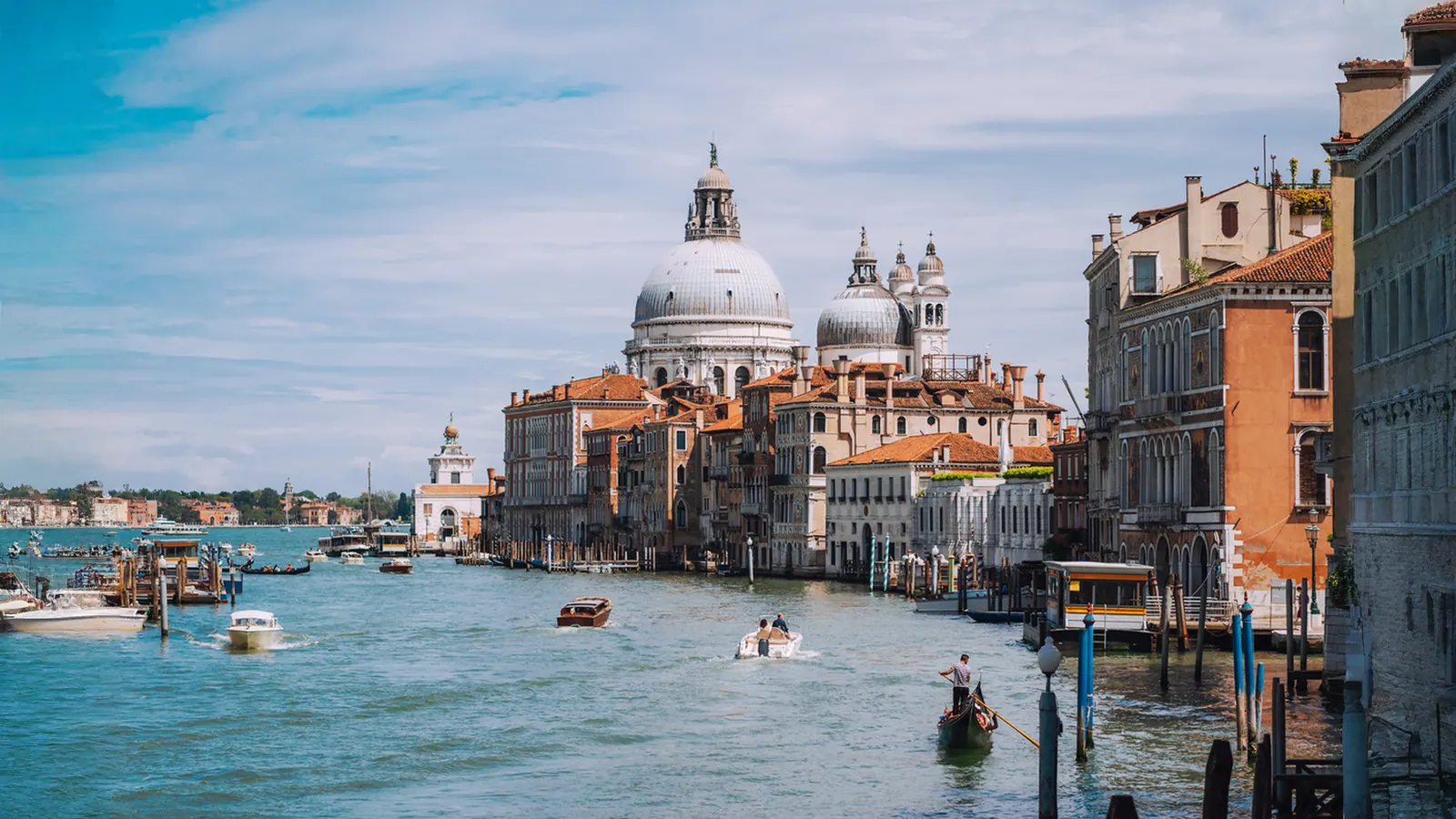
What to see in Venice on foot
59 places with their stories, the map and free audio in 15 languages.
Updated November 2026 · 13 min read · Produced by World Tour
Venice in a nutshell
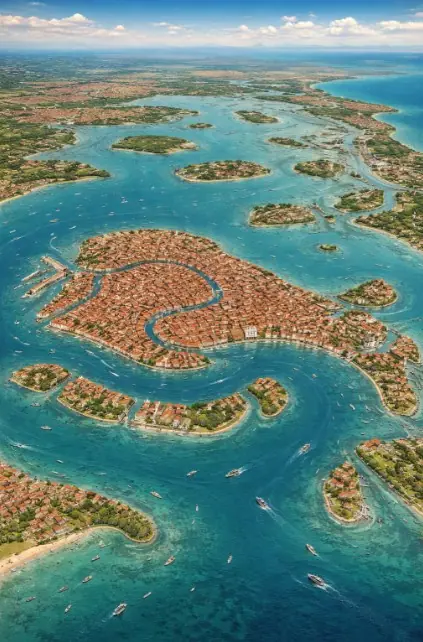
Venice is not just a city, it is a miracle on water, a republic that for centuries defied storms, armies and the passage of time. Its history begins in a context of chaos. After the barbarian invasions that marked the collapse of the Western Roman Empire in the 5th century, many people sought refuge in the marshy islands of the Venetian lagoon, fleeing from the Huns, Goths and Lombards.
The places on the map
Each number is the place’s number in the list.
Venice walking tour
-
1. Buildings in Venice
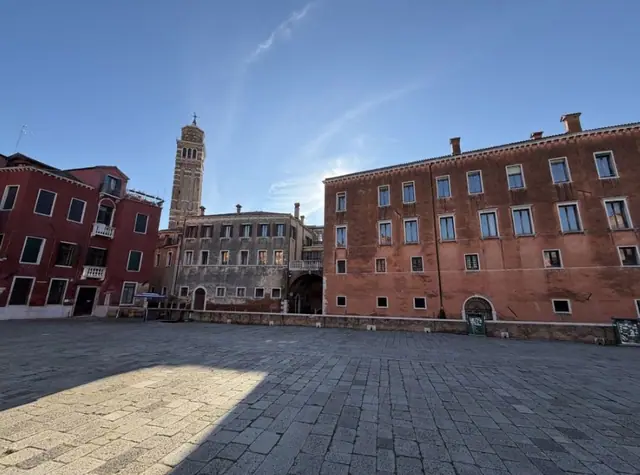
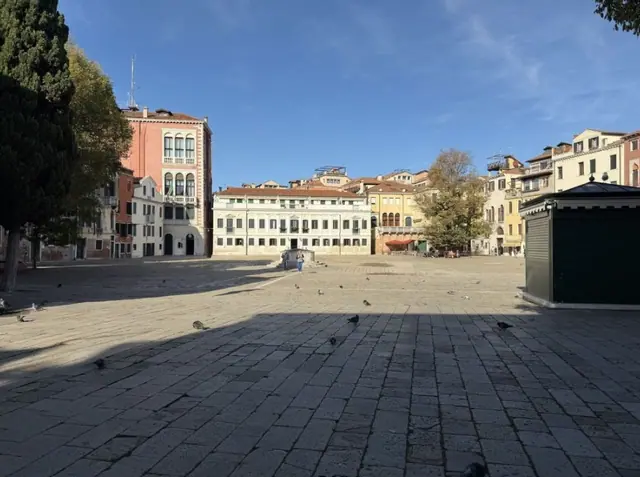
Now, in this square, I want you to look at that leaning tower you can see. It's the bell tower of Santo Stefano. You might not notice it much, but it does lean.
-
2. Grand Canal
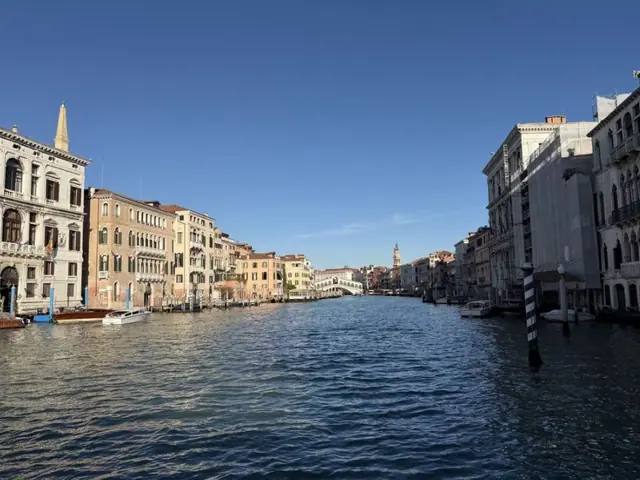
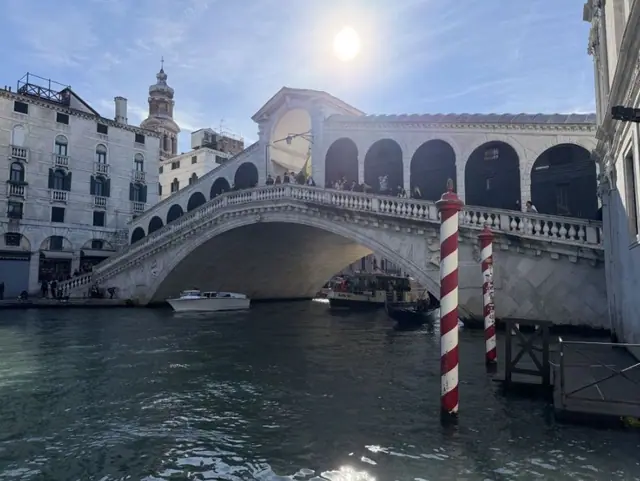
Well, from this point, we can see the Rialto Bridge, the most famous bridge in Venice, and also the oldest of the four that cross the Grand Canal.
-
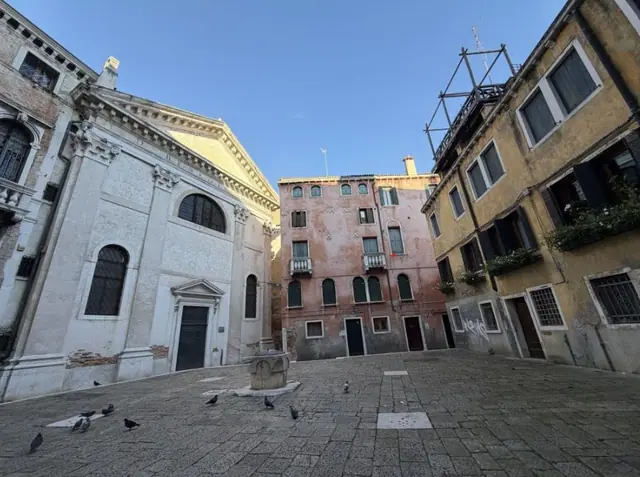
3. The Wells
Right, I just mentioned a word that is key here: the pavement, or sidewalk. In many parts of the Grand Canal, there isn't one; the buildings end right at the water's edge.
-
4. The Phoenix Theatre
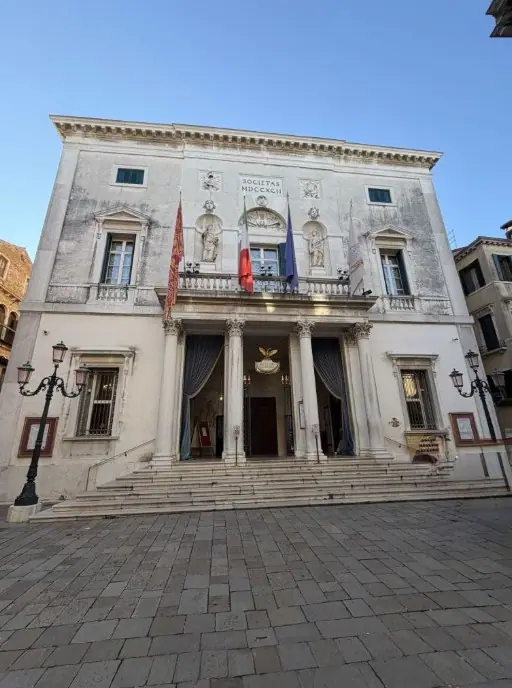
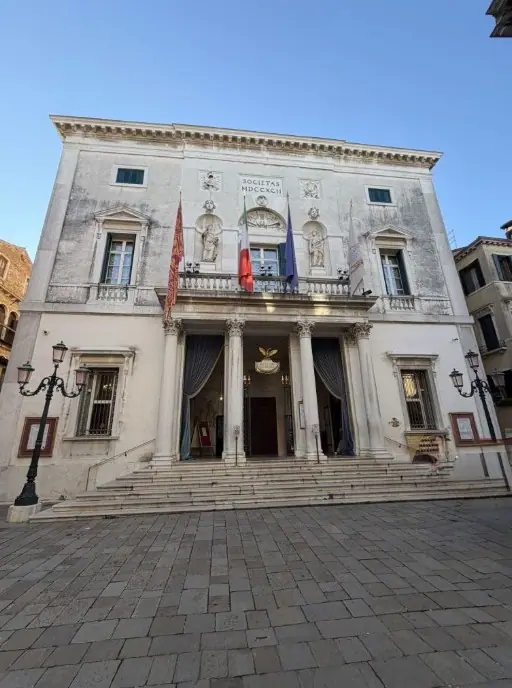
Here we are in front of the great The Phoenix Theatre, one of the most important theatres in the city. Its history begins with a very Venetian drama of ego, prestige and a legal dispute.
-
5. San Moisè Square
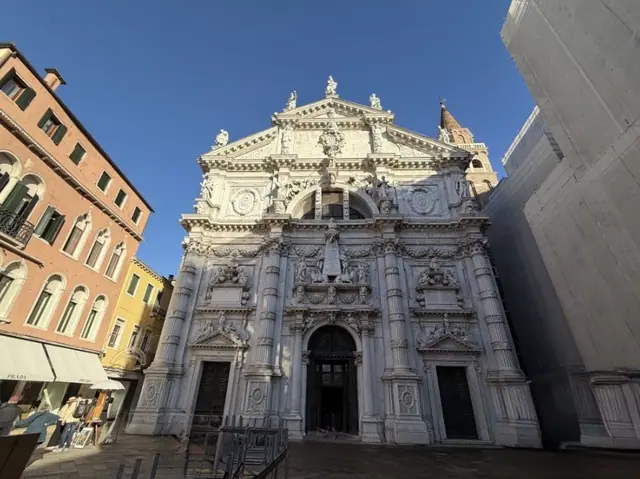
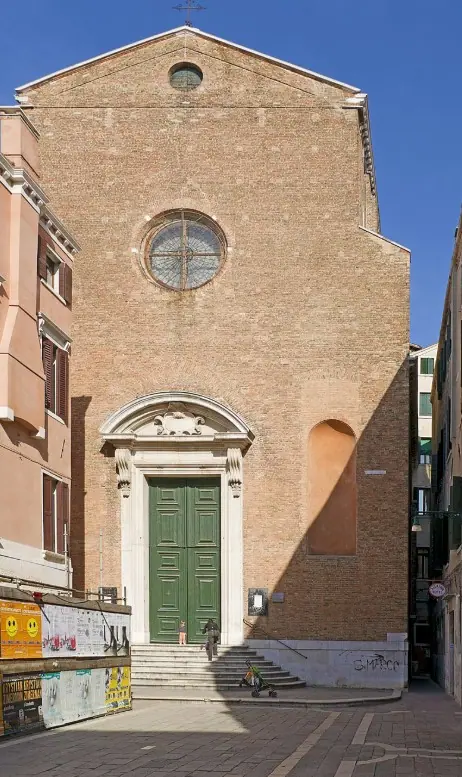
We are in San Moisè Square, one of those little Venetian squares that seem to be just a passing place, and here there is an incredible church: San Moisés.
-
6. St. Mark’s Basin
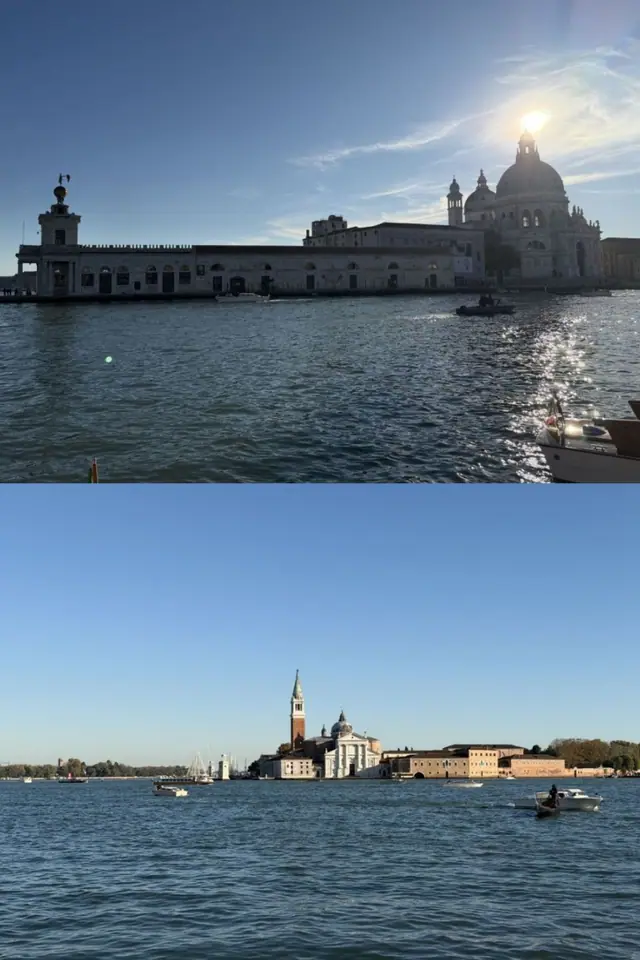
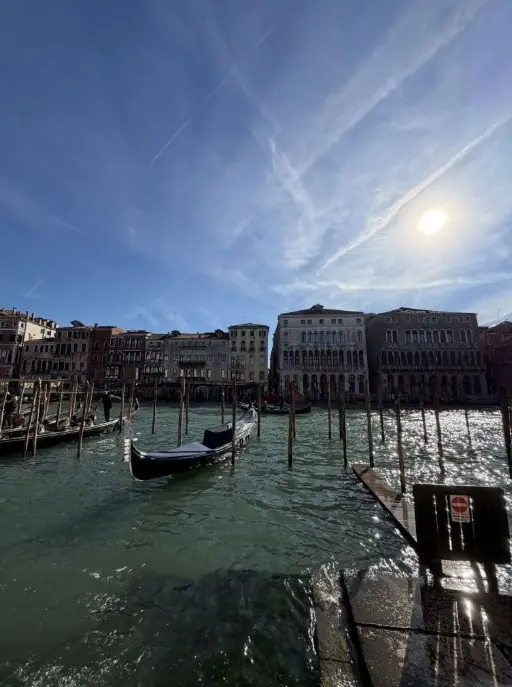
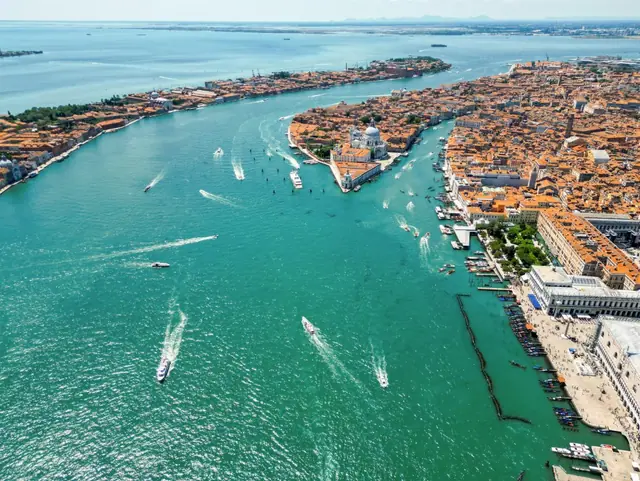
These places overlooking the water are very photogenic. What we have before us is the San Marcos Basin, like a bay within the city, and this is where the Grand Canal and the Giudecca Canal meet. That is why the water opens up like this, as if the city were taking a deep breath.
-
7. San Geminiano Church
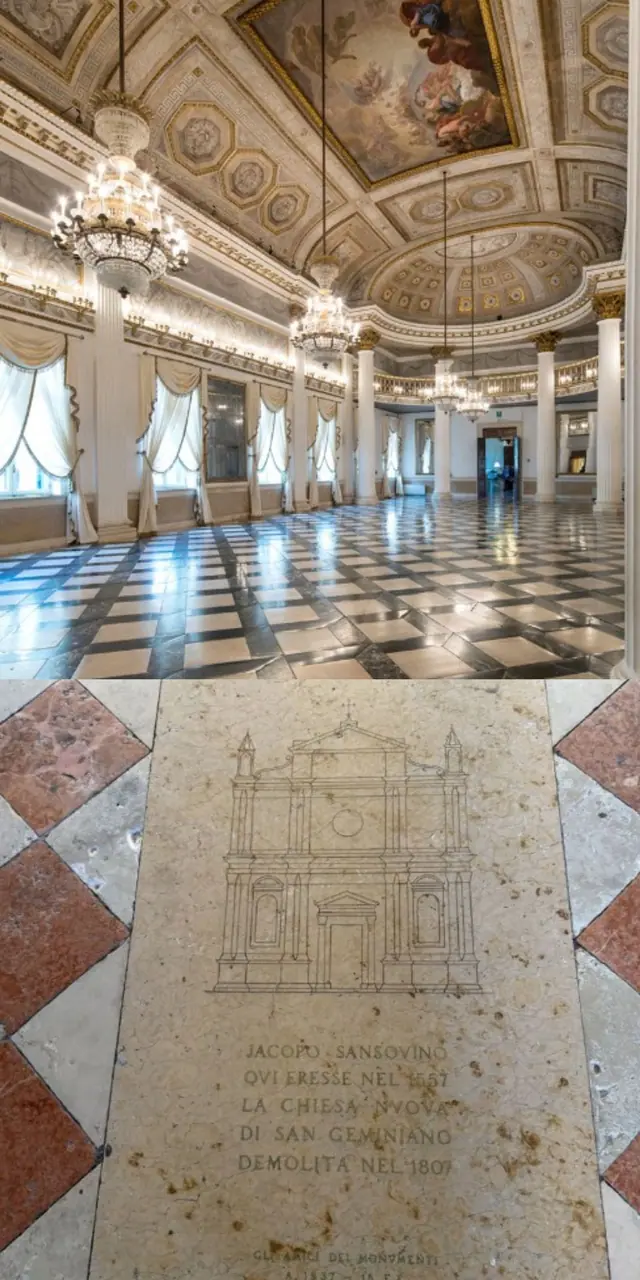
We're very sorry that Ryan has fallen ill, but don't worry: I'll take over from here and we'll continue the tour together. Before talking about the great square of San Marco, take a look at something we can see in this corner.
-
8. St. Mark's Basilica
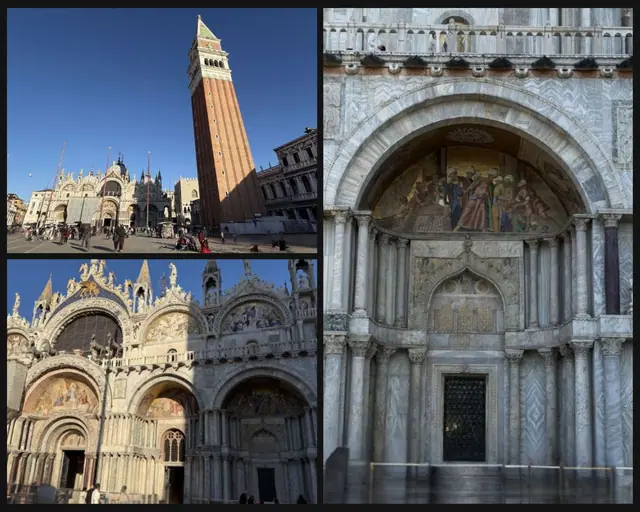
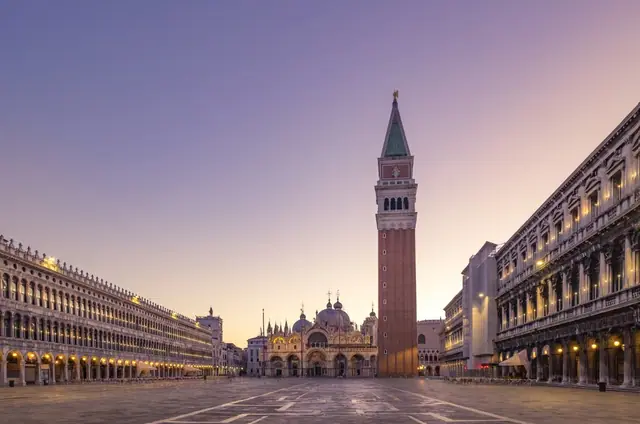
Well, now we are in St. Mark's Square, a key location in Venice because, without exaggeration, it is the heart of the city.
-
9. The Clock Tower
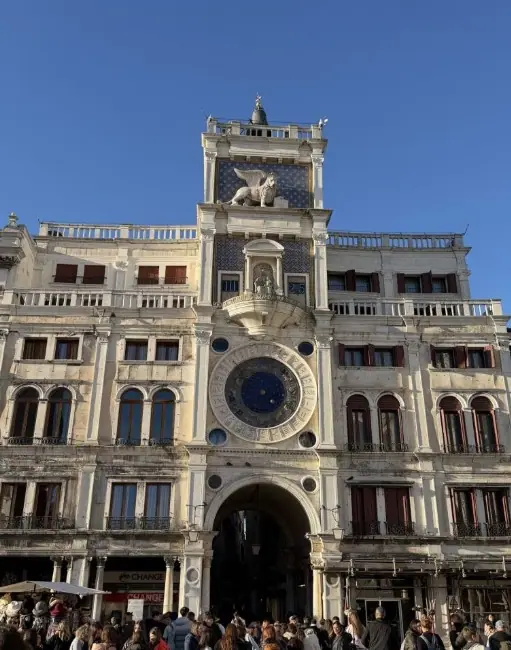
We are now standing in front of the Clock Tower of San Marcos, which serves as the gateway to Merceria, the shopping street that leads into the city centre.
-
10. The Doge's Palace
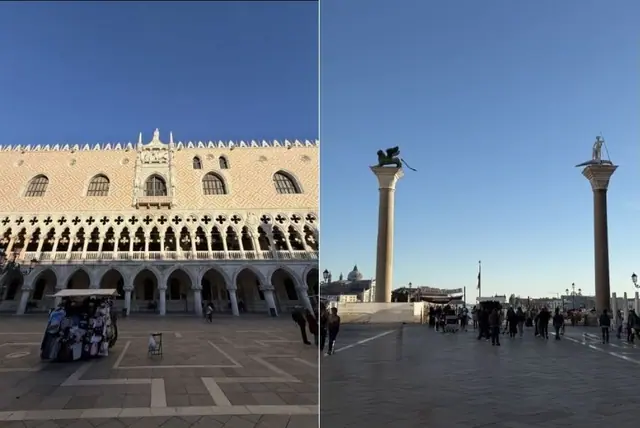
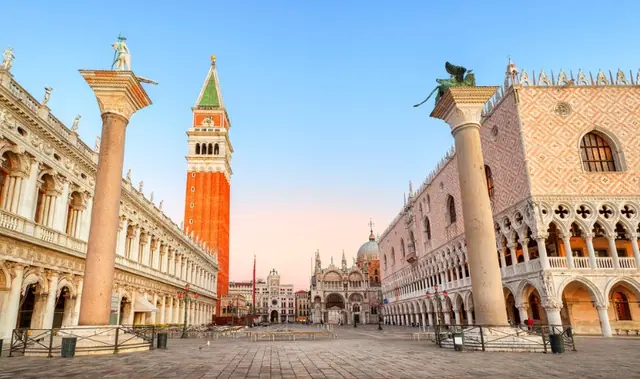
Now, I'm going to tell you about this building, the seat of power, and also the prison. Because in Venice, politics and justice went hand in hand, literally, wall to wall. What you see before you is the Doge's Palace.
-
11. The Bridge of Sighs
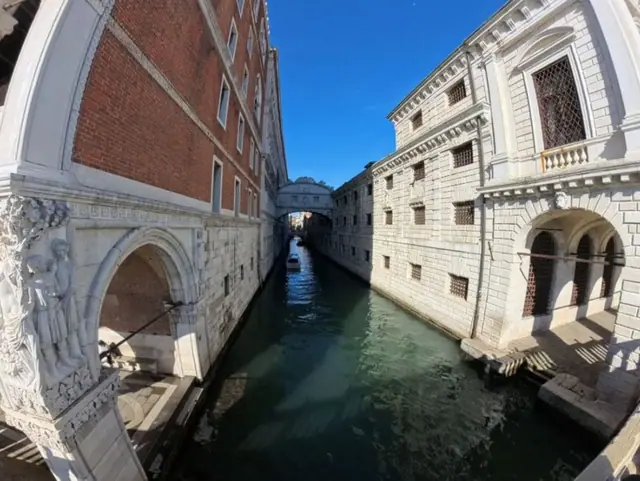
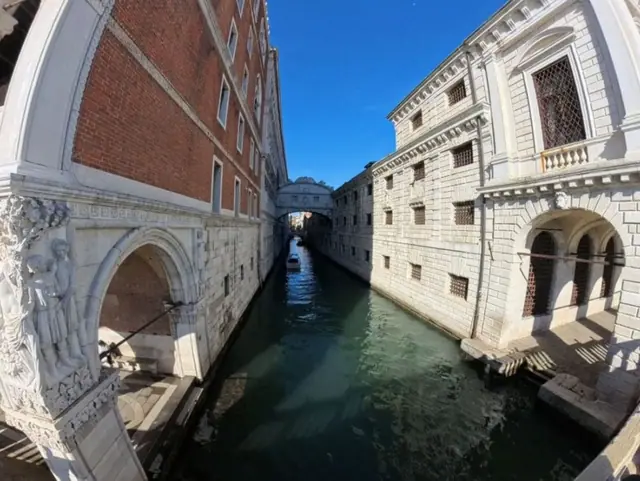
Well, we've reached the end. If you look to your right, the bridge you see there is called the Straw Bridge because, historically, boats loaded with straw would dock there to unload it in the area. It was used for horses, for stuffing sacks and mattresses, and for everyday uses.
Authentic Venice Walking Tour (Cannaregio and Castello)
-
12. Marco Polo
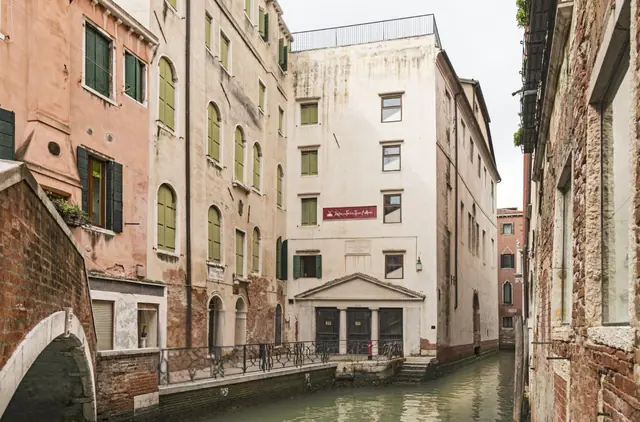
This corner where we are now is part of the Cannaregio district: it sounds elegant, but in reality it is quite ordinary.
-
13. Venice Lagoon
You can listen to this stop as we walk to the next one, which will be number 4. So enjoy the walk, and let's continue.
-
14. Aqueducts of Venice
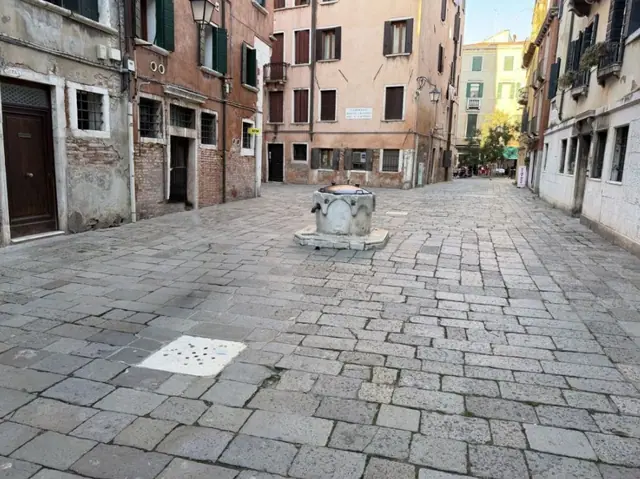
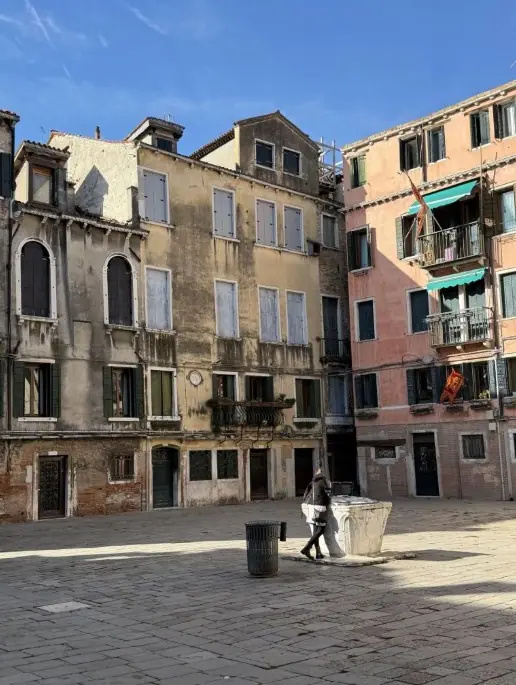
Well, now we are standing next to this water well, although it is not a conventional well. In Venice, digging and drawing water as you would on dry land is not feasible, because here the water in the canals is brackish, a mixture of sea and lagoon water, and is not drinkable.
-
15. Church of Santa Maria dei Miracoli
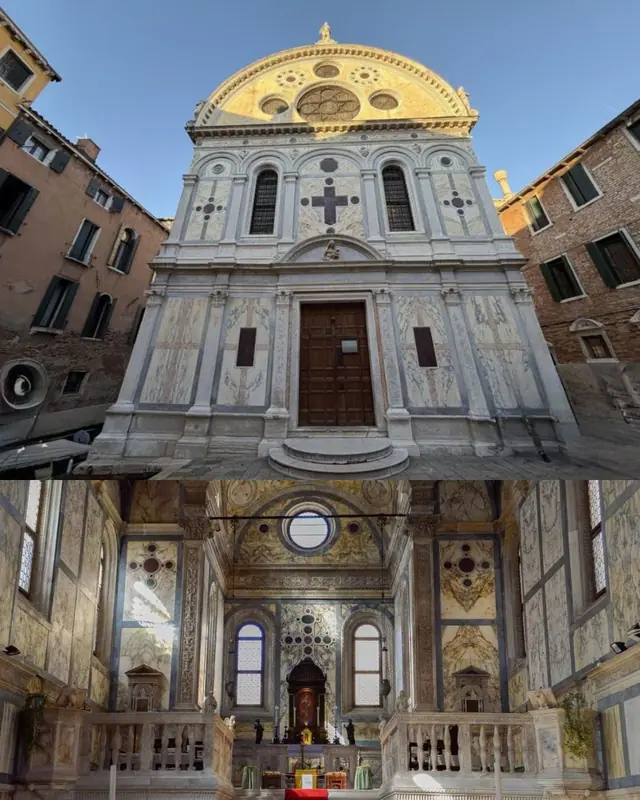
Take a look at this beautiful church, called Santa Maria dei Miracoli, although many people in Venice simply refer to it as the marble church, which makes sense, as it is covered inside and out with coloured marble.
-
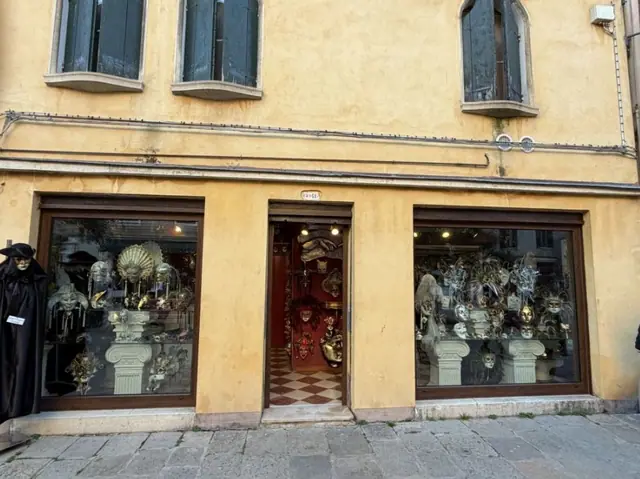
16. The Masks
Before we dive into Carnival, take a look at this detail on the façades: those iron bars that cross the walls. They are not decoration: they are braces that help prevent the building from opening up or collapsing over time.
-
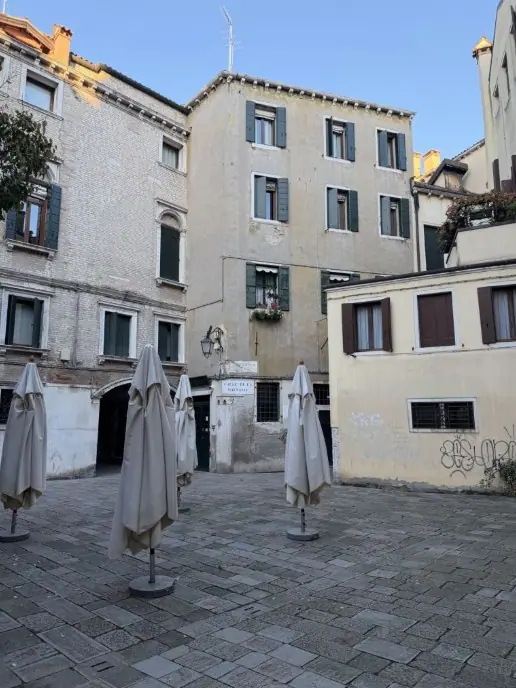
17. Addresses in Venice
At this stop, we're going to talk about something everyone needs to know to find their way around: addresses. Here in Venice, they can sometimes be tricky, even for those who swear they have a good sense of direction.
-
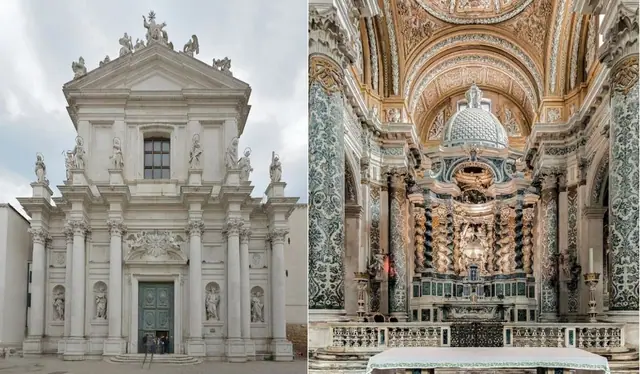
18. The Jesuit Church
Take a look at this church: its official name is Santa Maria Assunta, after the Assumption of the Virgin, but almost no one in Venice calls it that. Here it is known as the Jesuit Church, because it belongs to the Jesuit order.
-
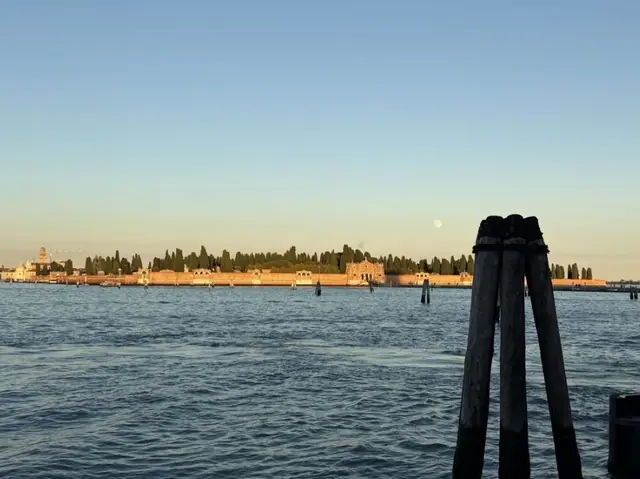
19. The cemetery island
We are now at a very interesting point. Look out towards the water: that island you can see on the other side is Saint Michael, Venice's cemetery.
-
20. Venetian tunnels
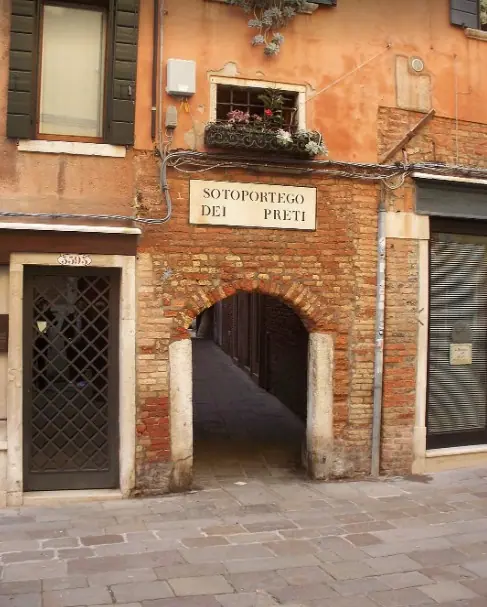
During this mini-stop, I'm going to tell you about a hidden treasure: Venice wasn't designed with a modern plan; it was built up century after century, which is why there are alleys that cut off, strange turns, and tunnels that look like traps.
-
21. Great School of Mercy
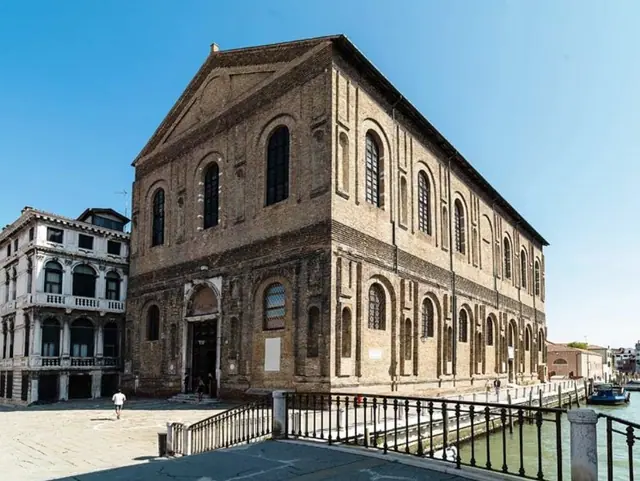
This enormous building in front of you is the Great School of Mercy, and the first thing that strikes you is that it seems unfinished. The façade is only half finished, and the empty niches give you the feeling that something is missing here.
-
23. Abbey Square
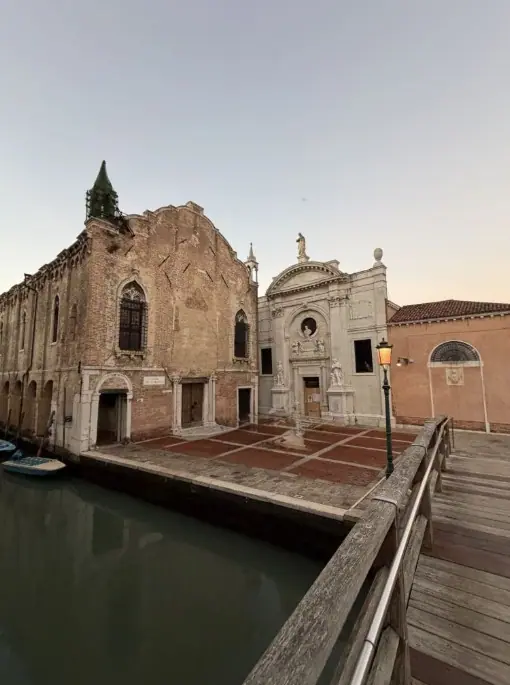
Well, here we are at the end of our tour, in this quiet corner of the Campo of the Abbey.
Walking tour: The other Venice (Dorsoduro and Zattere)
-
24. Santa Inés Square
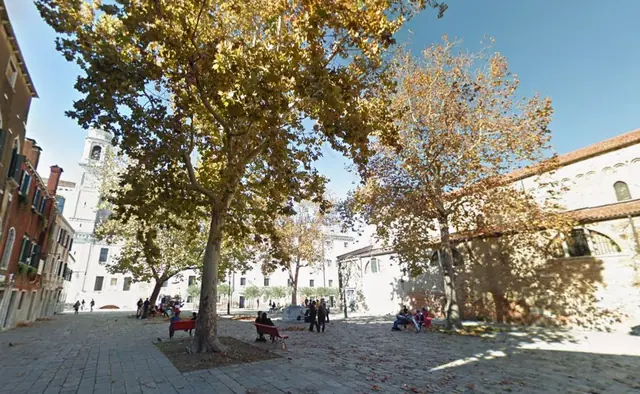
Today, I'm going to take you on a tour of the other Venice, in the Dorsoduro district and the Zattere area, a less crowded area with more neighbourhood life and views that make you want to slow down.
-
25. The Grand Canal
If you look closely, you'll see that there's another well in this square, although it's actually a cistern that collected rainwater and filtered it with sand, because underneath it's all salt water from the lagoon.
-
26. The unfinished palace
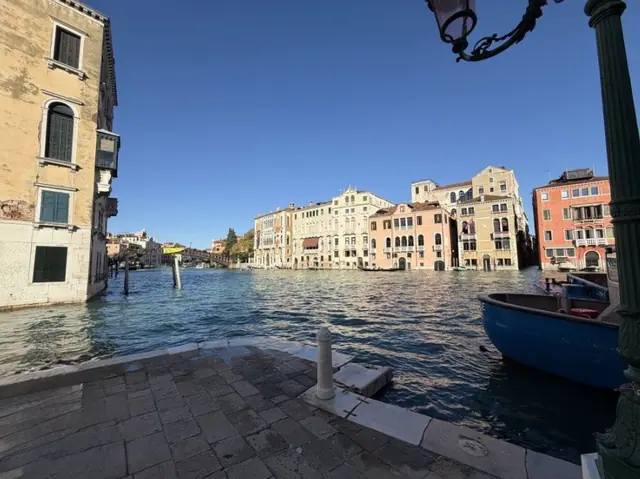
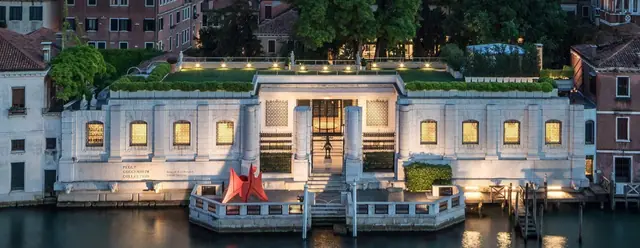
Just opposite, across this small canal, is the rear of the Peggy Guggenheim Collection museum, a key venue for modern and contemporary art, although from here it is difficult to appreciate how special it is, because the beauty of this building can only truly be appreciated from…
-
27. The cursed palace
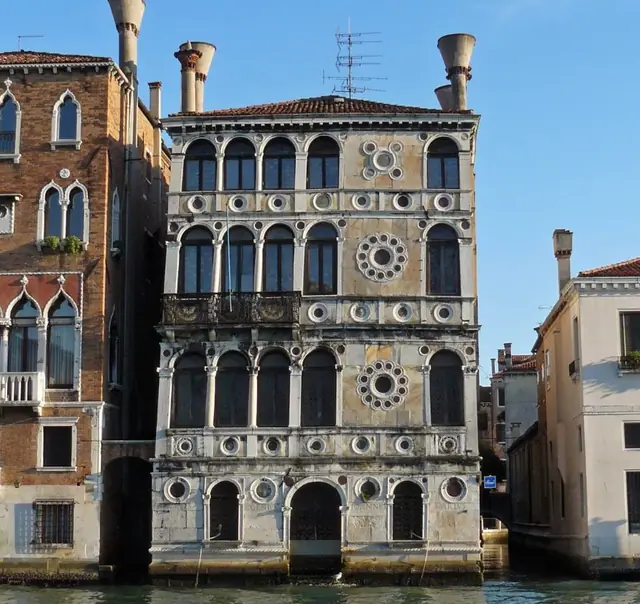
We are now at the rear of the Dario Palace, which can be seen in all its splendour from the Grand Canal. From here you can see the gardens of the building, famous for being beautiful on the outside and noisy on the inside.
-
28. Church of Saint Gregory
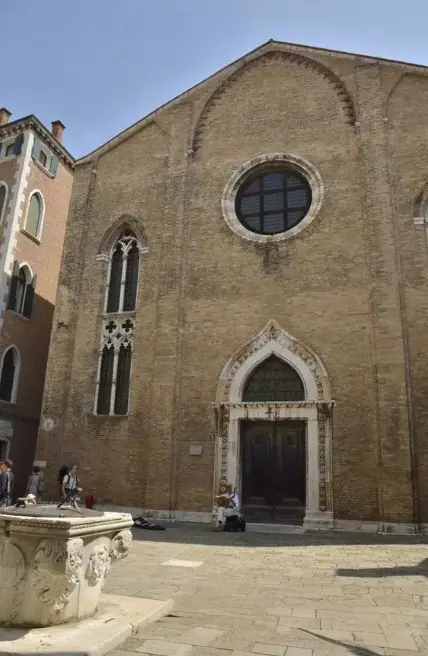
We are now in the Church of Saint Gregory, an ancient church in Dorsoduro. This place has a long history, dating back to medieval Venice, and the building we see today is mainly from the 15th century, in the Venetian Gothic style, completed around 1455.
-
29. Basilica della Salute
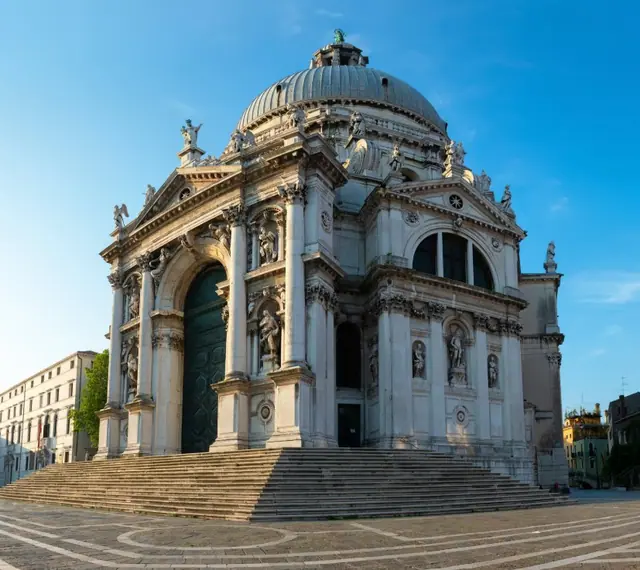
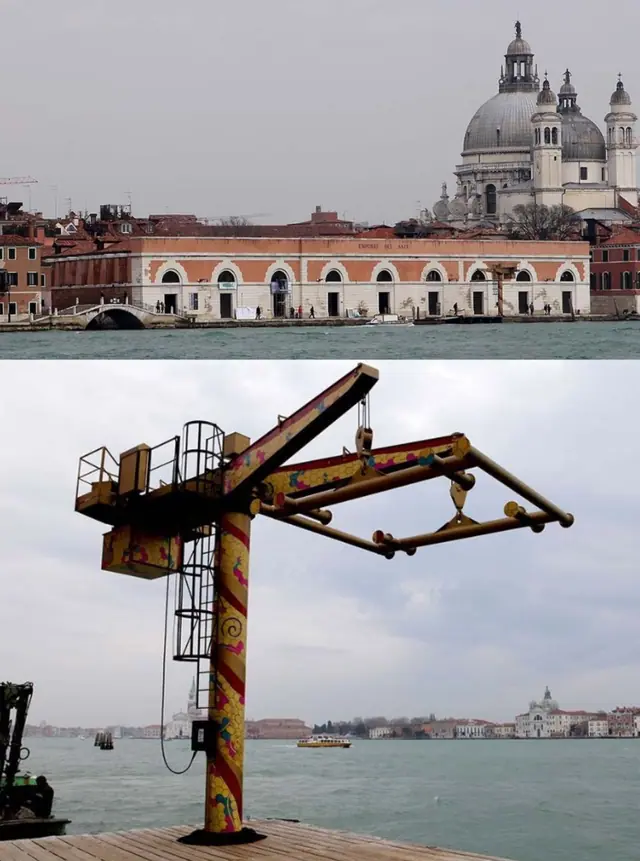
You're probably thinking how incredible this building is. And it is. The church in front of you is one of the most iconic and representative of Venice, due to its beauty and the way it stands majestically at the entrance to the Grand Canal.
-
30. Inside the Basilica
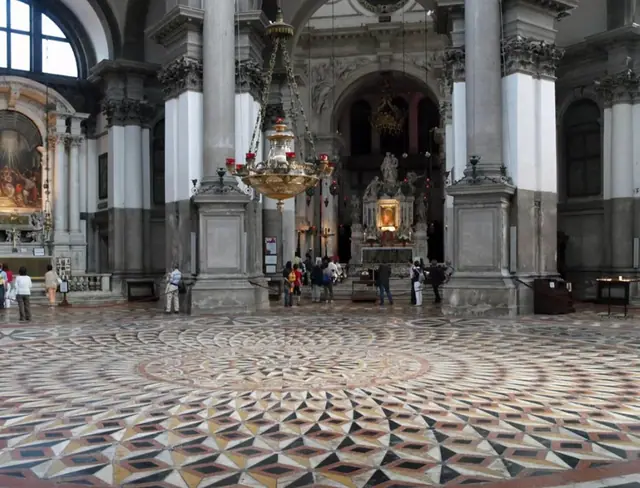
If you manage to get inside, the first thing you'll see isn't a painting, but the space itself. The Basilica has a very circular, octagonal floor plan, and a sense of height that makes you look up almost reflexively.
-
31. Customs Point
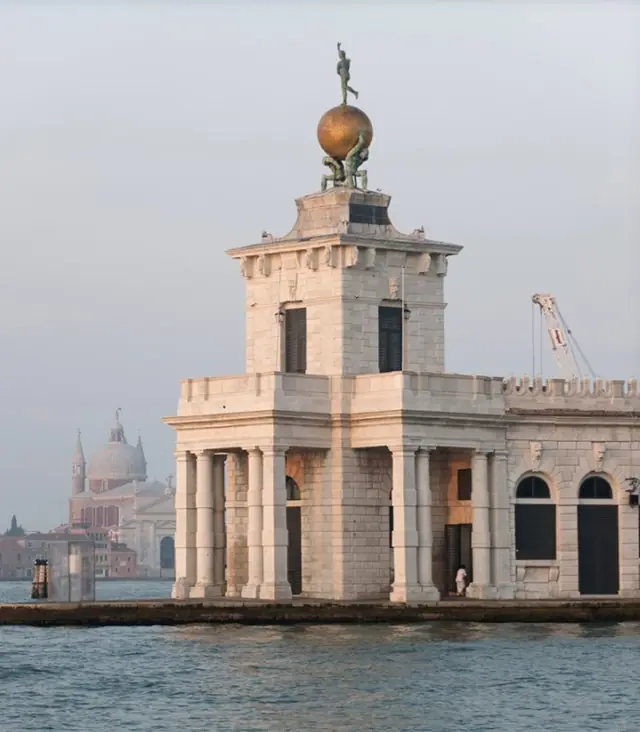
Now we come to the perfect spot to upload your photo to Instagram. This place is literally the bow of Venice: you are at the point where the Grand Canal opens onto the San Marco basin and intersects with the Giudecca Canal, so everything here has a monumental feel to it.
-
32. Filled Canals
From this point, we are looking at the Giudecca Canal in all its splendour. This canal is basically the waterway of this area: it is about 4 km long and separates central Venice from the island of Giudecca, flowing into the San Marco basin.
-
33. White Gold
We are right next to the bridge, Casa Balà, a discreet little bridge with a name that is a Venetian pun.
-
34. Venice Art Academy
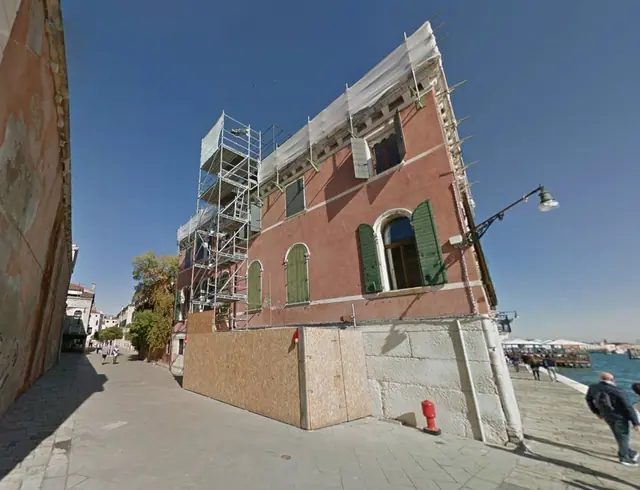
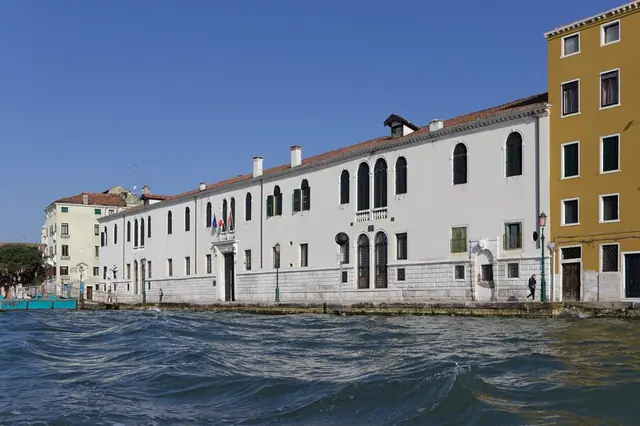
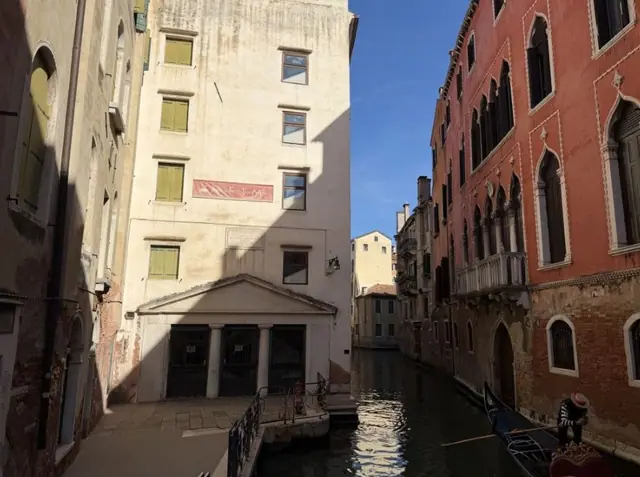
Well, take a look at this little street with water on one side and buildings on the other, like a promenade next to the canal. This one, in particular, is called Incurables, because of the long white building you see here: the Hospital of the Incurables.
-
35. The final view
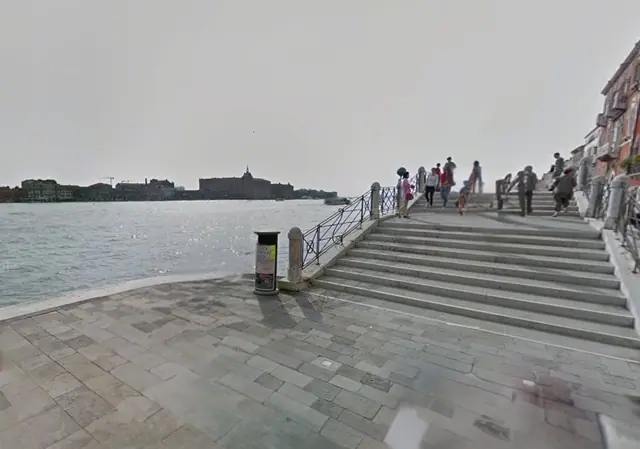
In front of you, you have this beautiful view of the canal. On the other side, on the island of Giudecca, if you look closely, you will see a huge brick building. That is the Molino Stucky, which is not a castle; it was a factory.
Walking tour of the Jewish Ghetto
-
36. Historical context
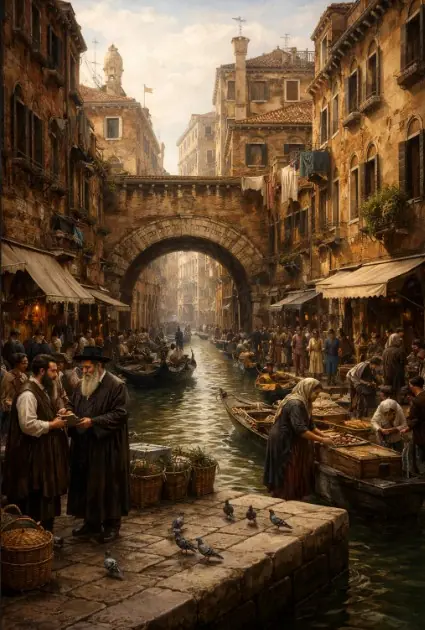
This is a very special tour: here, literally every step has a memory. We are going to discover incredible places, but also see a part of Venice's history that is not always told.
-
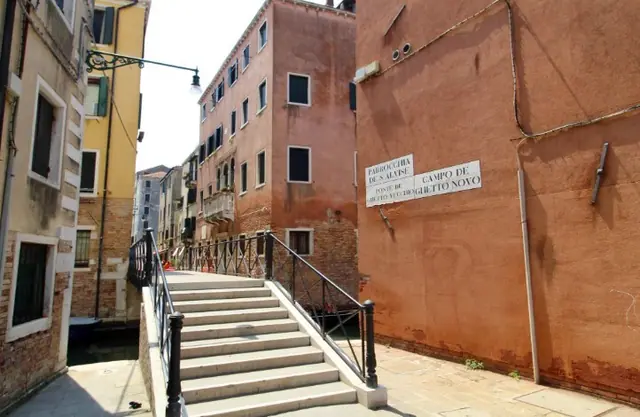
37. Bridge of Needles
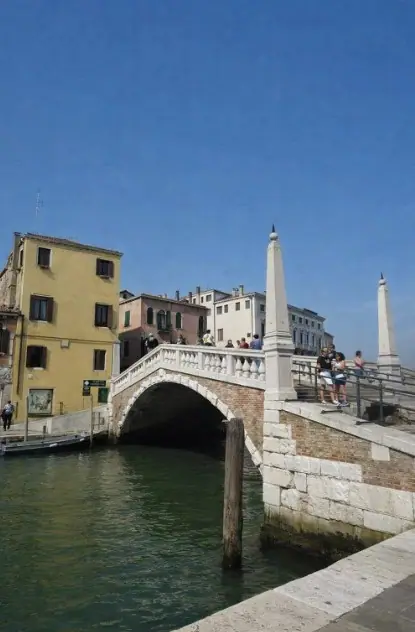
In front of us is a bridge known for its four points, like small obelisks, each topped with a needle. The funny thing is that these needles were added in 1823 during a reconstruction. But to the left of this bridge, we can see the houses of the Jewish ghetto.
-
38. The Ghetto Gate
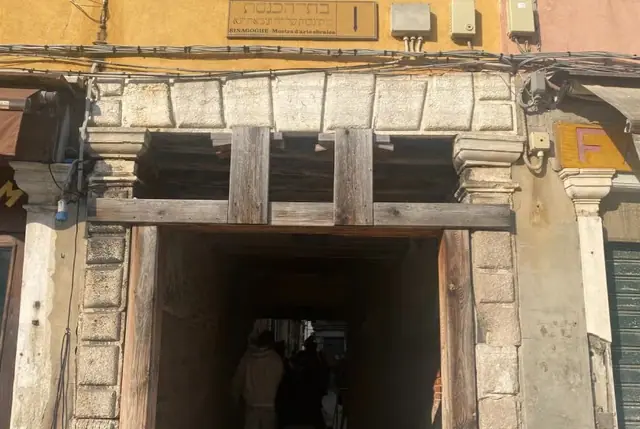
We are standing in front of the entrance to the ghetto. Before continuing, take a look at the details of the entrance: on either side of the passageway, on those stone and old wooden posts, you will see holes.
-
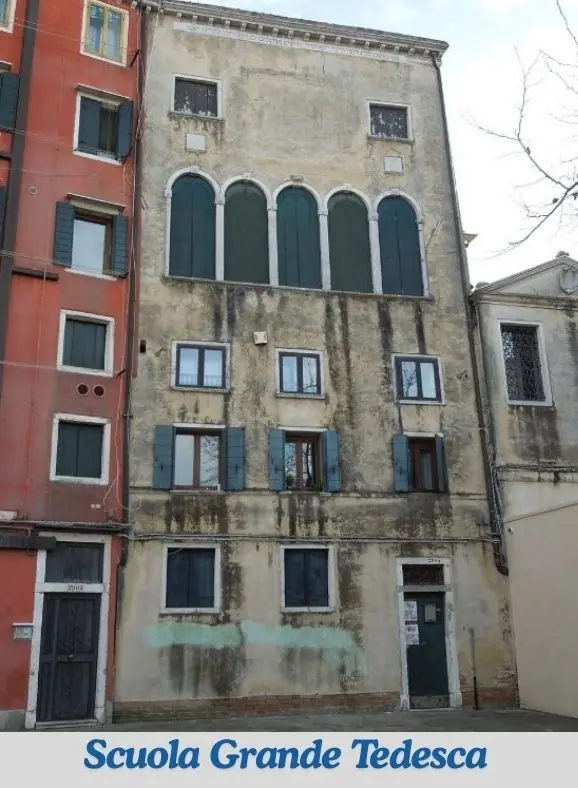
39. Small Square of the Schools
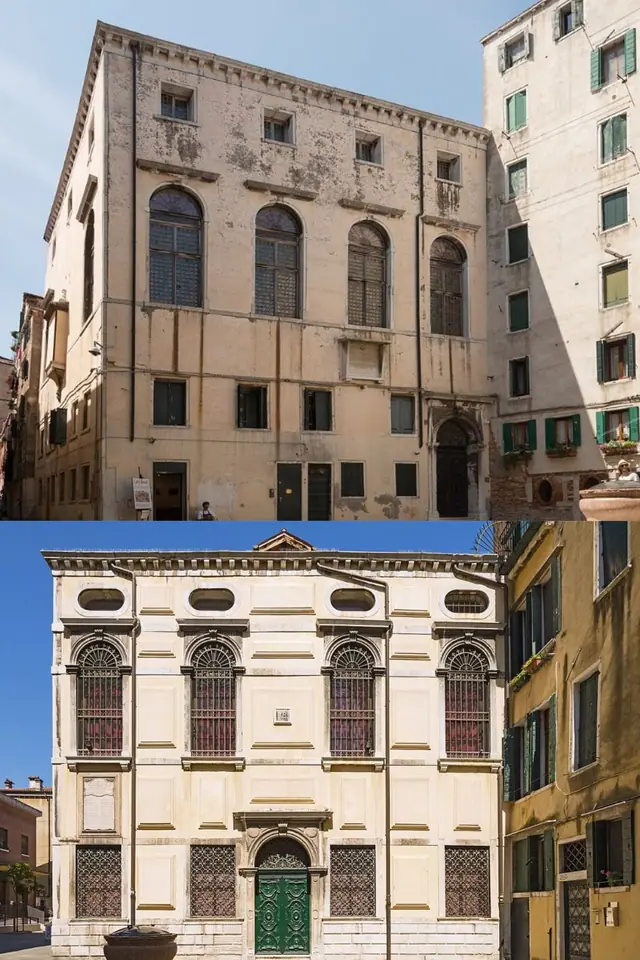
We are in a small but very important square. In the ghetto, synagogues were often called schools because they were not only places of worship but also places of study and community life. Now, look around this square.
-
40. Jewish Symbols
At this point, I would like to tell you about some very distinctive Jewish symbols, which, if you look closely, you will see on doors, entrances, and some shops.
-
41. Entrance to the New Ghetto
Well, we have now crossed the bridge of the old ghetto that spans the ghetto river and acts as a hinge between two worlds in the neighbourhood: between the old ghetto, where we were, and this ghetto, which is the new one.
-
42. New Ghetto Square
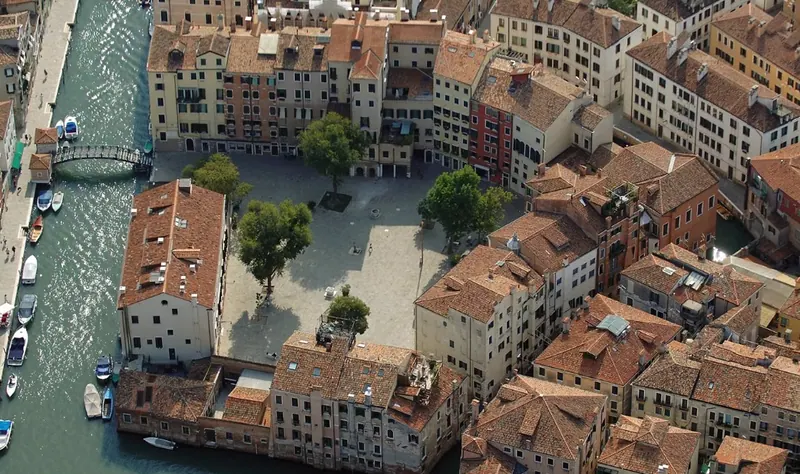
We are now in the heart of the new ghetto, the largest part and the first place where the Jewish community was confined. Venice is made up of narrow streets, bridges and passageways.
-
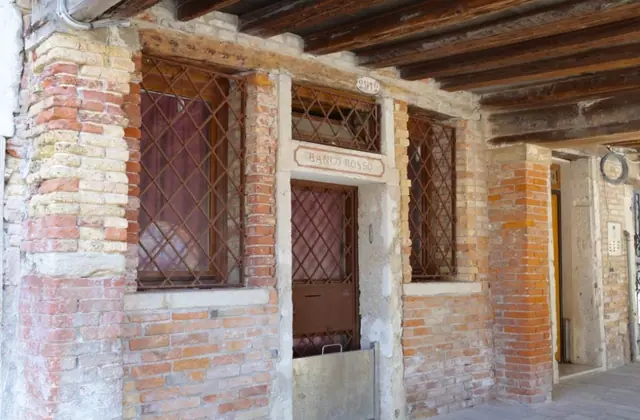
43. Ghetto Bank
Well, now we are facing some very important arches. A key part of the ghetto's economy operated here: loan and pawn banks. Several of these existed in this area, and over time, three famous ones remained, identified by colour: red, green and black banks.
-
44. The last train
Before continuing, Christians can enter Jewish synagogues, especially when it is a guided tour, but with one clear idea in mind: it is not just any museum; it is a living, sacred place. So you enter with respect and a few basic rules of etiquette.
-
45. Monument to the victims
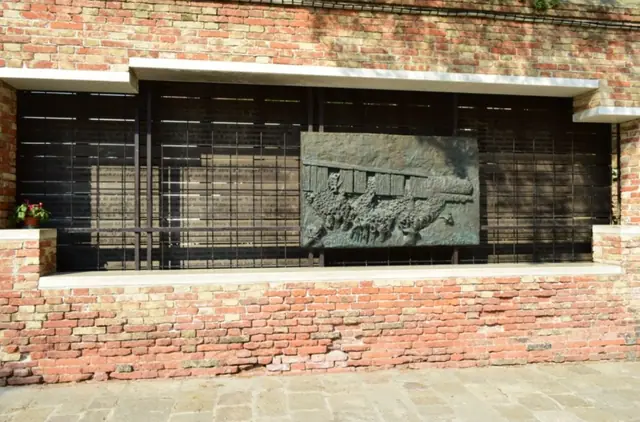
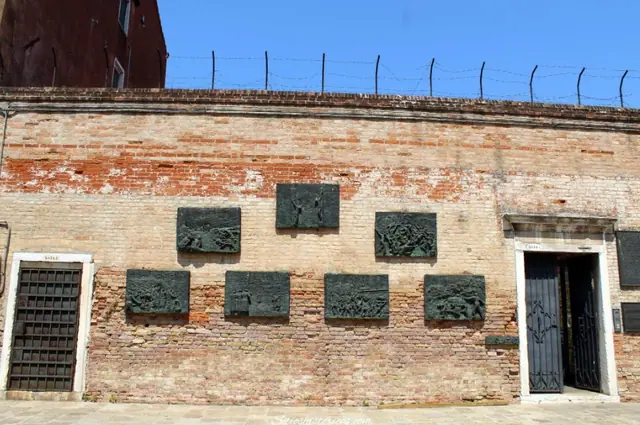
Now I want you to look at this brick wall. At first glance, it looks like just a wall, but it's actually like a hardcover album: here are the seven bronze panels from the Holocaust memorial in the ghetto.
-
46. Newest ghetto
Well, we've just crossed over to the east: the newest ghetto, the last piece that was added to the ghetto.
-
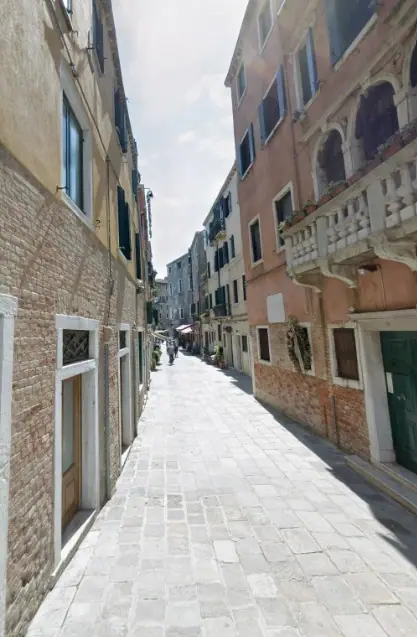
47. Gate Street
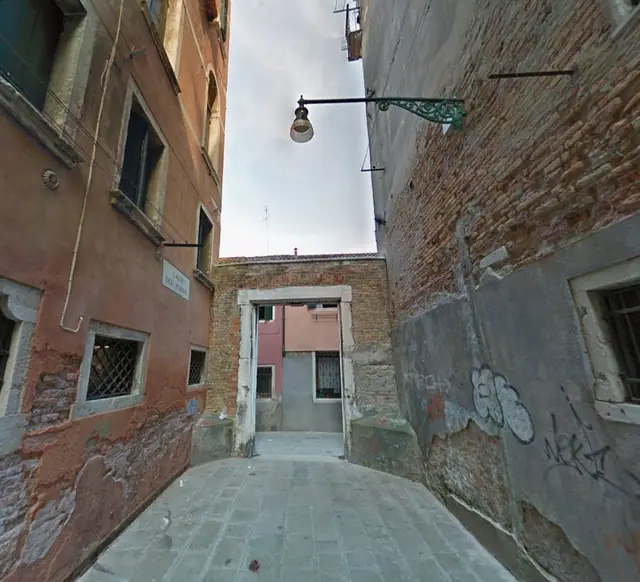
This is where the original gate to the ghetto was located, but it is an important spot because it marked the end of open Venice and the beginning of locked-up Venice: at night, the gates were closed, there was surveillance, and the ghetto became an island within an island.
Venice Mysteries & Legends Walking Tour
-
48. San Polo Square
one of mysteries and legends. This tour is special: here, every corner has a secret, or at least a rumour with a very good story behind it. We're going to discover incredible places, yes, but also their mysteries and most hidden stories. Look around you: what you see is a campo.
-
49. Palace hotel
We are standing in front of a hotel called Aman Venice, a super-exclusive hotel housed in a Renaissance palace, the Palazzo Papadopoli, built in the 16th century and converted into a hotel in recent times. The palace is best seen from the Grand Canal.
-
50. Night Detectives
We are in Campo San Silvestro, a little corner that many people pass by without a second glance, because they are in a hurry to get to Rialto. You are in the San Polo area, in the heart of Venice's historic shopping district, and here everything feels practical.
-
51. The Gondolas
We are now at the wine quay. For centuries, boats loaded with barrels docked here; the wine was unloaded and transported to the Rialto market and the rest of the city.
-
52. The Rialto Bridge
Well, let's continue our tour of the Grand Canal, the city's waterway. It is the large S that divides Venice in two, with the six historic districts spread out on either side, three on one side and three on the other.
-
53. The voice of the princess
We are now standing in front of this old house opposite you. Today it is the Teatro Malibran, one of the city's historic theatres. Venice has several, but this one has a beautiful connection to the Venice of centuries past.
-
54. Island of the Dead
We are now in a very authentic part of Venice, halfway between the chaos of Rialto and the quiet alleys of Castello: right next door is the church of Santa Maria del Habá. The name itself is an interesting clue, as it comes from the bridge and the small square in front of it.
-
55. Fénix Theatre
We are standing in front of one of the most symbolic places in Venice. Its name, is the Fénix Theatre, and it is not marketing: it is a statement of personality.
-
56. St. Mark's Square
We are in St. Mark's Square, the largest square in Venice. This is the great official hall of the Republic: the place where important decisions were made. Look around you: here you have St.
-
57. The Doges' trial
Here we are in front of the ducal palace, with its enormous columns. There is a Venetian mini-game here. It is not a historical fact, but rather an urban legend that is told around here, but it is very interesting.
-
58. Bridges with history
From this point, we are at the Bridge of Straw, whose name comes from the boats that docked here to unload straw and other goods, but most importantly, this bridge is famous for being the best spot to view the Bridge of Sighs, which is the next bridge after this one in the…
-
59. Water rules
From this point, you are looking at Venice's great aquatic stage: this is where the San Marco basin opens up, and it is right where the Grand Canal reaches the mouth of the lagoon and meets the waters of the Giudecca Canal.
Walk them with the app
The 5 tours visit these places in order, with the full audio and the map. Free, with no sign-up.
-
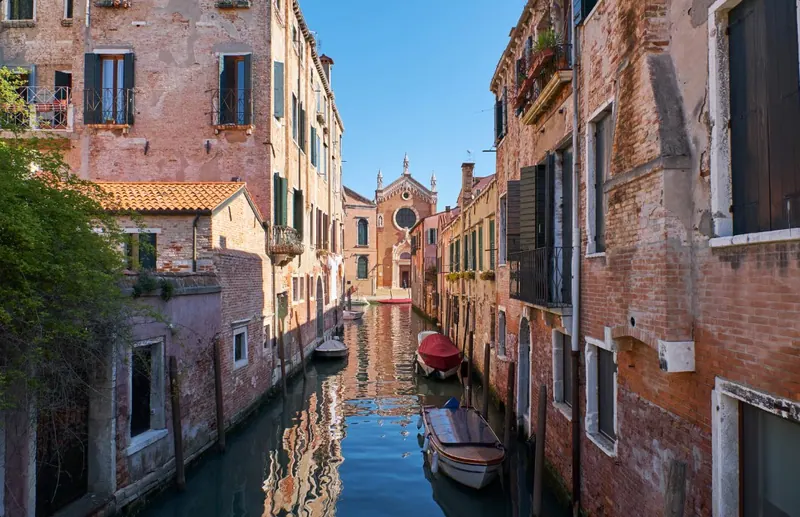 1 · Walking tour
Authentic Venice Walking Tour (Cannaregio and Castello)
-
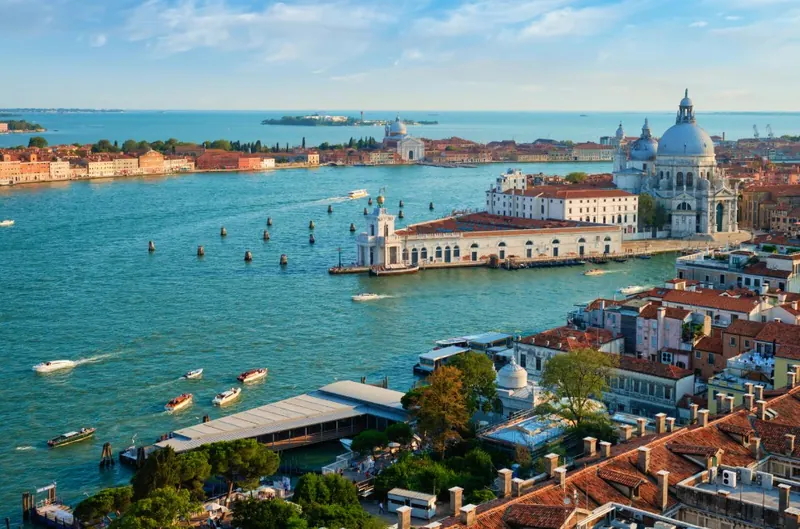 2 · Walking tour
Venice walking tour
-
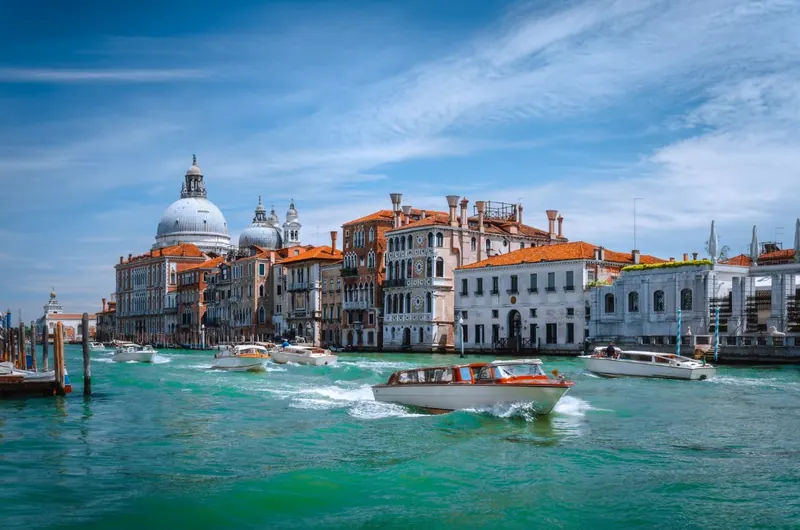 3 · Walking tour
Walking tour: The other Venice (Dorsoduro and Zattere)
-
 4 · Walking tour
Venice Mysteries & Legends Walking Tour
-
 5 · Walking tour
Walking tour of the Jewish Ghetto
-
 City history
History of Italy and Venice