What to see in Córdoba on foot
30 places with their stories, the map and free audio in 15 languages.
Updated November 2026 · 7 min read · Produced by World Tour
Córdoba in a nutshell
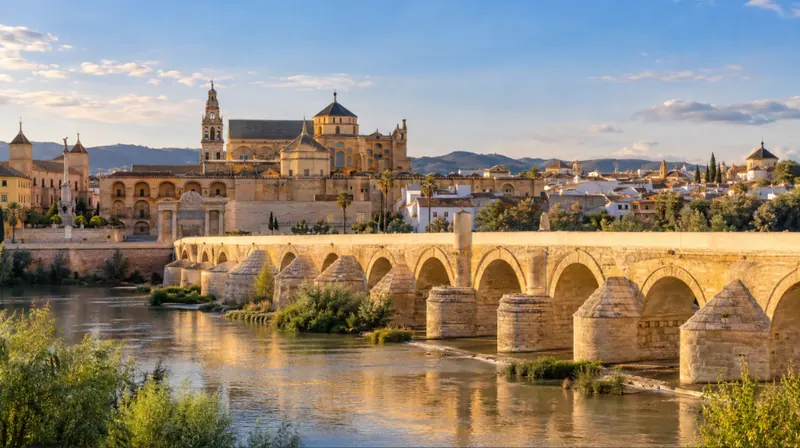
Cordoba's history is deeply intertwined with the Guadalquivir River. Its waters, the nearby farmlands, and resources from the Sierra Morena mountains encouraged settlement here long before the Romans arrived. One notable early site is the Los Quemados Hill settlement. Over centuries, this region became part of the Roman world, beginning a period in which the city would play a significant role in the peninsula's history. Roman Cordoba, known as Corduba, developed in the second century BC.
The places on the map
Each number is the place’s number in the list.
Cordoba Walking Tour
-
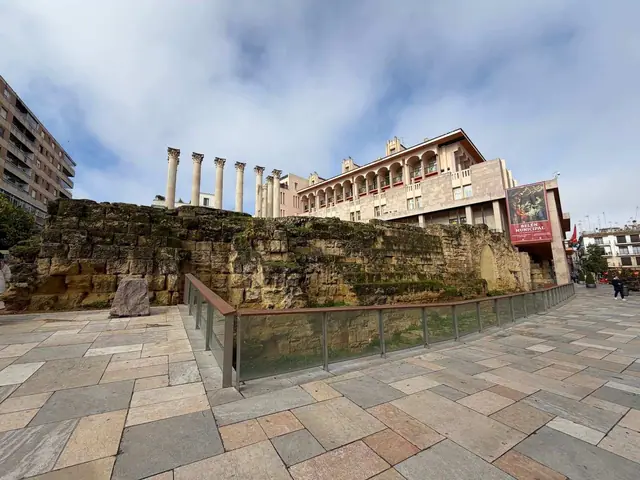
1. The Roman Temple
It's a city known for its Mosque-Cathedral, its flower-filled patios, and the marks left on its streets by Romans, Muslims, Jews, and Christians.
-
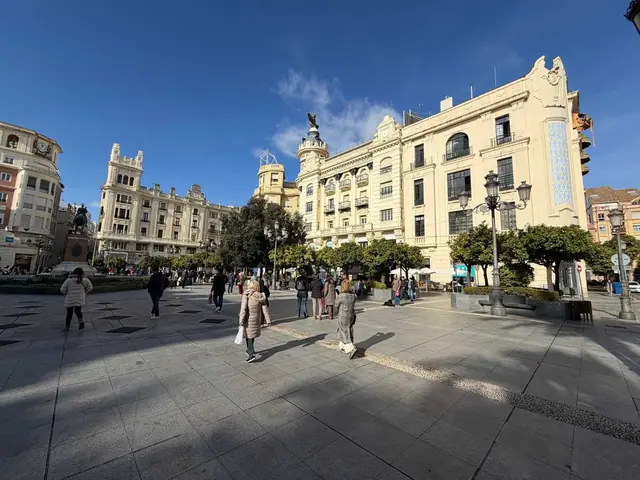
2. The Plaza de las Tendillas
After seeing the Roman temple columns, you'll notice the scenery has changed quite a bit. Now, we're in an open square, surrounded by tall buildings, shops, and outdoor cafes.
-
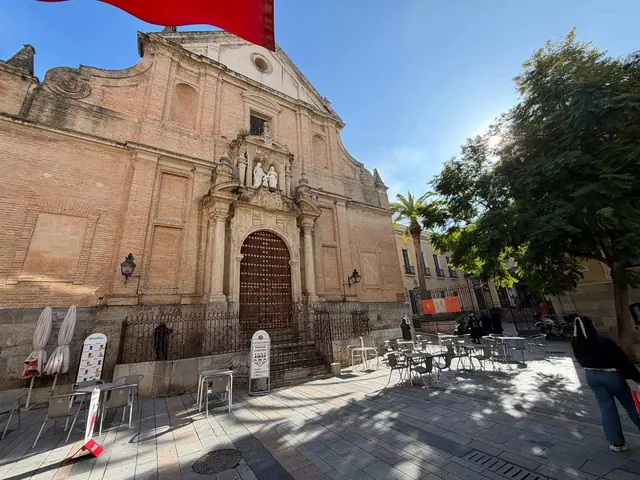
3. Santa Ana and Carbonell House
After leaving Tendillas Square and walking along Jesús y María Street, we'll arrive at the area around Santa Ana and Carbonell House. You'll notice the atmosphere changes here: the streets narrow, and the buildings feel much closer.
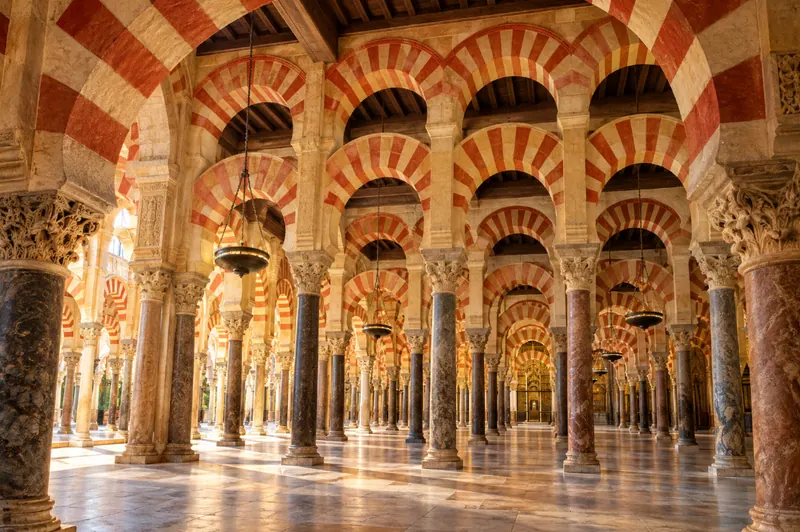
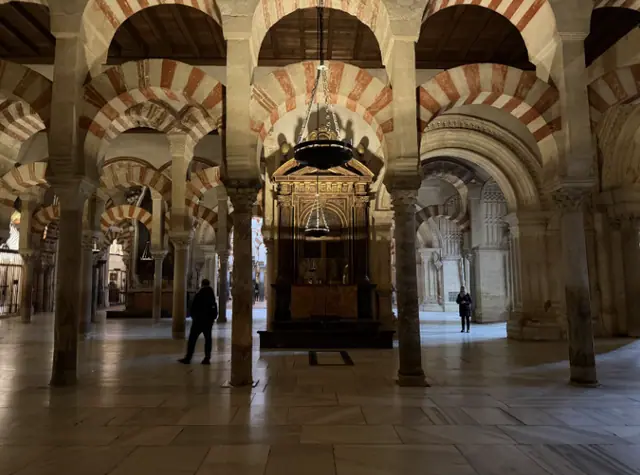
-
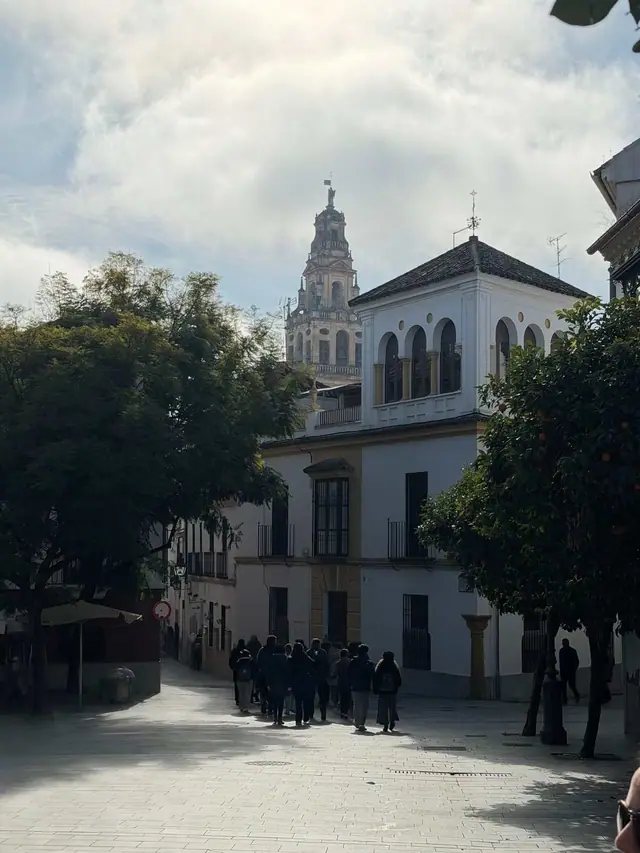
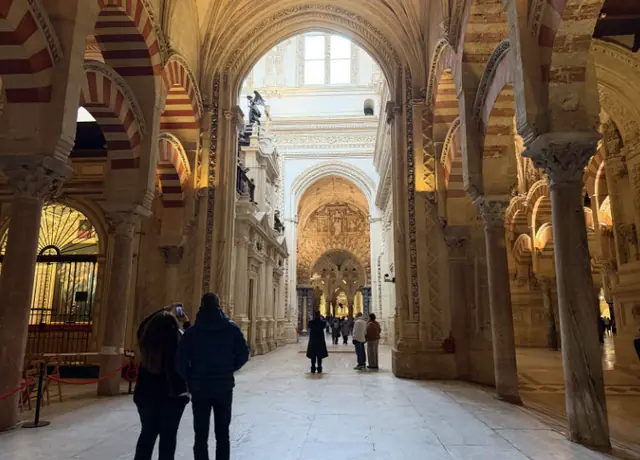
4. The Bell Tower
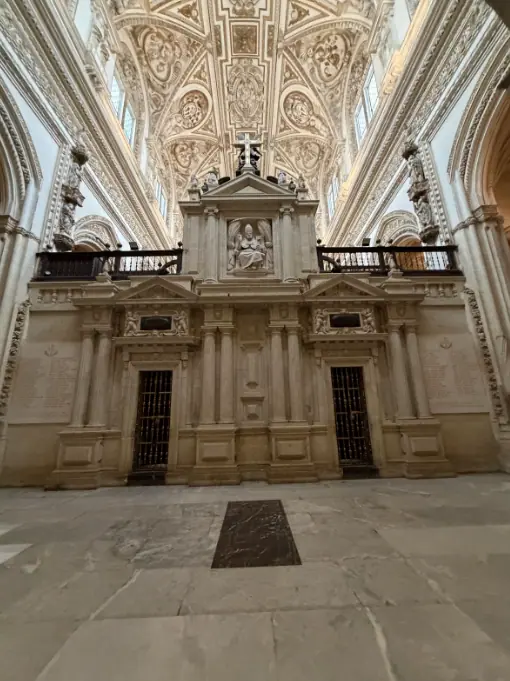
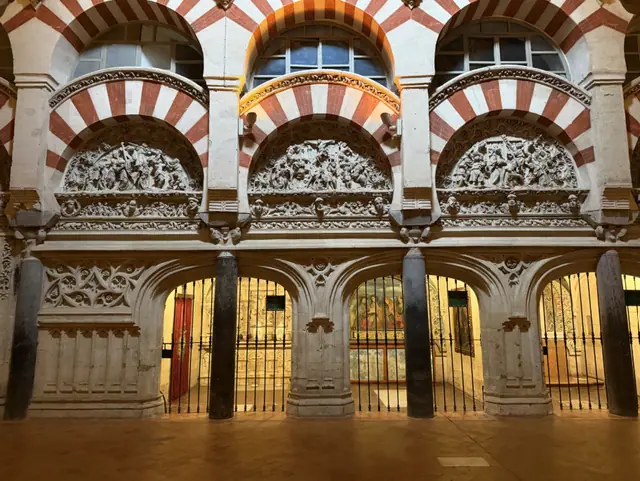
Before we head further into the streets of the historic quarter, let's pause for a moment and look up. In the distance, rising above the trees and next to that white building, you'll see the bell tower of the Mosque-Cathedral.
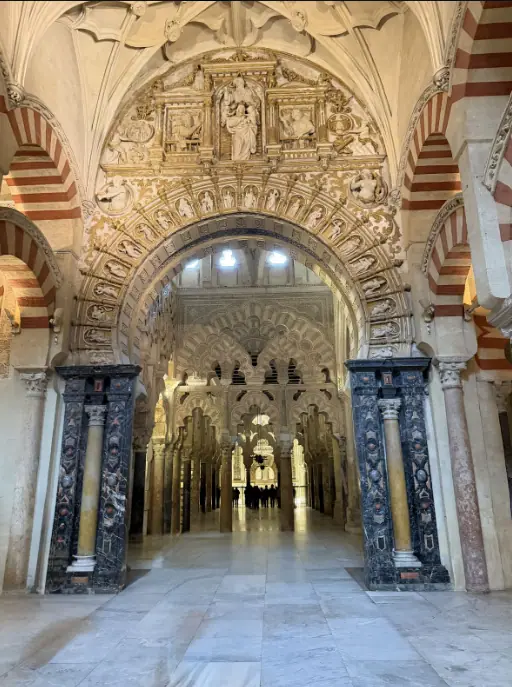
-
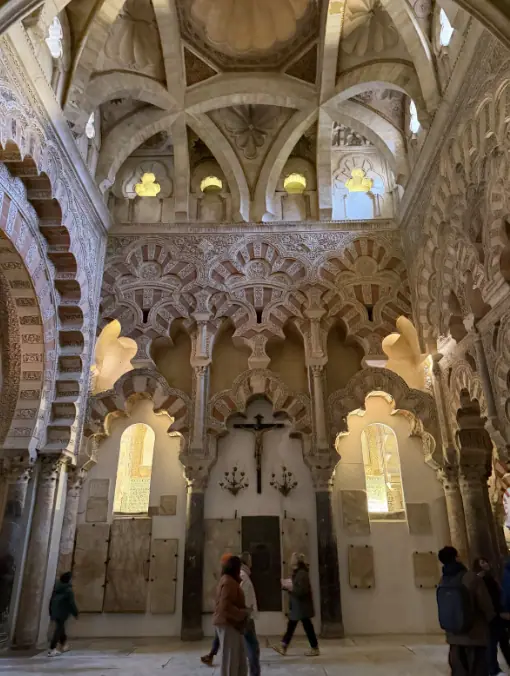
5. The Andalusian Mosque
Since we left the bell tower behind, our walk has really changed pace. The buildings are closer now, the view feels more enclosed, and every turn reveals a new hidden corner.
-
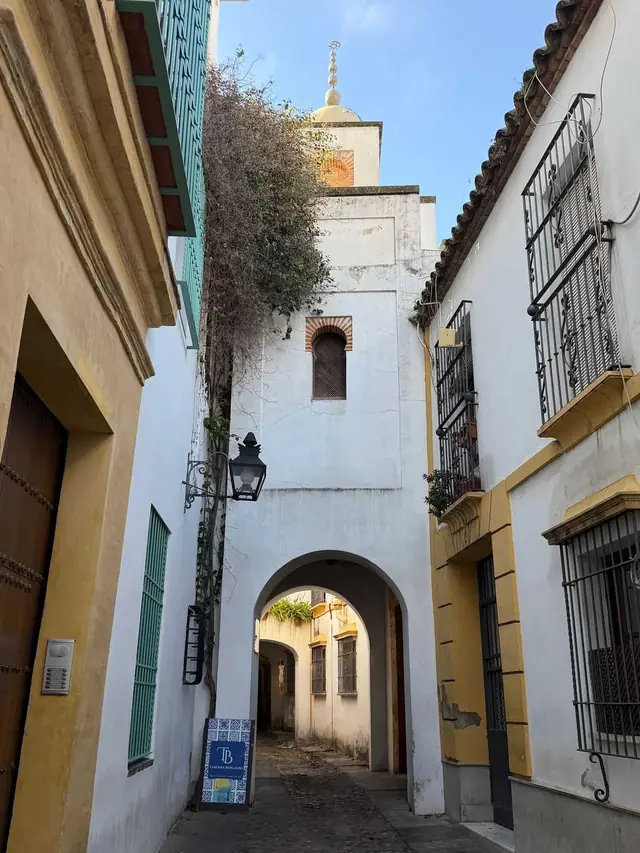
6. The Jewish Quarter
A Jewish Quarter, or 'judería,' is the neighborhood or area in a city where the Jewish community lived and gathered, especially during the Middle Ages. This is where you'd find their homes, shops, and the synagogue, their place of worship.
-
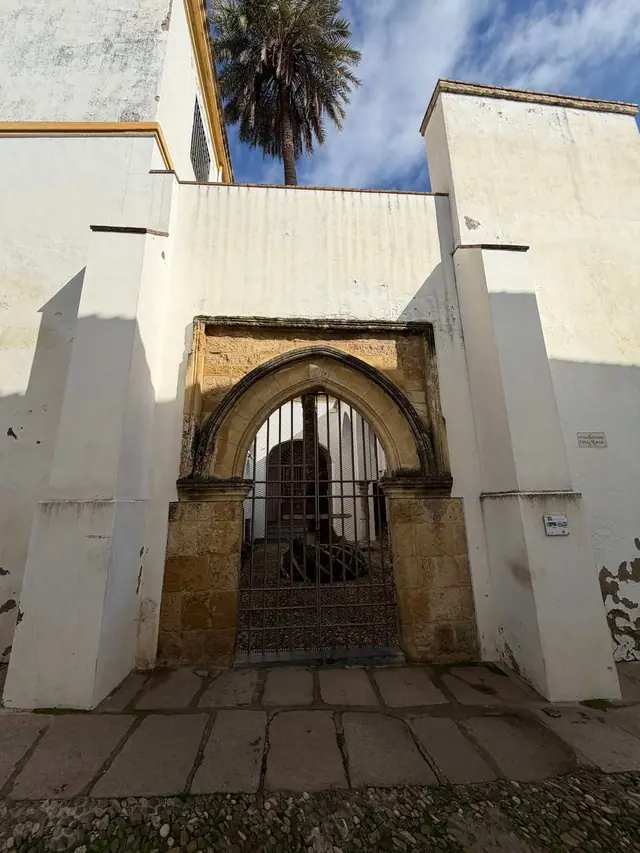
7. Chapel of San Bartolomé
Pause here in front of this stone entrance, framed by white walls. We're standing by the Chapel of San Bartolomé, a true gem in the Jewish Quarter, where you can really see how Córdoba's artistic traditions have woven together over the centuries.
-
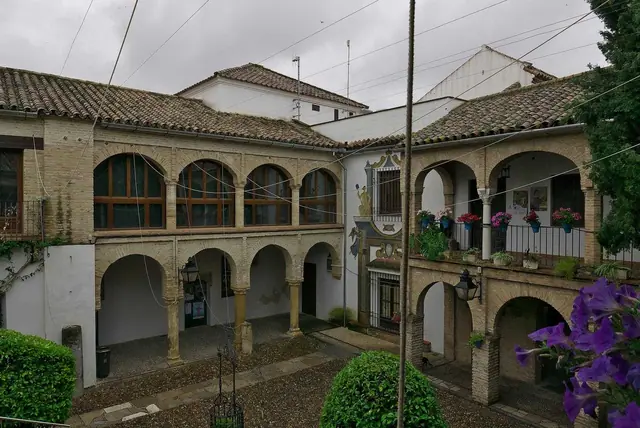
8. Municipal Souk Courtyard
After navigating the narrow streets of the Jewish Quarter, we've arrived at a space that really invites you to slow down. We're now in the courtyard of the Municipal Souk, nestled between Judíos and Averroes streets.
-
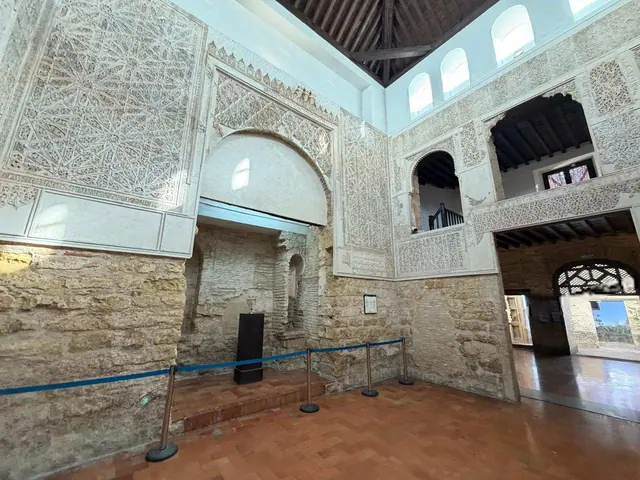
9. Cordoba Synagogue
We're now standing in front of the synagogue. If you can go inside, take a few minutes to really look around. The photos will also help you spot all the details. Here, we'll explore a place of worship for the medieval Jewish community and discover traces of their lives.
-
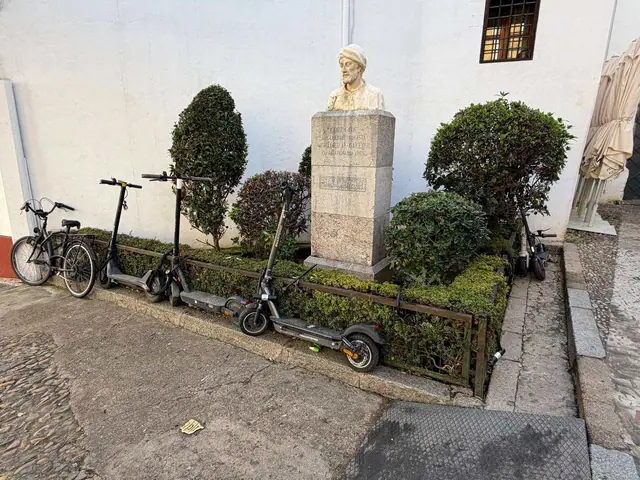
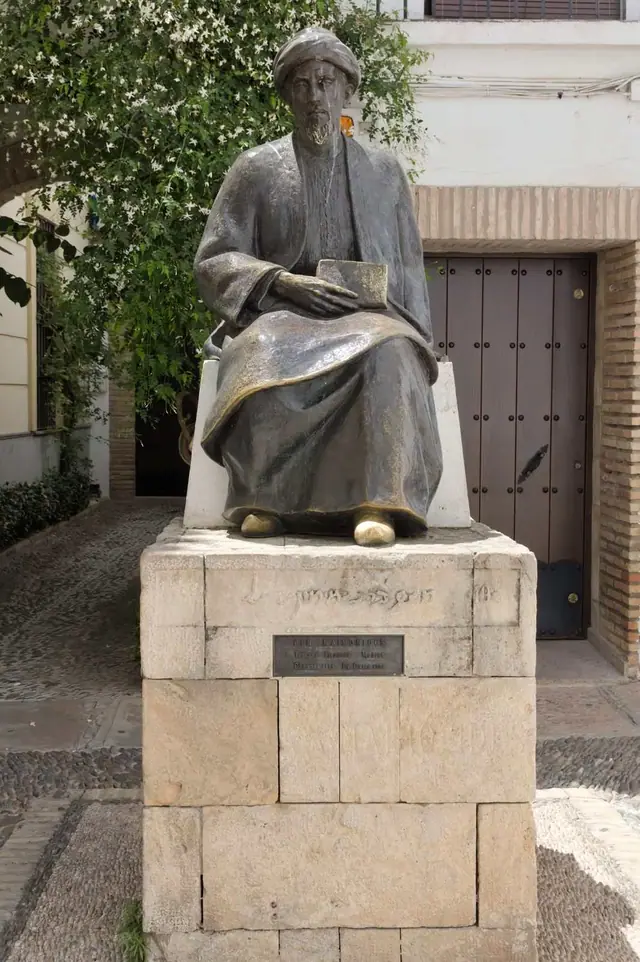
10. Maimonides
We're now in the small Tiberias Square. Here, we're greeted by the statue of Maimonides, one of the most important thinkers of medieval Cordoba. You might also know him as Moses ben Maimon, and in Jewish tradition, he's called Rambam.
-
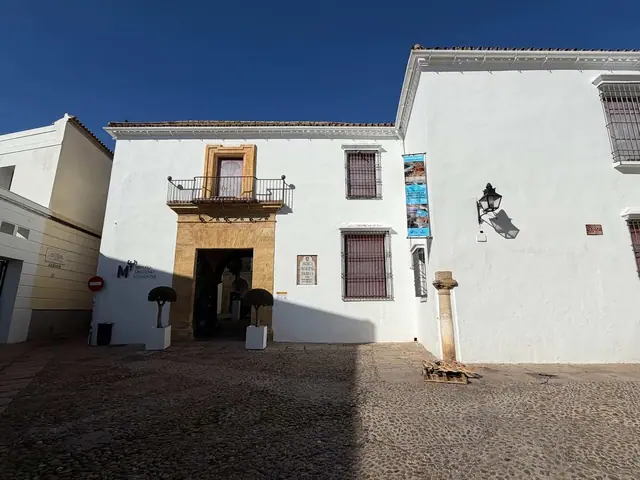
11. The Bullfighting Museum
We're stopping now in Maimonides Square, right in front of the entrance to Córdoba's Bullfighting Museum. Here, we're going to shift gears a bit and focus on a figure who left a deep mark on the city's history: Manolete.
-
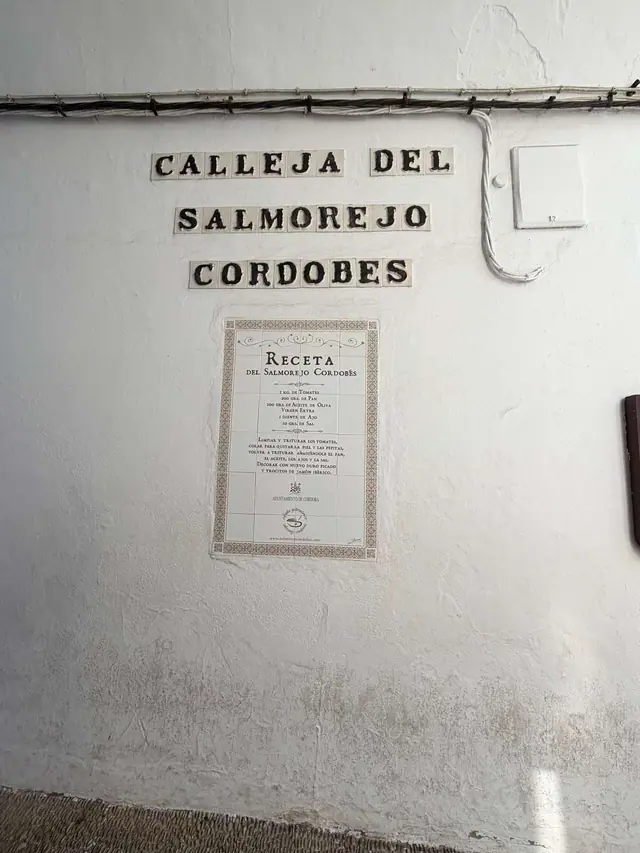
12. Cordoba's Cuisine
Is truly something special. You can listen to this stop as you walk to the next one. We're on Salmorejo Cordobés Alley, and right here you'll find a little tribute to one of the city's most beloved dishes. On the white wall, there's a ceramic tile with a special recipe.
-
13. The Alcázar of the Christian Monarchs
Just look at the massive stone walls right in front of us. We're standing before the Alcázar of the Christian Monarchs. An alcázar is a palace fortified like a fortress. It was a place to live, but also to defend against attacks.
-
14. The Mosque-Cathedral
We're finishing our tour here on Torrijos Street, right between the Mosque-Cathedral and the Episcopal Palace. Before we look at the buildings, take a moment to look at the ground near the mosque wall.
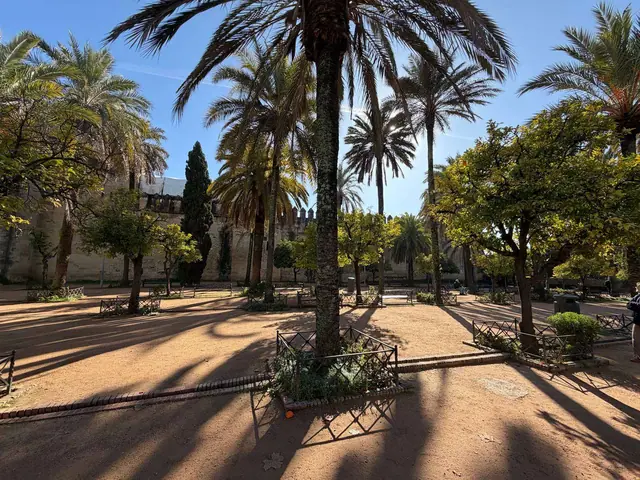
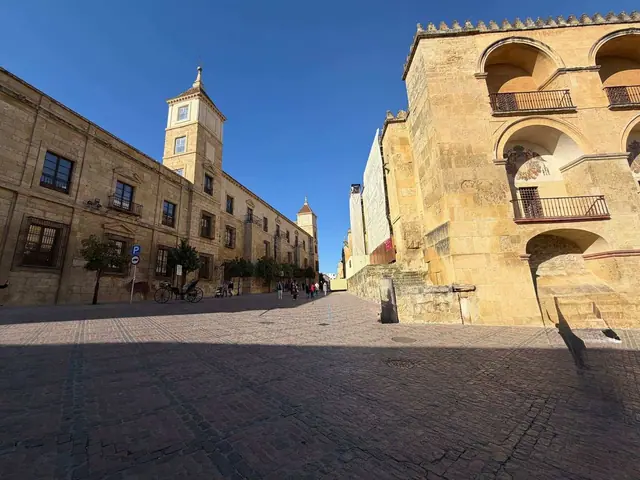
Cordoba's Mosque-Cathedral Walking Tour
-
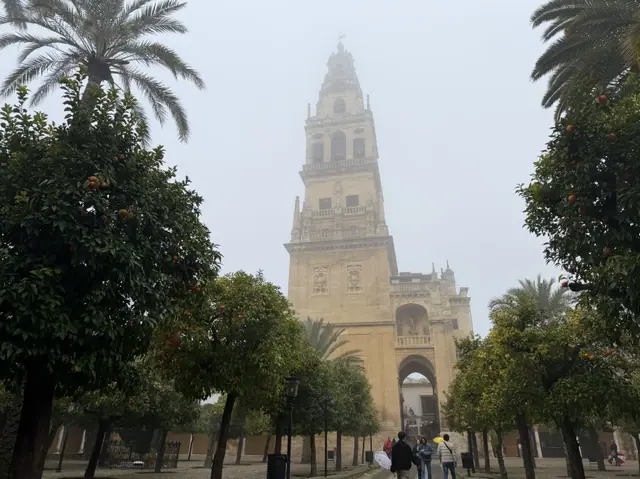
15. The Courtyard of the Orange Trees
And today, we're going to discover how this building grew and what was happening during each stage of its history. This way, you can easily orient yourself and follow the tour at your own pace.
-
16. Archaeological Remains Beneath the Floor
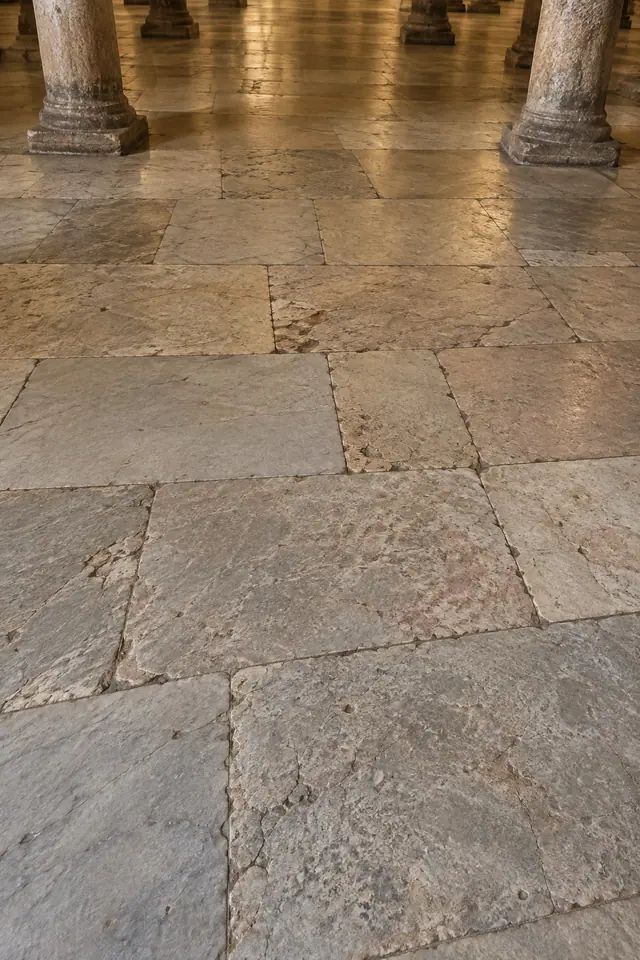
We're now inside this impressive cathedral. But before you look up at the columns and arches, look down. This spot had a rich history long before the mosque was even built. What you see preserved here are fragments of previous structures, like walls and old floors.
-
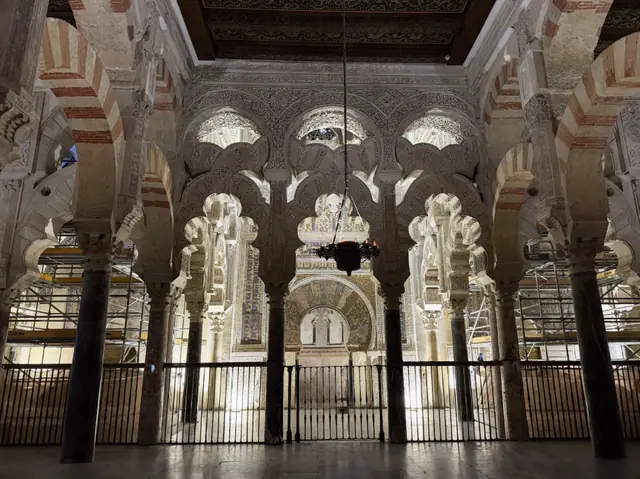
17. The First Mosque and its Forest of Columns
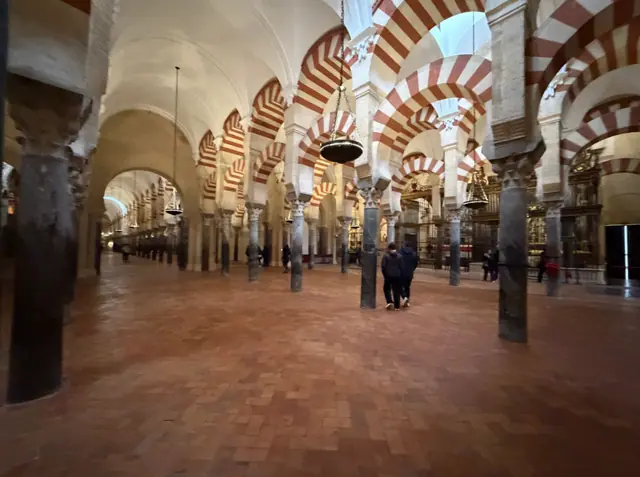
We're continuing our journey through history to learn a bit more about the first mosque, the one commissioned by Abd al-Rahman I. Now, let's look up to understand how that hall was organized and how they managed to raise this forest of columns.
-
18. The Great Arch and the Old Qibla Wall
Now, take a look at the grand stone arch right in front of you. On either side, you'll still see those red and white arches we were just looking at. It's pretty neat because right here, you can compare two different stages of the building's history all at once.
-
19. The Retrochoir
Now, look at the wall to your left and stand so you're facing it directly. It's called the retrochoir, and it encloses the back of the choir. Even though you're seeing it inside the building, it's decorated as if it were the facade of a church.
-
20. The Arch of Redemption
We're now standing in front of this impressive arch. Take a moment to look at both sides. Down at the bottom, you'll notice some dark supports with small, colorful decorations. Above them, the arch forms a grand curve, like half a circle. It's what we call a semicircular arch.
-
21. Villaviciosa and the Gothic Nave
We're now on the other side of the Arch of Redemption, in the area known as Villaviciosa. We're going to look at it from two different perspectives. First, find the dome and the arches you see in the first photo on your app. Look up.
-
22. The Royal Chapel and Mudéjar Art
Now, let's focus on the Royal Chapel. The photo on your app will help you spot it. We're going to look at it from the outside, as the interior isn't part of our tour. Notice the difference in height. The chapel is raised above the ground you're walking on.
-
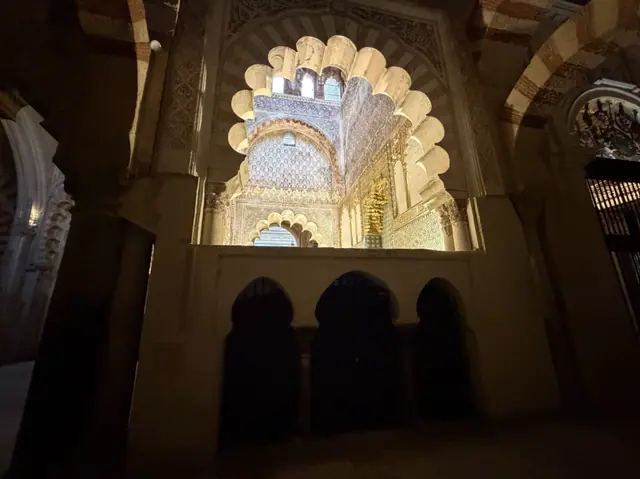
23. The Mihrab and Maqsura of Al-Hakam II
We're now standing in front of Al-Hakam II's mihrab. Please pause where you can see it clearly without blocking the path. The grille you see wasn't here during Al-Hakam II's time. It was added during the Christian period and later modified.
-
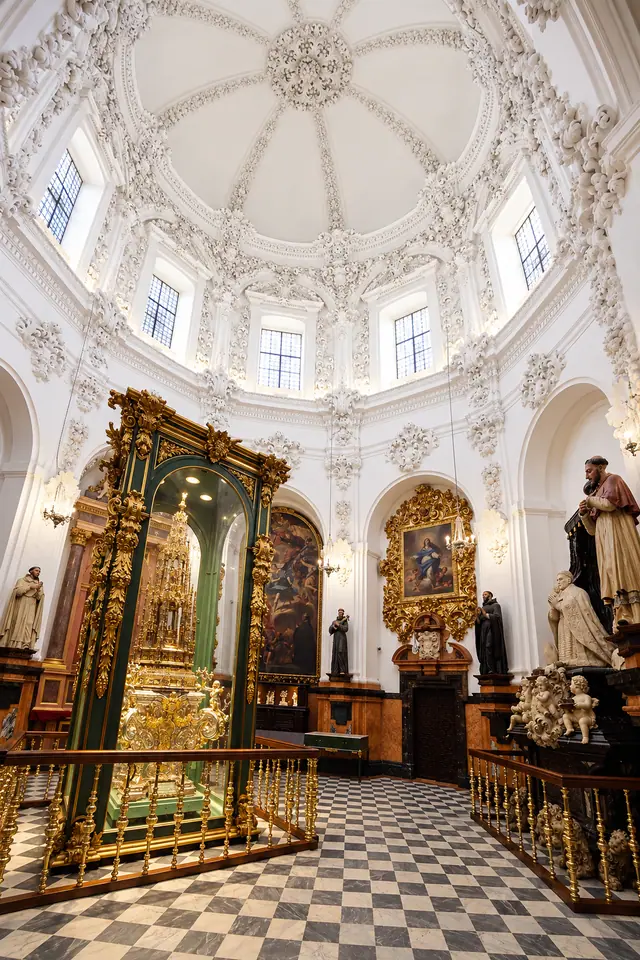
24. Saint Teresa and the Cathedral Treasure
Now, we're approaching Saint Teresa's Chapel. It's located near the mihrab, and you can use your map to find its exact spot. Just follow the designated route to its entrance.
-
25. The Sagrario and its Murals
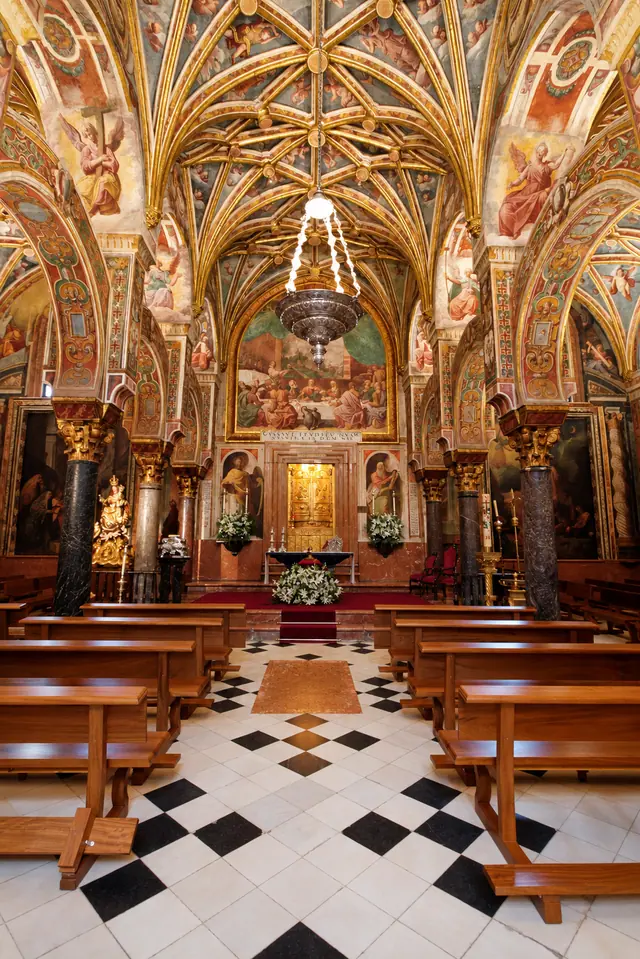
Now we're in front of the Sagrario. Please follow the marked path to its entrance. Catholic services are still held here. If it's open to visitors, please enter quietly and be careful not to block the entrance.
-
26. Almanzor's Expansion
Now we're in the area of Almanzor's expansion. You'll notice the reddish floor and long rows of columns here. This pavement is actually a good reference point to help you get your bearings during your visit. To understand this expansion, let's go back to the late tenth century.
-
27. The Main Chapel
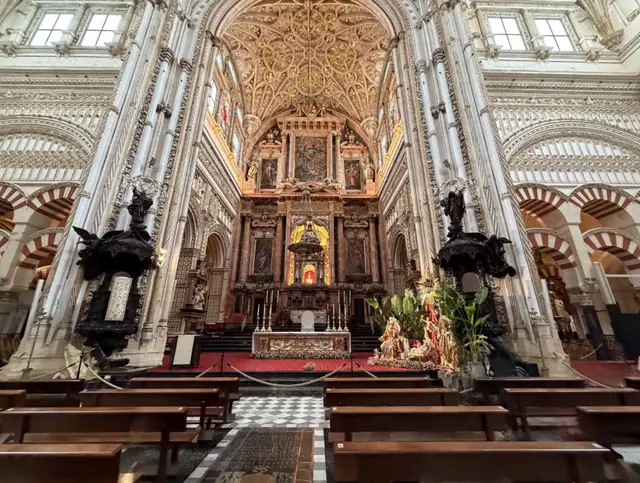
Now we're standing before the Main Chapel, home to the cathedral's high altar. From here, we're going to explore the impressive Christian complex that was built right in the center of the old mosque. First, look up.
-
28. The Choir
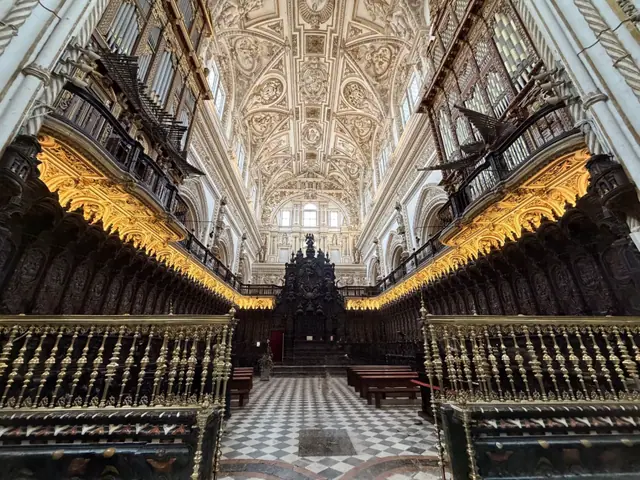
Please stop in the designated area, without crossing any railings or entering the seating section. Notice the long rows of wooden chairs on both sides. This entire arrangement is called the choir stalls.
-
29. The Reredos and its Reliefs
We're now circling the main chapel, using the passageway that runs behind it. Take a moment to find the view matching the photo in your app. This area is known as the trasaltar, or reredos.
-
30. The Column of the Captive
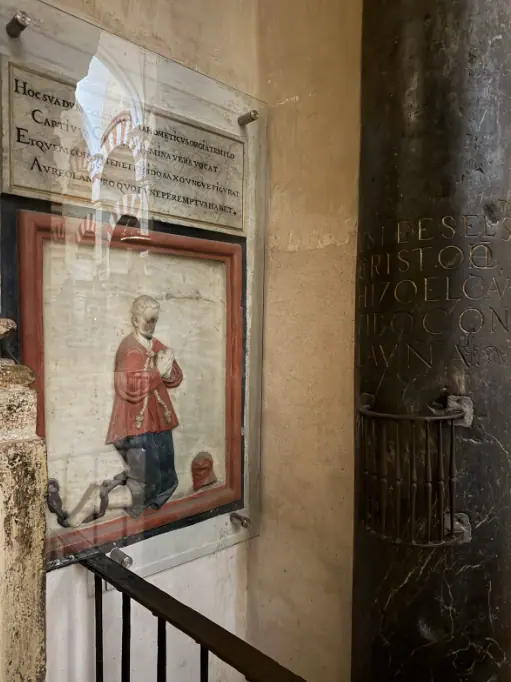
To wrap up our tour, let's head over to the side of the building facing the courtyard, in Almanzor's extension. Look for the corner you see in your app's photo or on the map.
Walk them with the app
The 2 tours visit these places in order, with the full audio and the map. Free, with no sign-up.