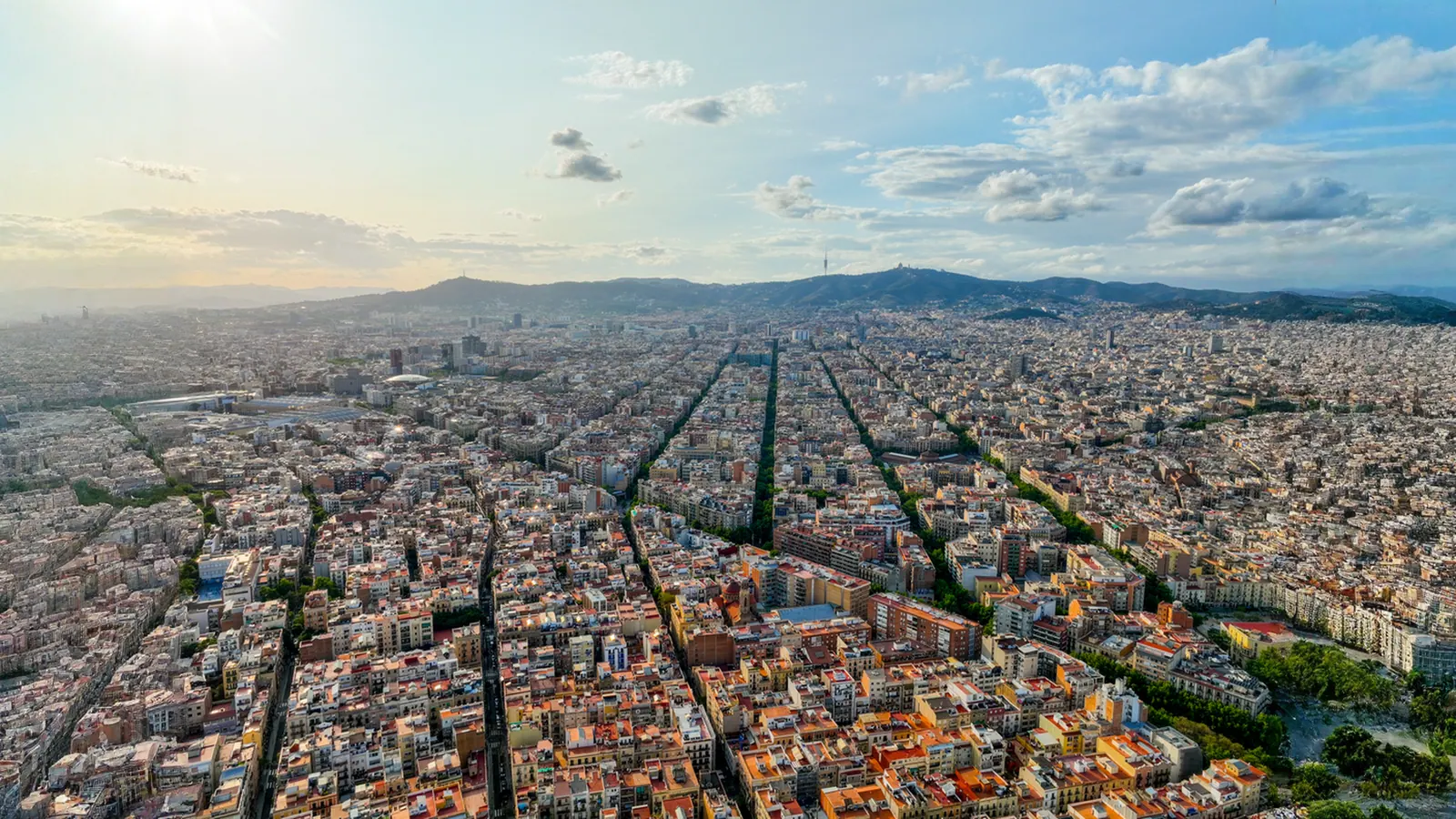
What to see in Barcelona on foot
43 places with their stories, the map and free audio in 15 languages.
Updated November 2026 · 10 min read · Produced by World Tour
Barcelona in a nutshell
Barcelona has a long, rich and varied history. Its origins date back to prehistoric times, when Iberian tribes such as the Layetani lived in this area. However, it was with the arrival of the Romans in the 1st century BC that the city acquired a recognisable urban structure. The colony was called Barcino and was built on a small hill by the sea, where the Gothic Quarter stands today. Barcino was a walled city with straight streets, a forum, thermal baths and temples.
The places on the map
Each number is the place’s number in the list.
Barcelona Walking Tour
-
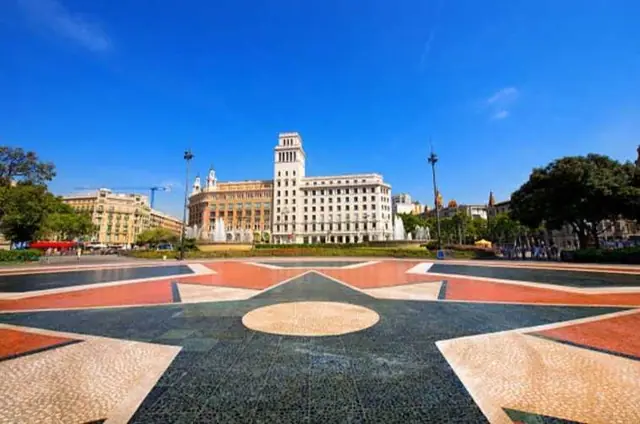
1. Catalan Square
On this tour, we’re going to discover unique places, but we’re also going to understand how Barcelona was, for a long time, a city with a character all of its own, with a rich history and a pride that you can still sense in its people.
-
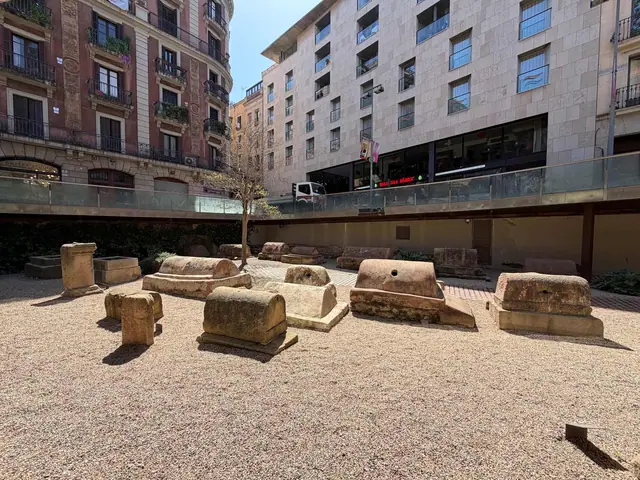
2. Roman Barcelona beneath your feet
We are now in Villa de Madrid Square, which takes its name in honor of the capital city of Spain. And although at first glance it looks like a quiet square in the center of Barcelona, there is something very special here: we are looking at an ancient Roman cemetery.
-
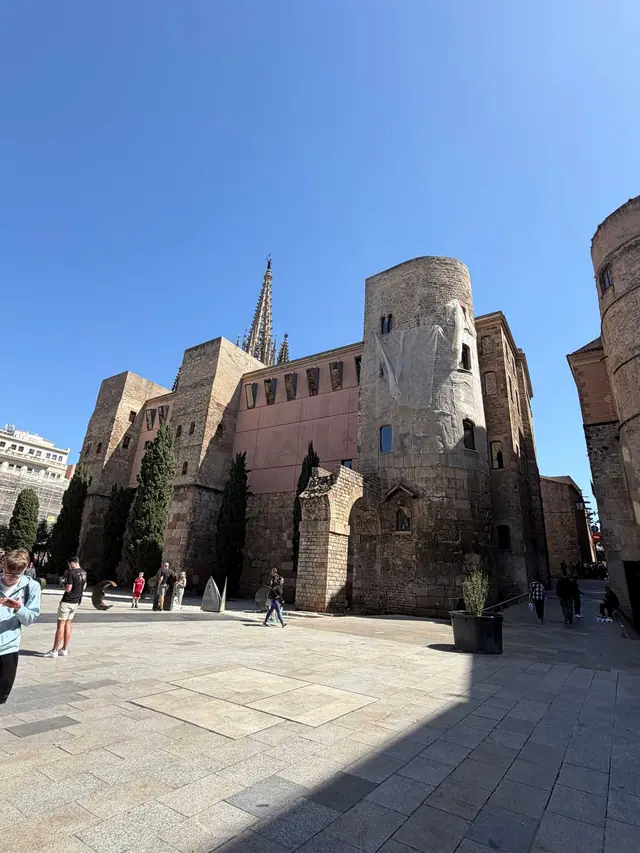
3. Between city walls and aqueducts
We are now standing next to the large letters spelling Barcino. These letters were created by the Catalan artist Joan Brossa, from the ancient Roman name for Barcelona. In fact, the colony’s full name was extremely long: Colonia Iulia Augusta Faventia Paterna Barcino.
-
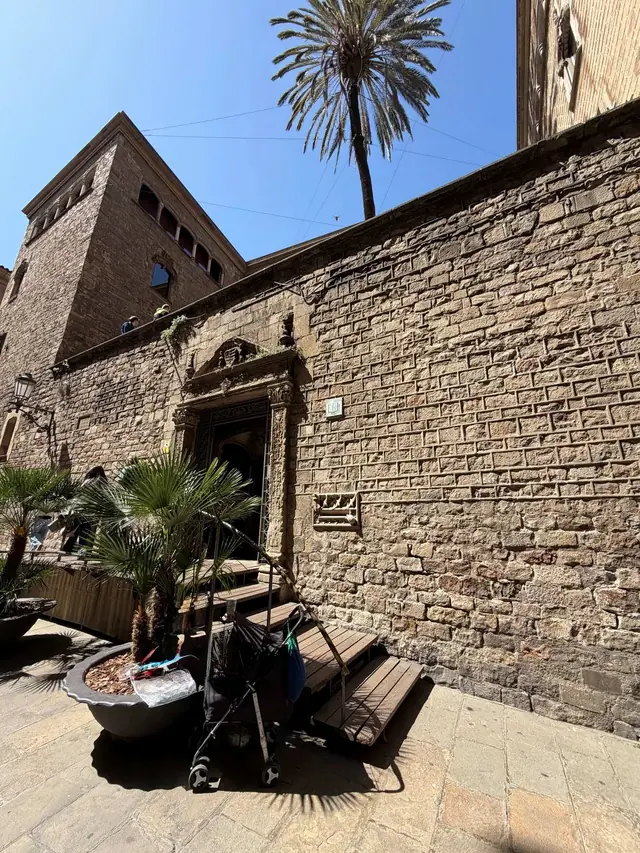
4. The Archdeacon’s House
We are now at the Archdeacon’s House. This building combines Roman ruins, Gothic architecture, Renaissance details and even a touch of Modernism on the façade. If the door is open, I recommend popping into the courtyard for a moment.
-
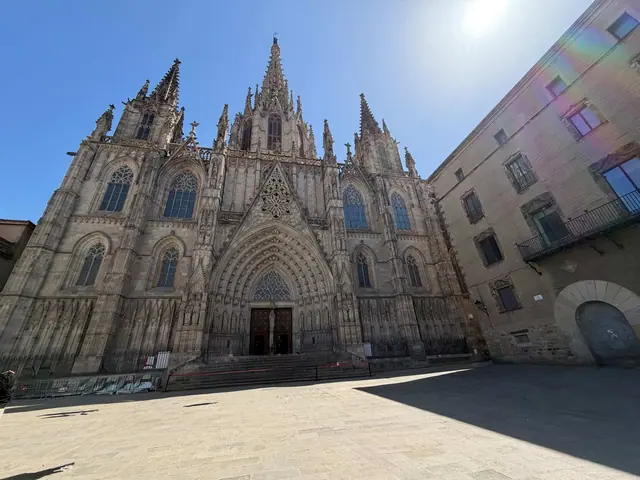
5. Barcelona Cathedral
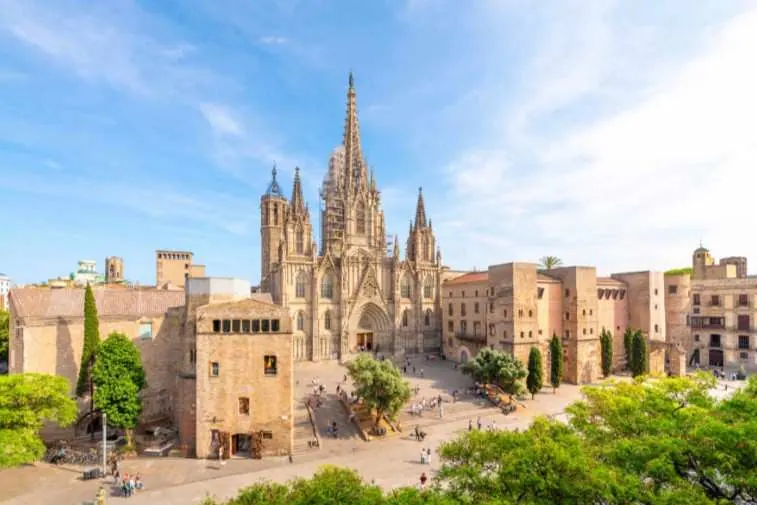
We are now in Plaza de la Seu, in front of the Cathedral of the Holy Cross and Saint Eulalia. Although almost everyone simply calls it the Barcelona Cathedral.
-
6. The hidden tombstones
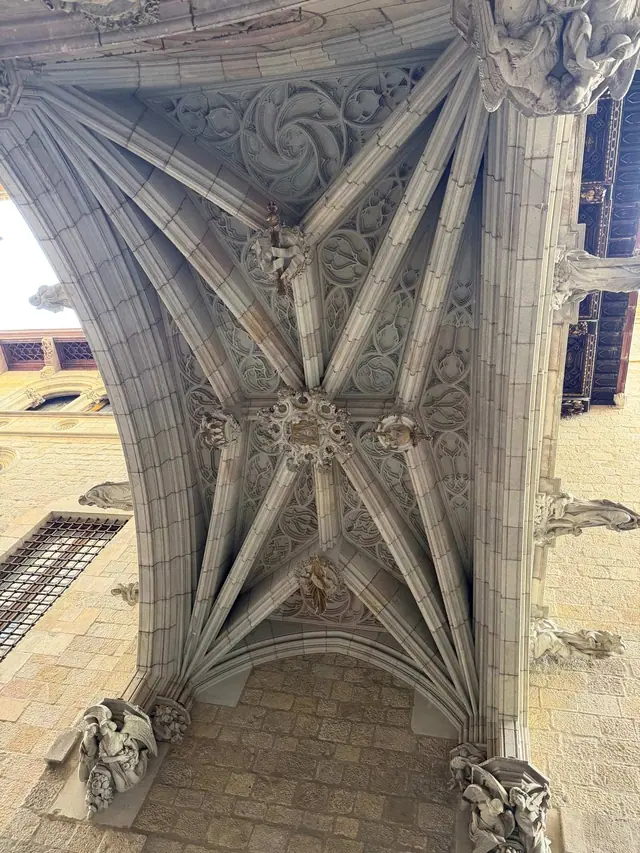
We are now in a very special part of the Gothic Quarter, next to the Cathedral. This spot is known as the San Ivo Gate, and for a long time it was the main entrance to Barcelona Cathedral.
-
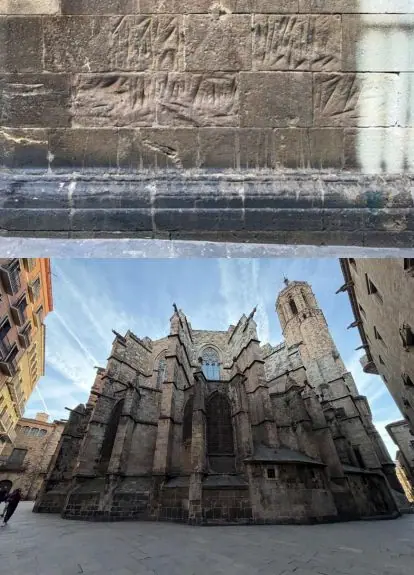
7. Gargoyles and symbols
Now, on this side of the Cathedral, take a close look at the wall. You’ll see some marks in the stone. According to tradition, these marks were left by soldiers or armed men who came here to sharpen their knives and swords.
-
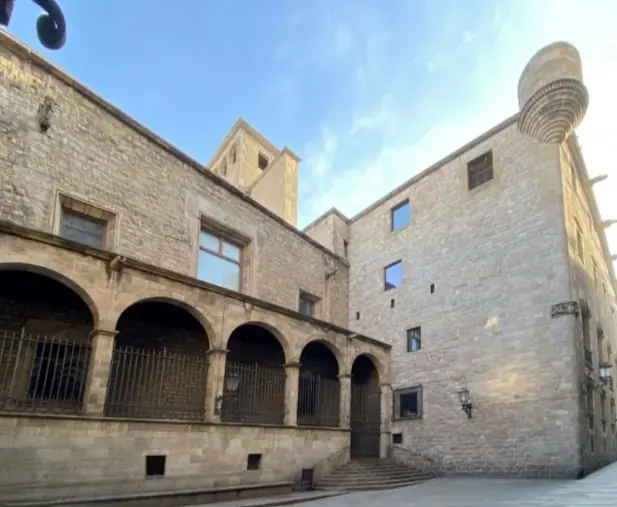
8. King's Square
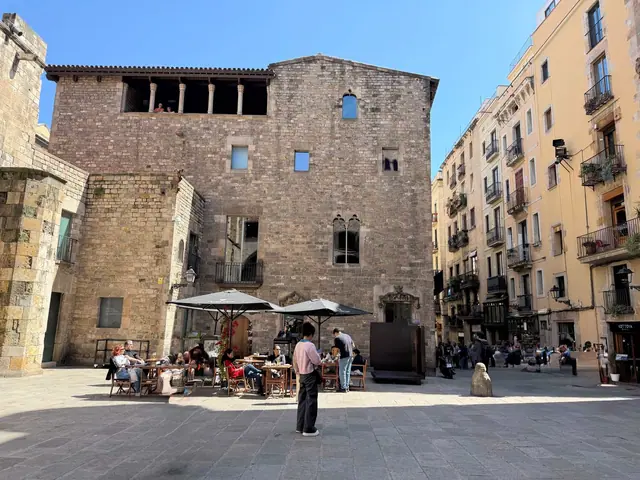
We are now in one of the most important corners of the Gothic Quarter. At first glance, it looks like a quiet, almost enclosed square, as if it were cut off from the hustle and bustle of Barcelona. But this place is packed with an incredible amount of history.
-
9. Temple of Augustus
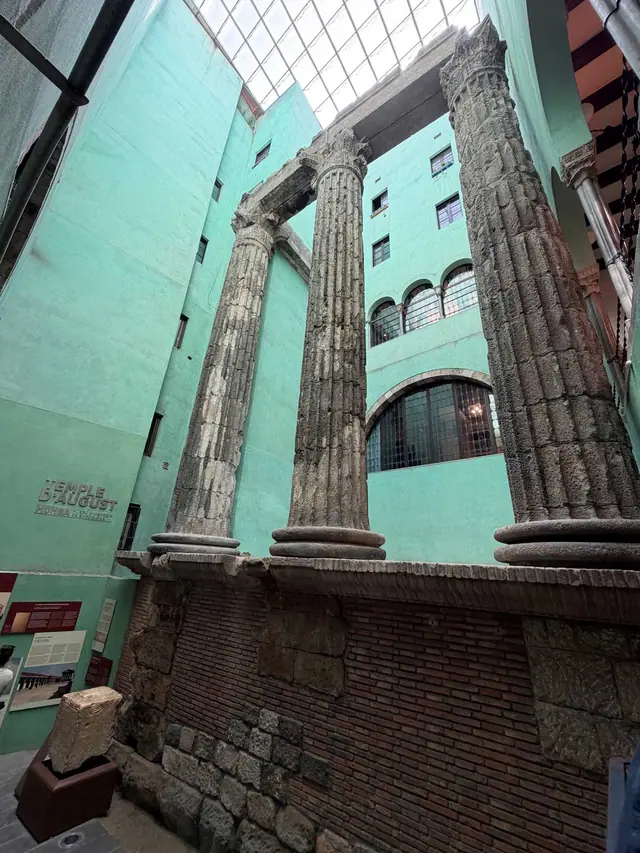
We are now in the area around Carrer Paradís, at the highest point of the ancient Roman city. This small hill is called Monte Táber. Today it doesn’t look like a mountain, because the city has covered it all with streets, buildings and squares.
-
10. The mysterious bridge
We are now standing in front of one of the most famous spots in the Gothic Quarter: the Bishop's Bridge. This bridge is probably one of the most photographed landmarks in Barcelona. But here’s the surprise: this bridge is not medieval.
-
11. Martyrs’ Square
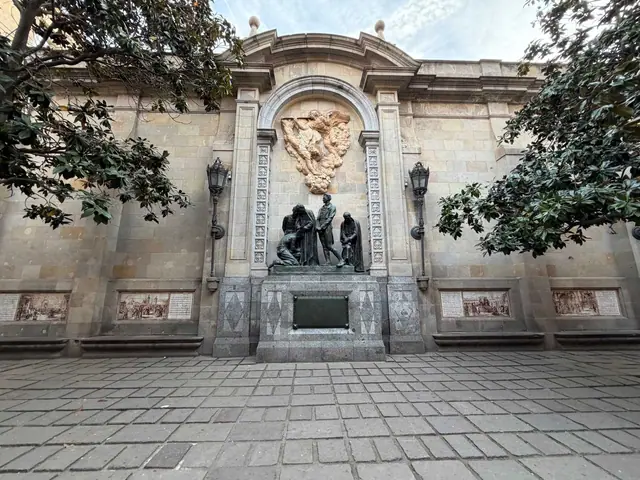
We are now in Plaza de Garriga y Bachs, a small square situated behind Barcelona Cathedral, opposite the side façade of the church of Sant Sever. Here stands one of the most moving monuments in the Gothic Quarter: the Monument to the Martyrs of Independence.
-
12. Wounds and memory
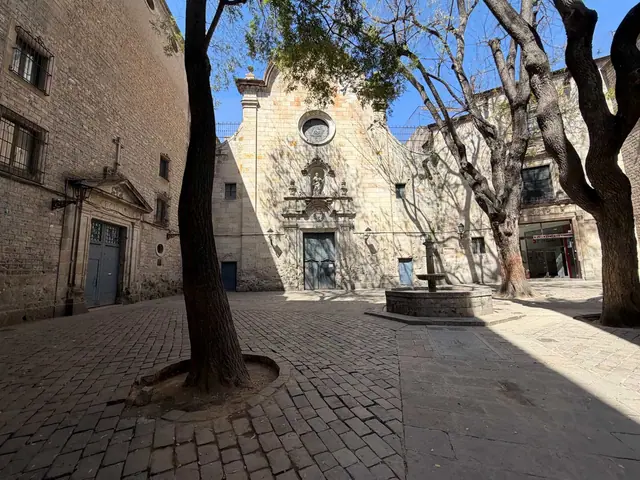
We are now in San Felipe Neri Square, one of the most special spots in the Gothic Quarter. Unlike other squares in the city centre, the atmosphere here is different. Everything seems quieter, more intimate, almost as if the city were speaking in a hushed tone.
-
13. Old Streets
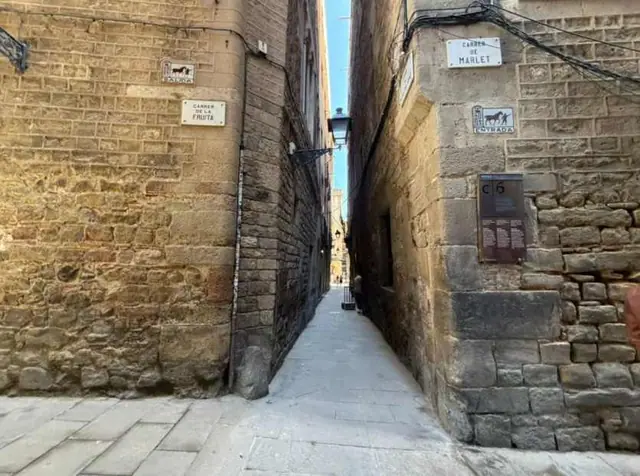
We are now entering one of the oldest and most delicate areas of the Gothic Quarter. In this area, you can already see that the streets are narrow, winding and almost seem designed for walking in single file. In the Middle Ages, this presented its own challenges.
-
14. Jewish heritage
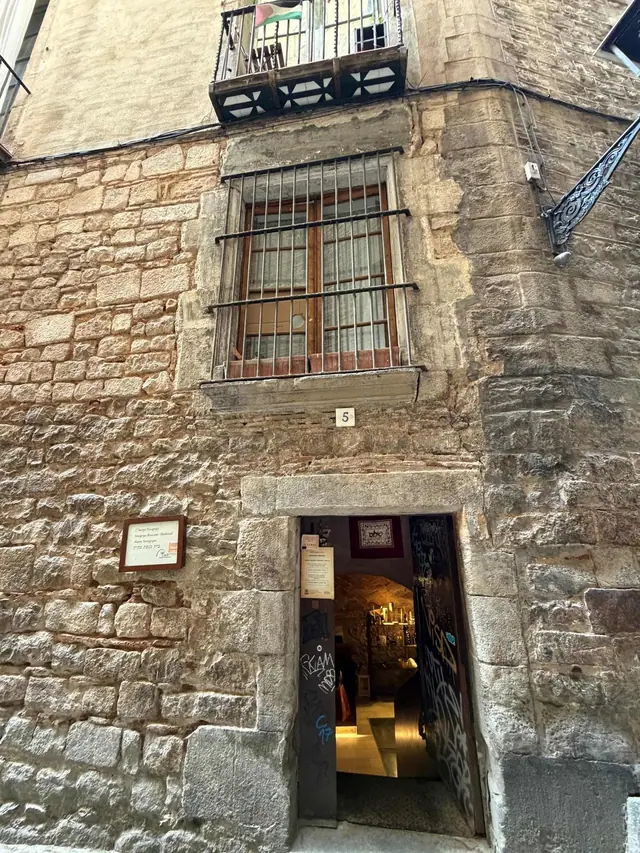
We are now standing in front of the Great Synagogue of Barcelona, in the heart of the old Call, the city’s medieval Jewish quarter. This place does not impress with its size or its monumental façade. In fact, if you don’t know it’s here, you could easily walk right past it.
-
15. The political heart of Barcelona
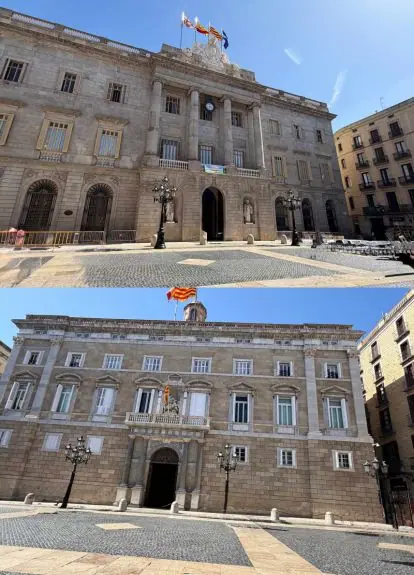
We are now in Santa Jaime Square, one of the most important places in Barcelona. It is named after a church dedicated to Saint James that once stood here; in many contexts, he is identified as Saint James the Greater, one of the twelve apostles of Jesus Christ.
-
16. Angel Square
We are now at a small but fascinating spot in Barcelona’s old town. This place helps us understand something key: Barcelona wasn’t always an open, sprawling city. For centuries, it was defined by walls, gates and clearly marked boundaries.
-
17. The village church
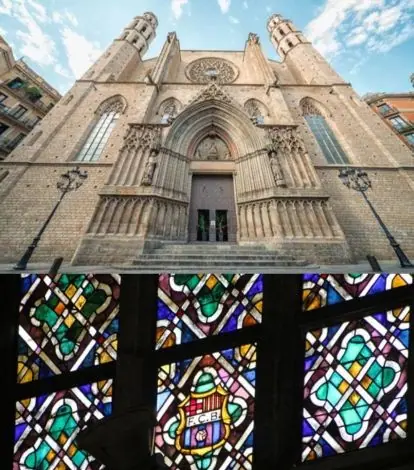
We are now standing in front of Holy Mary of the Sea, one of Barcelona’s most beloved churches. Although many people know it as the Cathedral of the Sea, technically it is not a cathedral. Barcelona’s cathedral is that of Santa Creu i Santa Eulàlia, which we saw earlier.
Modernist Barcelona Walking Tour
-
18. Between Two Barcelonas
This isn’t just any old tour; on this tour, we’re going to discover some of Barcelona’s most surprising places, but we’re also going to understand how this city forged its own identity. Before we start, here’s something important to note about the tour.
-
19. Modernist Architecture
We are now standing in front of the Pascual y Pons House, at the point where Passeig de Gràcia begins – one of Barcelona’s most important and elegant avenues, next to Plaça de Catalunya.
-
20. Passeig de Gràcia
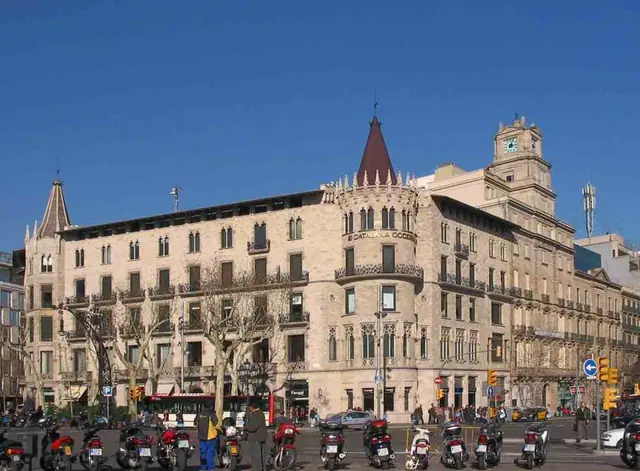
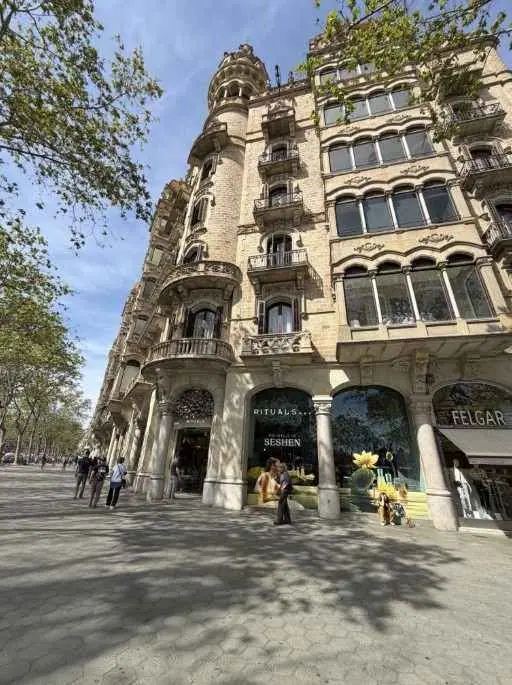
Now let’s stop at another building that’s also well worth a closer look. If you look up to your right, you’ll see a large complex with brick towers and domes. It’s called Casas Rocamora, and was built between 1914 and 1917 by the architects Joaquim and Bonaventura Bassegoda.
-
21. Benches and Street Lamps
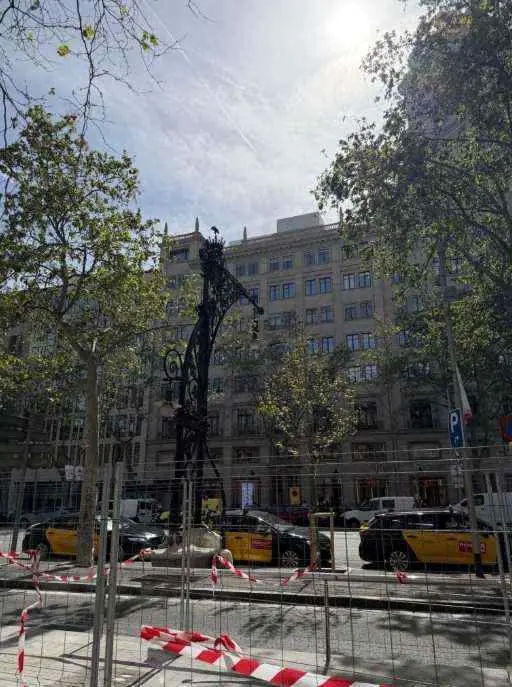
Now let’s take a closer look at this part of the Passeig de Gràcia. If you look closely at the street, you’ll see some rather distinctive benches with street lamps. They were designed in 1906 by Pere Falqués i Urpí, who was Barcelona’s city architect at the time.
-
22. The gastronomic temple
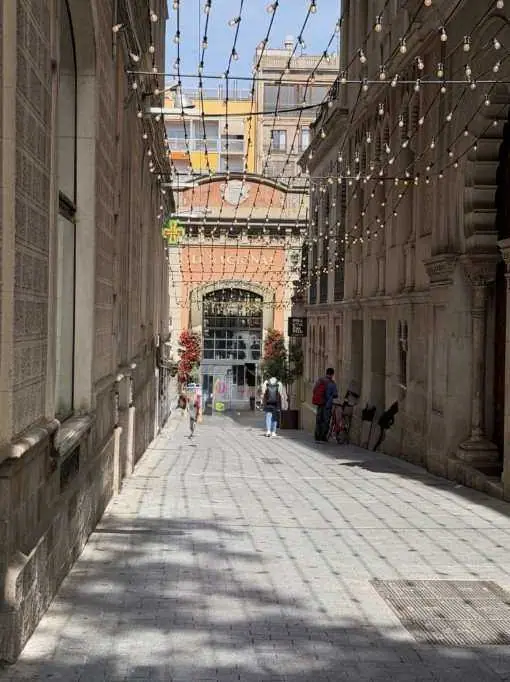
Now let’s take a short break at a very special spot on Passeig de Gràcia. Just across this alleyway lies The National, a grand historic building that today serves as one of Barcelona’s best-known gastronomic venues.
-
23. Symbols and History
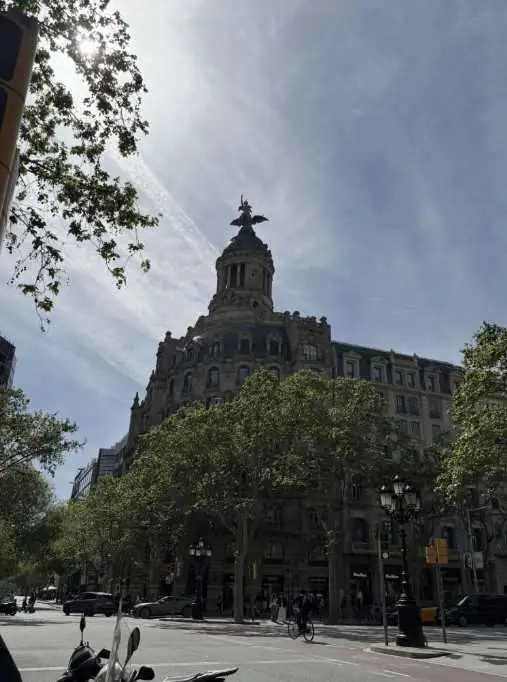
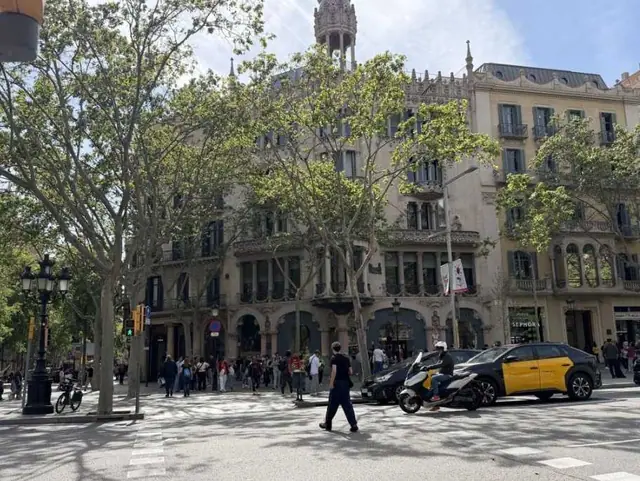
As we continue walking along Passeig de Gràcia, I’d like to suggest a game: start looking up and spot the animals. In Barcelona, and particularly in Modernist architecture, dragons appear everywhere. Sometimes they’re very obvious, like huge creatures made of stone and iron.
-
24. Modern luxury
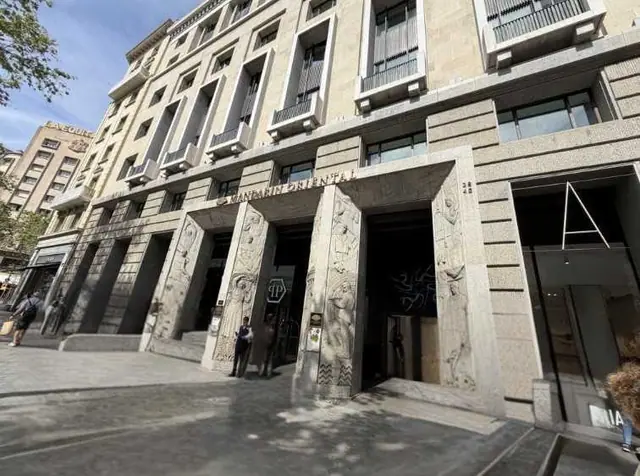
We now stop in front of the Mandarin Oriental Barcelona, one of the most luxurious hotels on Passeig de Gràcia. The hotel occupies a historic building constructed in 1955, which formerly housed the Banco Hispano Americano.
-
25. The luxury of detail
We now pause in front of the Lleó Morera House, one of the great gems of Passeig de Gràcia. The house was renovated by the architect Lluís Domènech in 1905, based on an earlier building dating from 1864.
-
26. The stone dragon
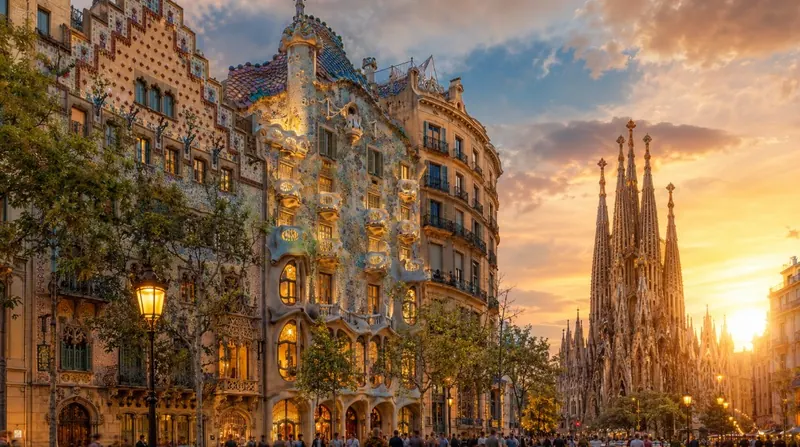
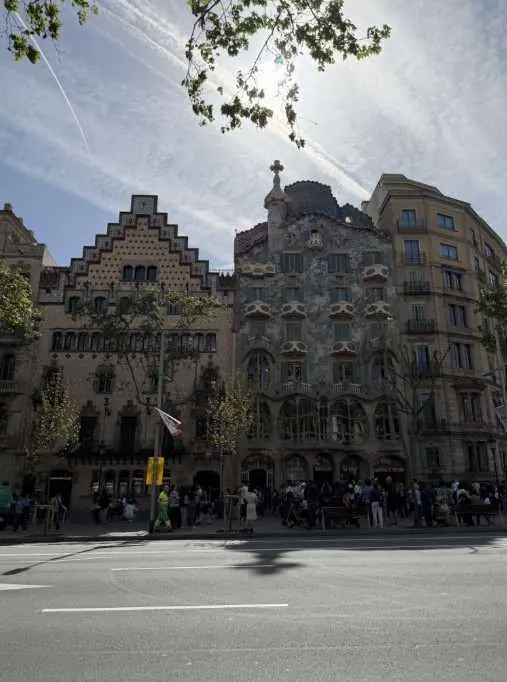
We are now standing in front of two of the most iconic and frequently photographed buildings on Passeig de Gràcia: House Amatller and House Batlló. To spot them easily: House Amatller is the one that looks like a medieval house, with a stepped upper section.
-
27. The chocolatier’s house
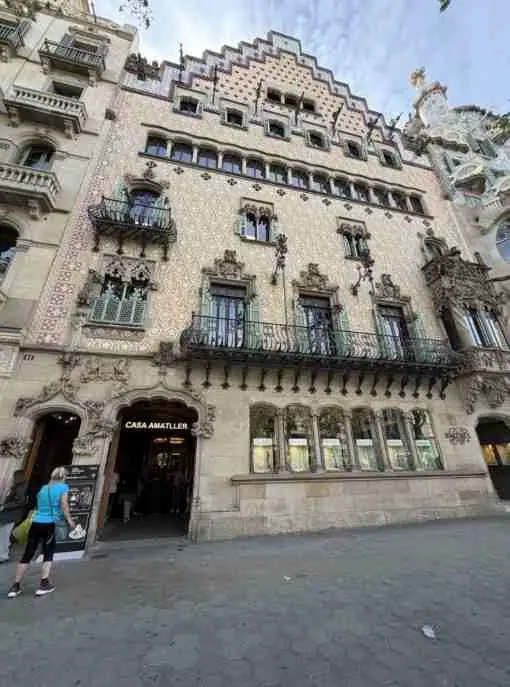
We are now standing in front of the Amatller House. It was renovated between 1898 and 1900 by Josep Puig. He was a Catalan Modernist architect who infused many of his works with a blend of history, medieval fantasy and bourgeois elegance.
-
28. Gaudí’s work beneath your feet
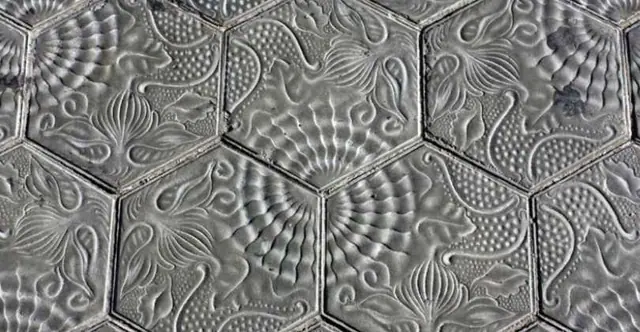
Now let’s try something different. After looking up at so many façades, cast your gaze down to the ground. The tiles you see here also have a history. They are known as ‘Gaudí tiles’, and are inspired by a design created by Antoni Gaudí in the early 20th century.
-
29. The mountain of stone
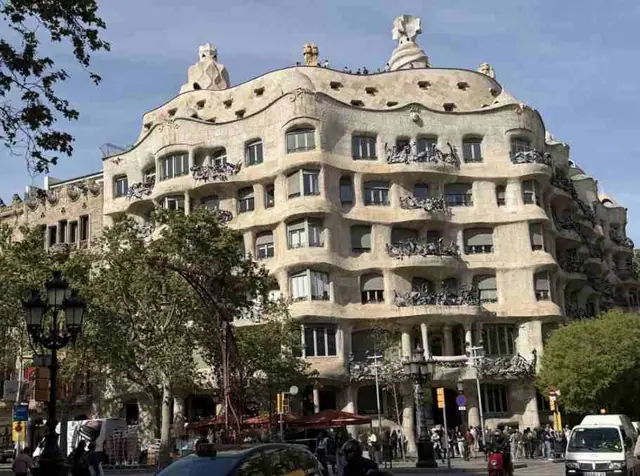
We now come to another of Antoni Gaudí’s great works: House Milà, better known as La Pedrera. And here something curious happens.
-
30. Gaudí’s final years
We’re now going to head towards the Sagrada Família area. From here, the easiest option is to take the metro from the station and go down via the entrance on this corner. Once inside, look for the L5, the blue line, heading towards Vall d’Hebron.
-
31. A Bible carved in stone
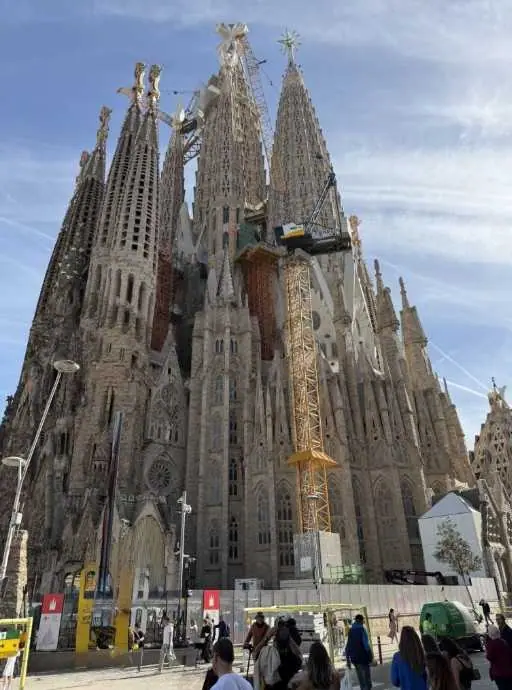
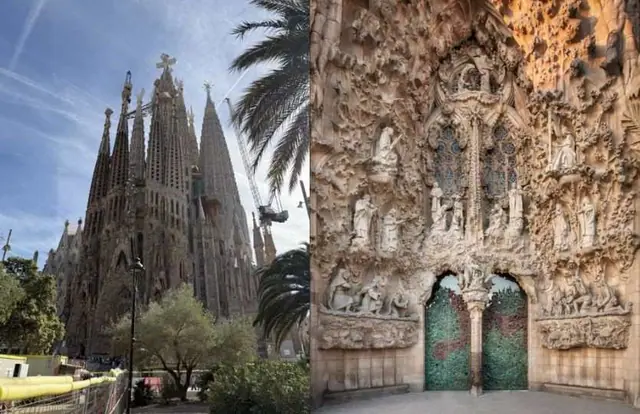
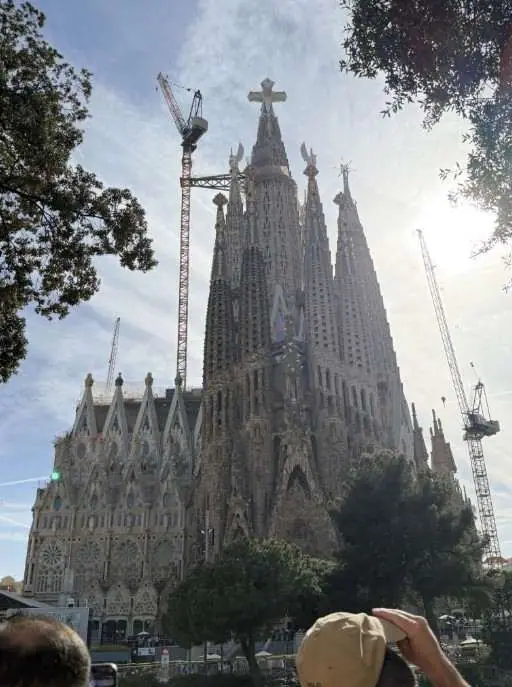
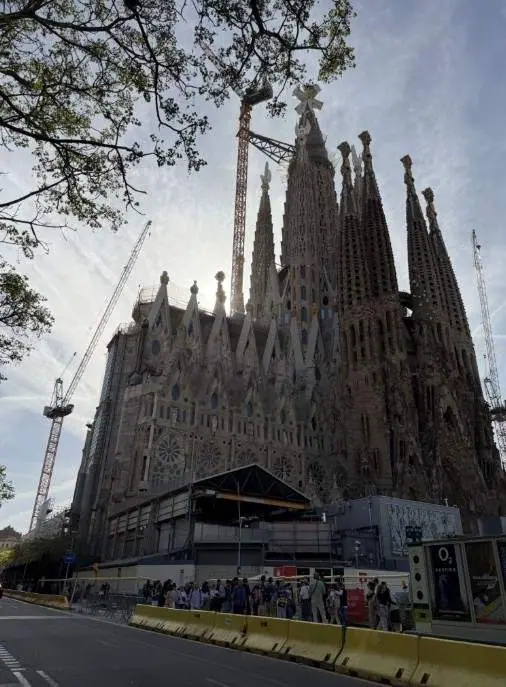
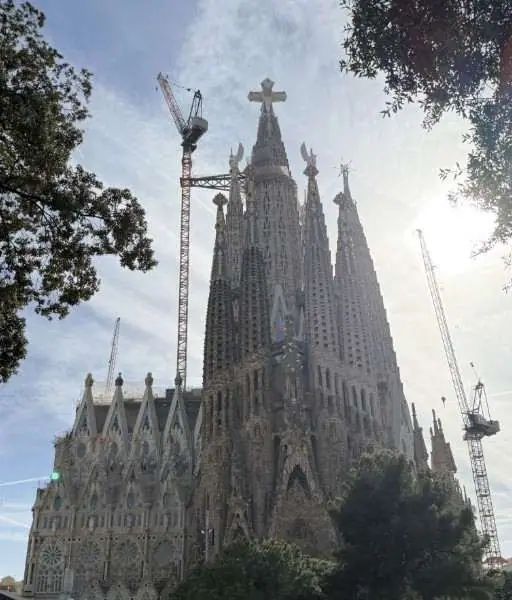
Now we’re there. We’re standing in front of the Sagrada Família, Antoni Gaudí’s most ambitious work, and one of the most extraordinary buildings in the world. There are buildings that can be explained, and others, like this one, that leave you speechless.
-
32. The Nativity Façade
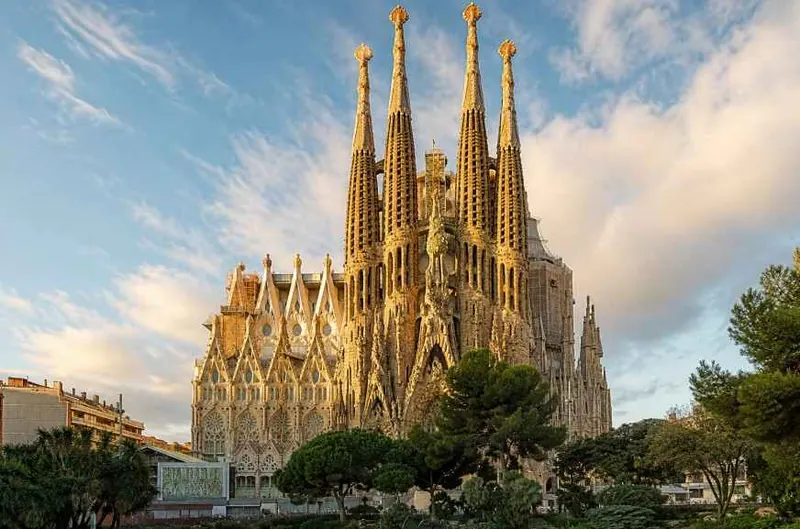
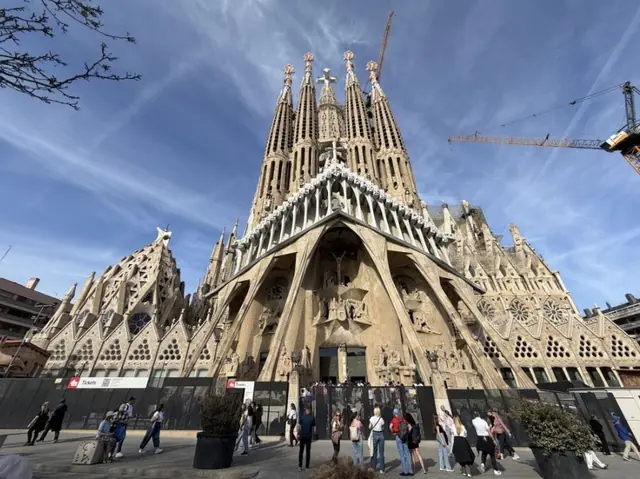
We are now going to look at the cathedral’s Nativity Façade, situated on the side facing Marina Street. This is the oldest part and the one most directly linked to Gaudí.
-
33. Gaudí’s stone testament
Before focusing on any specific detail, it is worth viewing this façade as if it were a grand theatrical composition.
-
34. Fruits and Saints
Now, let’s take a closer look at this corner of the Sacred Family. We’re still very close to the Nativity Façade, but here the church takes on a different character. We no longer see a large frontal scene like that of the Three Wise Men or the Coronation of the Virgin.
-
35. The path to eternity
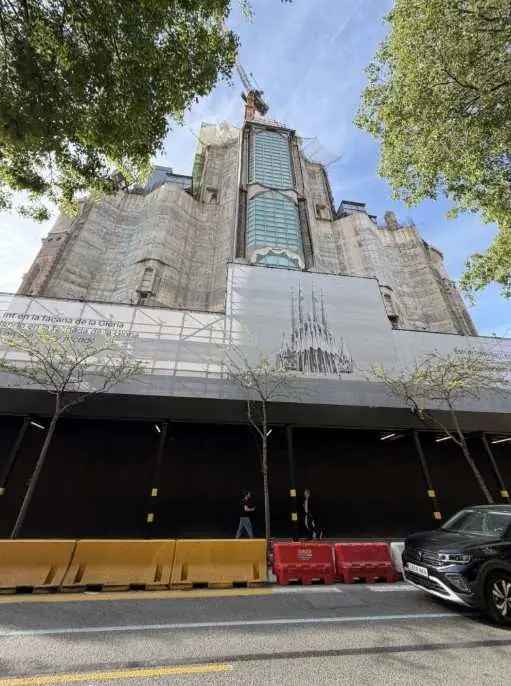
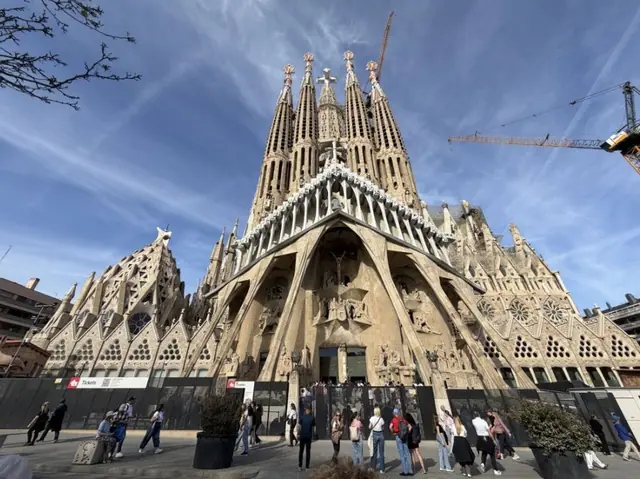
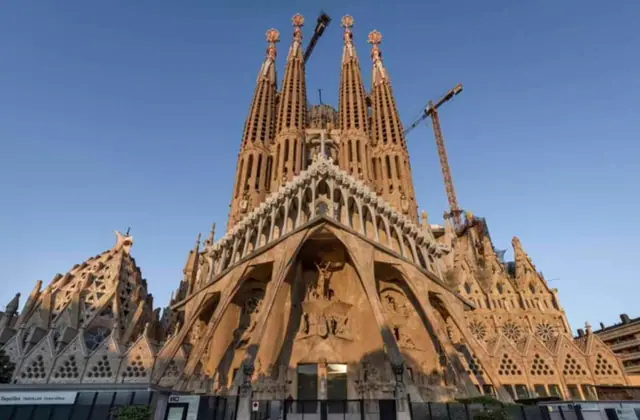
We are now standing in front of the Façade of Glory, on the side facing Mallorca Street. This was intended to be the grand main entrance to the Sagrada Família, but it is not yet complete. In fact, what we see before us is only part of the project.
-
36. The Way of the Cross
We are now standing in front of the Façade of the Passion, on the side facing Calle de Sardenya. And the first thing you notice is that this façade bears no resemblance whatsoever to the Façade of the Nativity. There, everything was full of life, nature and hope.
-
37. The Last Message on Stone
Before I finish, I’ll share a few more details with you. At the top of the portico’s gallery, where the 18 white columns stand, there is an inscription. It reads, in Latin: Jesus of Nazareth, King of the Jews.
Sagrada Familia Walking Tour
-
38. General overview
the Basilica of the Sagrada Família. This is going to be a very special tour, because you can’t truly appreciate the Sagrada Família just by looking up. You have to look closely. Every figure, every tower, every symbol and every corner has a story to tell.
-
39. Antoni Gaudí
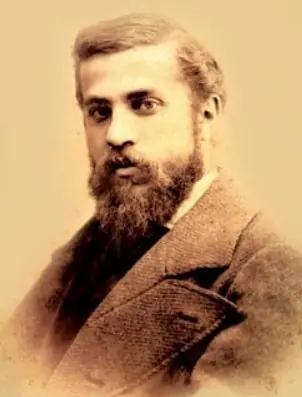
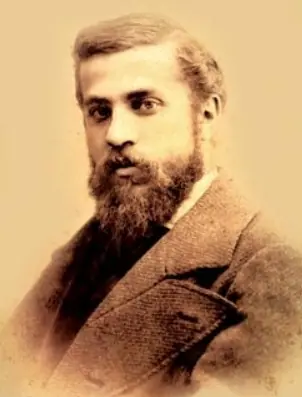
Now that we know how this story began, let’s talk about the man who changed everything. In 1883, barely a year after construction began, Antoni Gaudí took charge of the building works.
-
40. The towers and façades
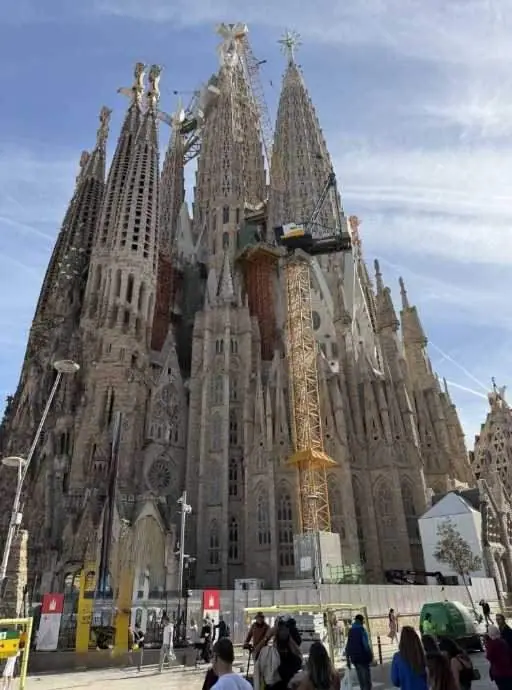
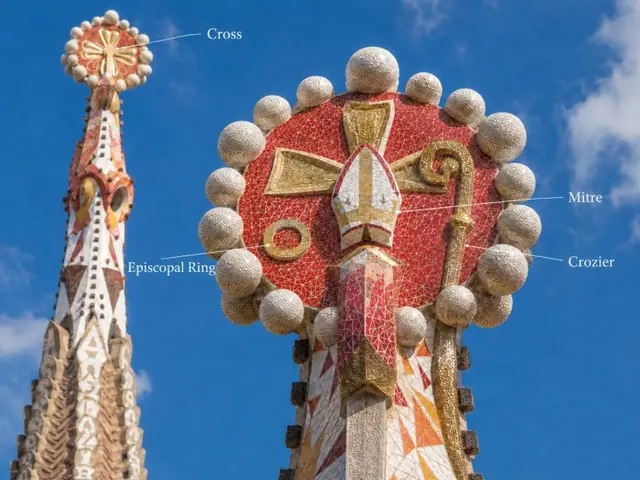
Now, let’s look up at the top of the basilica for a moment. The basilica is almost completely finished, but there is still one part missing, which I’ll mention later. When it is finished, the basilica will have 18 towers. Twelve of these towers are dedicated to the apostles.
-
41. A forest of stone and light
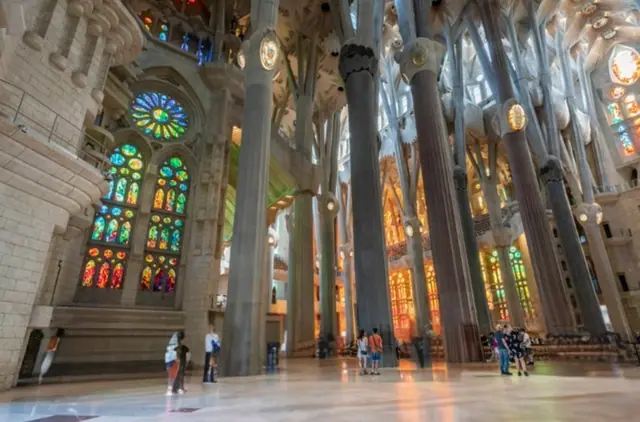
Before we move on to our final façade, we need to discover what lies inside the Sagrada Família. And here, the contrast is striking. From the outside, the basilica may seem like an explosion of stone, sculptures and symbols. But inside, the feeling is quite different.
-
42. The inscription on the stone
Now, standing in front of this façade of the Passion, look up slightly. At the top of the portico’s gallery, where the 18 white columns stand, there is an inscription. It reads, in Latin: Jesus of Nazareth, King of the Jews.
-
43. The final secrets
To round off this tour, it is worth looking at the Sacred Family from a different perspective: this church was not built by a single person. Gaudí is the big name.
Walk them with the app
The 3 tours visit these places in order, with the full audio and the map. Free, with no sign-up.